What does secure attachment behavior look like in him?
6 min read
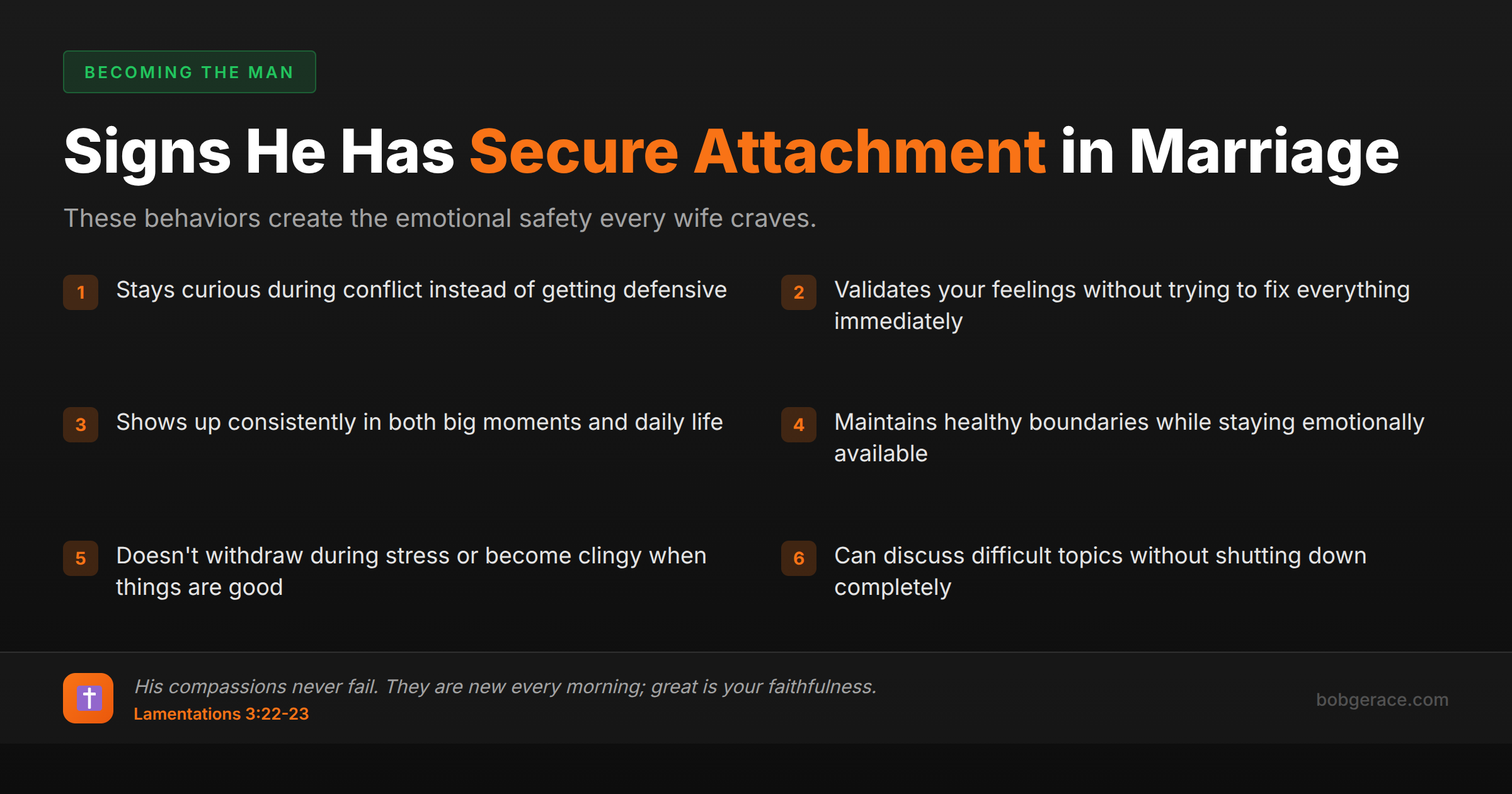
A husband with secure attachment naturally creates emotional safety through consistent, responsive behavior. He communicates openly without defensiveness, handles conflict with curiosity rather than anger, and maintains healthy boundaries while staying emotionally available. You'll notice he doesn't withdraw during stress or become clingy when things are good. Securely attached men show up reliably in both big and small moments. They validate your feelings without trying to fix everything immediately, can discuss difficult topics without shutting down, and maintain their own identity while fully investing in the marriage. They're comfortable with intimacy and don't fear your independence.
The Full Picture
Secure attachment in your husband shows up as emotional consistency that you can count on. He doesn't swing between being overly needy and completely distant. Instead, he maintains a steady presence that feels safe and predictable.
Communication patterns reveal secure attachment clearly. He listens without immediately jumping to solutions or getting defensive. When you're upset, he can stay calm and curious about your experience rather than making it about himself. He asks questions like "Help me understand" instead of "That's not what I meant."
During conflict, securely attached husbands don't resort to stonewalling, contempt, or explosive anger. They can disagree without attacking your character or threatening the relationship. They take breaks when emotions run high and return to finish difficult conversations.
Intimacy feels natural with secure attachment. He's comfortable with both physical and emotional closeness without being possessive. He celebrates your friendships and interests rather than feeling threatened by them. Sex isn't used as a weapon or bargaining chip - it flows from genuine connection.
Trust-building behaviors happen automatically. He follows through on commitments, communicates changes in plans, and maintains appropriate boundaries with others. He's transparent about struggles without dumping everything on you emotionally.
Stress responses show security too. Instead of completely withdrawing or becoming controlling, he shares what he's going through and asks for specific support. He doesn't expect you to read his mind or fix his problems, but he doesn't shut you out either.
What's Really Happening
Secure attachment stems from early experiences of consistent, responsive caregiving that created internal working models of relationships as safe and trustworthy. About 60% of adults have secure attachment, making it the most common but not universal pattern.
Neurologically, securely attached individuals have better regulation of their stress response system. Their amygdala doesn't hijack rational thinking as quickly during relationship stress. This allows them to stay present and responsive rather than flooding with fight-or-flight reactions.
The key difference lies in their internal narrative about relationships. They believe they're worthy of love and that others are generally trustworthy and available. This creates a self-fulfilling prophecy - they approach relationships with openness that typically generates positive responses.
Co-regulation happens naturally with secure attachment. They can help calm your nervous system through their presence and responses, while also being soothed by connection with you. This creates an upward spiral of emotional safety.
Securely attached partners have integrated their emotional experiences well. They can access and express their full range of feelings without being overwhelmed by them. They've learned to hold tension between seemingly opposite truths - like being disappointed in you while still loving you deeply.
It's important to note that secure attachment isn't perfection. These men still have bad days, make mistakes, and struggle with personal issues. The difference is in their repair capacity - they can acknowledge mistakes, make genuine apologies, and change problematic patterns.
What Scripture Says
Scripture provides the perfect picture of secure attachment through God's consistent love for us. Lamentations 3:22-23 reminds us: "Because of the Lord's great love we are not consumed, for his compassions never fail. They are new every morning; great is your faithfulness." This models the reliability and emotional safety that secure attachment creates.
1 Corinthians 13:4-7 describes love that mirrors secure attachment perfectly: "Love is patient, love is kind. It does not envy, it does not boast, it is not proud. It does not dishonor others, it is not self-seeking, it is not easily angered, it keeps no record of wrongs. Love does not delight in evil but rejoices with the truth. It always protects, always trusts, always hopes, always perseveres."
The way Jesus handled relationships demonstrates secure attachment beautifully. In John 11:35, "Jesus wept" with Mary and Martha, showing emotional availability and empathy. He could be present in their pain without trying to immediately fix their feelings.
Ephesians 4:15 calls husbands to "speak the truth in love," which perfectly captures how securely attached men communicate - honestly but with care for your heart. They don't avoid difficult conversations, but they approach them with gentleness.
Philippians 2:3-4 instructs: "Do nothing out of selfish ambition or vain conceit. Rather, in humility value others above yourselves, not looking to your own interests but each of you to the interests of the others." Secure attachment naturally produces this other-centered focus.
1 Peter 5:7 teaches us to cast our anxieties on God because he cares for us. Securely attached husbands create this same safe space where you can bring your worries without judgment or dismissal.
What To Do Right Now
-
1
Document specific behaviors you observe - write down examples of how he responds during stress, conflict, and normal daily interactions
-
2
Notice his communication patterns during disagreements - does he stay curious and engaged or become defensive and withdrawn
-
3
Observe how he handles your emotions - can he be present with your feelings without immediately trying to fix or minimize them
-
4
Pay attention to consistency - do his words match his actions over time, and does he follow through on commitments reliably
-
5
Assess his relationship with others - does he maintain healthy friendships and family relationships without drama or manipulation
-
6
Recognize repair attempts - when he makes mistakes, does he acknowledge them genuinely and work to change patterns rather than just apologizing
Related Questions
- What are markers of genuine remorse vs. guilt?
- What does rebuilding trust require from her?
- What does non-defensive response look like?
- What does taking responsibility sound like?
- How will he handle my doubt if he's genuine?
- What should I see in how he handles my emotions?
- What does genuine repair look like for old wounds?
- What is 'felt understanding' and how do I give it?
- How do I become a safe emotional presence?
- What does emotional co-regulation look like?
Also find Bob on
Subscribe for weekly videos on Christian marriage.
Ready to Build This in Your Marriage?
Knowing what secure attachment looks like doesn't make it happen in your actual relationship. A coach who knows your marriage can help you close that gap.
Talk to Bob →