How would his attachment style shift if he's changing?
6 min read
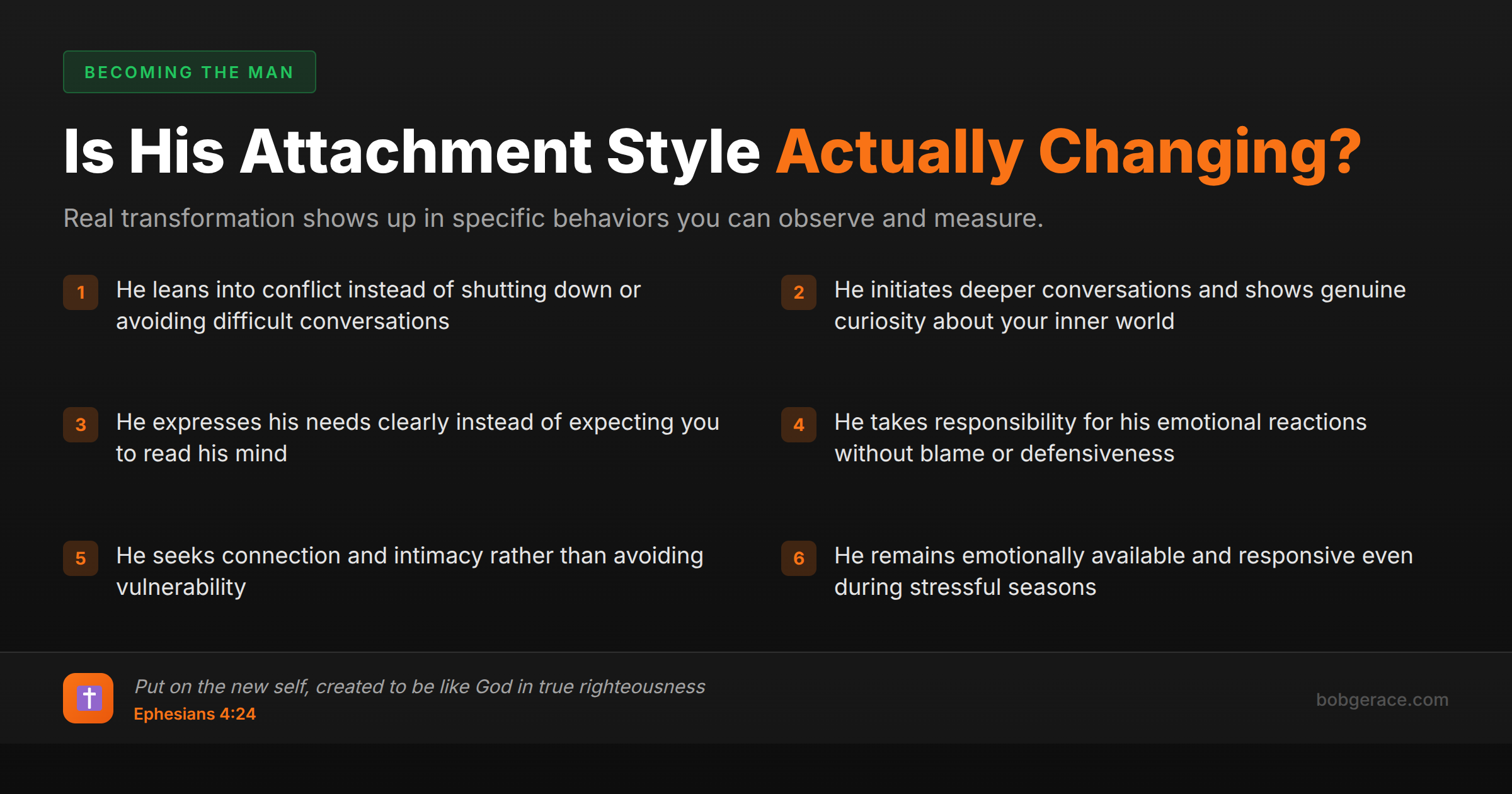
When a man's attachment style is genuinely shifting toward security, you'll notice specific behavioral changes that go beyond surface-level adjustments. He'll become more emotionally available and responsive to your needs without feeling threatened. Instead of shutting down during conflict, he'll lean in and work through issues with you. He'll initiate deeper conversations and show genuine curiosity about your inner world. The shift isn't overnight - it's a gradual process where he becomes more comfortable with vulnerability and interdependence. You'll see him seeking connection rather than avoiding it, expressing his needs clearly instead of expecting you to read his mind, and taking responsibility for his emotional reactions without blame or defensiveness.
The Full Picture
Understanding attachment style changes requires recognizing that true transformation happens from the inside out. When your husband is genuinely developing secure attachment patterns, the changes will be consistent and sustainable, not just temporary behavioral modifications to keep the peace.
Avoidant to Secure Shifts: If he's been avoidant, you'll notice him gradually becoming more comfortable with emotional intimacy. He'll stop treating your need for connection as clingy or demanding. Instead of disappearing when things get intense, he'll stay present and engaged. He'll begin sharing his thoughts and feelings without prompting and won't view emotional conversations as threats to his independence.
Anxious to Secure Shifts: If he's been anxiously attached, the constant need for reassurance will decrease. He'll stop interpreting your every mood as rejection and won't spiral into panic when you need space. His self-worth won't be completely dependent on your approval, and he'll be able to self-soothe during moments of uncertainty.
Disorganized to Secure Shifts: This is often the most dramatic transformation. He'll develop consistent responses to stress instead of the unpredictable hot-and-cold patterns. Trust becomes possible because his behavior becomes reliable. He'll stop pushing you away when he most needs connection.
The key indicator across all attachment styles moving toward security is emotional regulation. He'll manage his own emotions without making you responsible for them, while still being open to influence and connection. This creates the safety and predictability that secure attachment thrives on.
What's Really Happening
From a clinical perspective, attachment style shifts represent fundamental changes in the nervous system's response to relationship stress. When we see genuine movement toward security, we're witnessing neuroplasticity in action - the brain literally rewiring its relational patterns.
The most significant indicator is earned security - where someone with an insecure background develops secure functioning through healing relationships and intentional growth. This isn't just behavioral change; it's a reorganization of internal working models about self and others.
Watch for these clinical markers: First, increased distress tolerance - he can sit with difficult emotions without immediately defending, attacking, or withdrawing. Second, mentalization capacity - he can think about thinking, understanding both his mental states and yours. Third, coherent narrative - he can tell the story of his life and relationships with clarity and integration.
The change process typically involves three phases: recognition (awareness of patterns), reflection (understanding origins and triggers), and revision (developing new responses). Men often struggle with the recognition phase because they've been socialized to avoid emotional introspection.
Crucially, authentic change includes bidirectional influence - he affects you and allows himself to be affected by you. Pseudo-secure behavior might look compliant but lacks this genuine mutuality. True security involves both autonomy and connection, not choosing one over the other.
What Scripture Says
Scripture speaks powerfully about transformation and the possibility of renewed minds and hearts. When we understand attachment through a biblical lens, we see that God designed us for secure relationships, first with Him and then with each other.
Ephesians 4:22-24 teaches us to "put off your old self, which is being corrupted by its deceitful desires; to be made new in the attitude of your minds; and to put on the new self, created to be like God in true righteousness and holiness." This describes the very process of attachment healing - replacing old patterns with new, God-honoring ways of relating.
2 Corinthians 5:17 reminds us that "if anyone is in Christ, the new creation has come: The old has gone, the new is here!" This isn't just positional truth but practical reality as the Holy Spirit transforms our relational capacity from the inside out.
The heart of secure attachment is captured in 1 John 4:18: "There is no fear in love. But perfect love drives out fear." As your husband grows in understanding God's perfect love, the fear-based responses of insecure attachment lose their power. He learns to love and be loved without the protective strategies that once felt necessary.
Psalm 139:23-24 models the kind of self-examination essential for attachment healing: "Search me, God, and know my heart; test me and know my anxious thoughts. See if there is any offensive way in me, and lead me in the way everlasting." This vulnerability with God creates capacity for vulnerability with you.
God Himself demonstrates secure attachment - consistently available, responsive, and emotionally attuned to His children while maintaining His own identity and purposes.
What To Do Right Now
-
1
Document patterns over time - Keep a private journal noting specific behavioral changes rather than relying on memory or wishful thinking
-
2
Test consistency under stress - Pay attention to how he responds during difficult seasons, not just when things are smooth
-
3
Observe his self-reflection - Notice if he's taking responsibility for his growth without you having to point out every issue
-
4
Assess emotional availability - Look for genuine curiosity about your inner world and willingness to be known by you
-
5
Evaluate conflict resolution - See if he's moving toward problems with you rather than away from them during disagreements
-
6
Celebrate genuine progress - Acknowledge real changes to encourage continued growth while maintaining healthy boundaries
Related Questions
- What does secure attachment behavior look like in him?
- What should I see in how he handles stress?
- What should I see in how he handles my emotions?
- What does non-defensive response look like?
- How will he handle my doubt if he's genuine?
- What is anxious attachment and am I doing it right now?
- What does secure response to criticism look like?
- What is 'earned secure' vs. 'earned insecure'?
- Can adult attachment patterns change?
Also find Bob on
Subscribe for weekly videos on Christian marriage.
Bring Your Marriage to a Coach
Attachment shifts are messy in real time. A coach who knows your specific story can tell you what's real progress and what's performance—and what to do next.
Talk to Bob →