Can a marriage survive infidelity?
6 min read
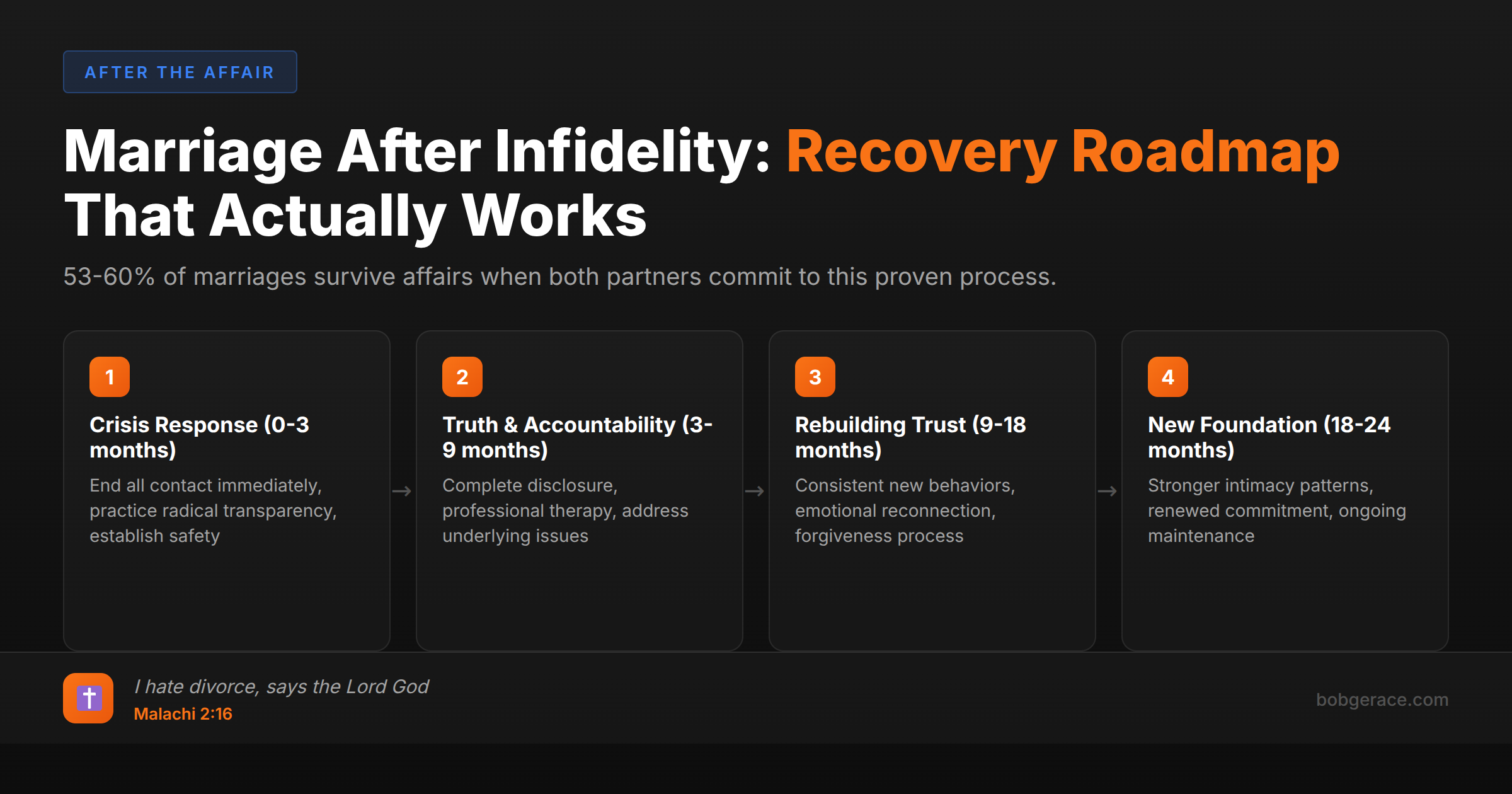
Yes, a marriage can absolutely survive infidelity, but it requires both spouses to be fully committed to the healing process. Statistics show that 53-60% of marriages survive an affair when both partners are willing to do the hard work of recovery. The key factors that determine survival include: the unfaithful spouse taking complete responsibility, ending all contact with the affair partner, practicing radical transparency, and both spouses committing to professional guidance. The betrayed spouse must also be willing to engage in the healing process, though this doesn't mean rushing forgiveness or minimizing the trauma. Recovery typically takes 18-24 months of consistent effort, but many couples report their marriages becoming stronger than before the affair. The difference lies in whether both people are willing to address the underlying issues that made the affair possible and build new patterns of intimacy and connection.
The Full Picture
Let me be direct with you: yes, marriages can and do survive infidelity, but survival isn't automatic. It requires both spouses to make a conscious choice to fight for their marriage, and that fight looks different than most people expect.
First, let's talk numbers. Research from the American Association for Marriage and Family Therapy shows that 53-60% of marriages survive an affair when both partners commit to recovery. That's actually higher than many people think, but it comes with important caveats.
The affair must end completely and immediately. No "friendship" with the affair partner, no gradual wind-down, no exceptions. Zero contact means zero contact. I've seen too many recovery attempts fail because the unfaithful spouse wanted to "let them down easy" or maintain some connection.
The unfaithful spouse must take full ownership. This means no blaming the marriage, the betrayed spouse, or circumstances. It means answering every question honestly, no matter how painful. It means being willing to be completely transparent about whereabouts, communications, and activities for as long as it takes.
Both spouses need professional support. Affairs create trauma that requires specialized skills to navigate. Individual therapy for both partners, plus couples therapy with someone trained in affair recovery, isn't optional—it's essential.
Recovery takes time—typically 18-24 months minimum. There's no rushing this process. The betrayed spouse will have good days and terrible days, sometimes within hours of each other. The unfaithful spouse must be patient with this roller coaster while consistently demonstrating change through actions, not just words.
Here's what many couples don't realize: marriages that successfully recover from affairs often become stronger than they were before. The crisis forces both partners to address issues they may have ignored for years and develop deeper levels of honesty and intimacy than they previously experienced.
What's Really Happening
From a clinical perspective, infidelity creates what we call "attachment trauma" in the betrayed spouse. Their fundamental sense of safety and security has been shattered, triggering the same neurological responses we see in other forms of trauma—hypervigilance, intrusive thoughts, emotional flooding, and difficulty regulating their nervous system.
This explains why betrayed spouses often feel like they're "going crazy" or can't control their emotional reactions. Their brain is literally in survival mode, scanning for threats and trying to make sense of information that doesn't fit their previous understanding of their relationship and partner.
For marriages to survive, we //blog.bobgerace.com/when-theres-another-man-what-you-need-to-know-first/:need to address this trauma directly. The unfaithful spouse must understand that their partner's intense reactions aren't "overreactions"—they're normal responses to betrayal trauma. This requires developing what we call "trauma-informed empathy," where they learn to respond to their spouse's pain without becoming defensive or trying to rush the healing process.
Successful recovery involves three critical phases: crisis stabilization (stopping the bleeding), processing and understanding (making sense of what happened), and rebuilding (creating new patterns of connection). Each phase has specific tasks and milestones, and skipping steps or rushing the process significantly reduces the chances of long-term success.
The couples who make it through develop what researchers call "post-traumatic growth"—they don't just survive the affair, they use it as a catalyst to build a more honest, intimate, and resilient marriage than they had before.
What Scripture Says
Scripture is clear that God hates divorce and desires restoration in marriage, even after infidelity. While adultery is given as biblical grounds for divorce, it's not a mandate—it's permission for those who cannot find a path to reconciliation.
"'I hate divorce,' says the Lord God of Israel" (Malachi 2:16). This isn't God being harsh toward divorced people; it's His heart for restoration and His understanding of the pain that broken marriages cause.
Forgiveness is commanded, but it's a process, not an event. "Be kind and compassionate to one another, forgiving each other, just as in Christ God forgave you" (Ephesians 4:32). This doesn't mean instant trust or pretending the betrayal didn't happen. Biblical forgiveness means releasing the right to revenge while still requiring accountability and genuine repentance.
True repentance involves change, not just apology. "Produce fruit in keeping with repentance" (Matthew 3:8). The unfaithful spouse must demonstrate through consistent actions over time that they've truly changed, not just say they're sorry.
God can restore what seems impossible. "And we know that in all things God works for the good of those who love him" (Romans 8:28). This doesn't minimize the pain or make the affair "worth it," but it affirms that God can bring redemption even from betrayal.
Both spouses need community and accountability. "Confess your sins to each other and pray for each other so that you may be healed" (James 5:16). Recovery happens in relationship with others who can provide support, accountability, and wisdom throughout the healing process.
Scripture gives us both the permission to end a marriage after adultery and the hope to restore it. The choice belongs to the couple, but God's heart is clearly for redemption whenever possible.
What To Do Right Now
-
1
End all contact immediately - The affair relationship must stop completely today. No goodbye messages, no explanations to the affair partner, no gradual wind-down.
-
2
Practice radical transparency - Unfaithful spouse shares all passwords, accounts, and whereabouts. No privacy rights until trust is rebuilt through demonstrated change.
-
3
Get professional help - Find a therapist trained in affair recovery. Both individual counseling and couples therapy are essential, not optional.
-
4
Create safety for the betrayed spouse - Answer all questions honestly, provide timeline of events, take full responsibility without blame-shifting or defensiveness.
-
5
Establish accountability - Both spouses need trusted friends or mentors who know the situation and can provide ongoing support and accountability.
-
6
Commit to the timeline - Recovery takes 18-24 months minimum. Both partners must be prepared for this long-term process without shortcuts or rushing.
Related Questions
- How do I trust her again?
- Will I ever get over this?
- How long does recovery take?
- What is the typical betrayal trauma recovery timeline?
- What's the success rate of marriages that survive affairs?
- What does full recovery actually look like?
- How long do I wait before giving up?
- When is it actually over?
- What does real transformation look like?
- How long does real change actually take?
Also find Bob on
Subscribe for weekly videos on Christian marriage.
Your Marriage Isn't a Statistic
Recovery depends on what's actually happening in your specific situation—not averages. A coach who knows your story can tell you what to do next week, not just what works in general.
Talk to Bob →