How do I trust her again?
6 min read
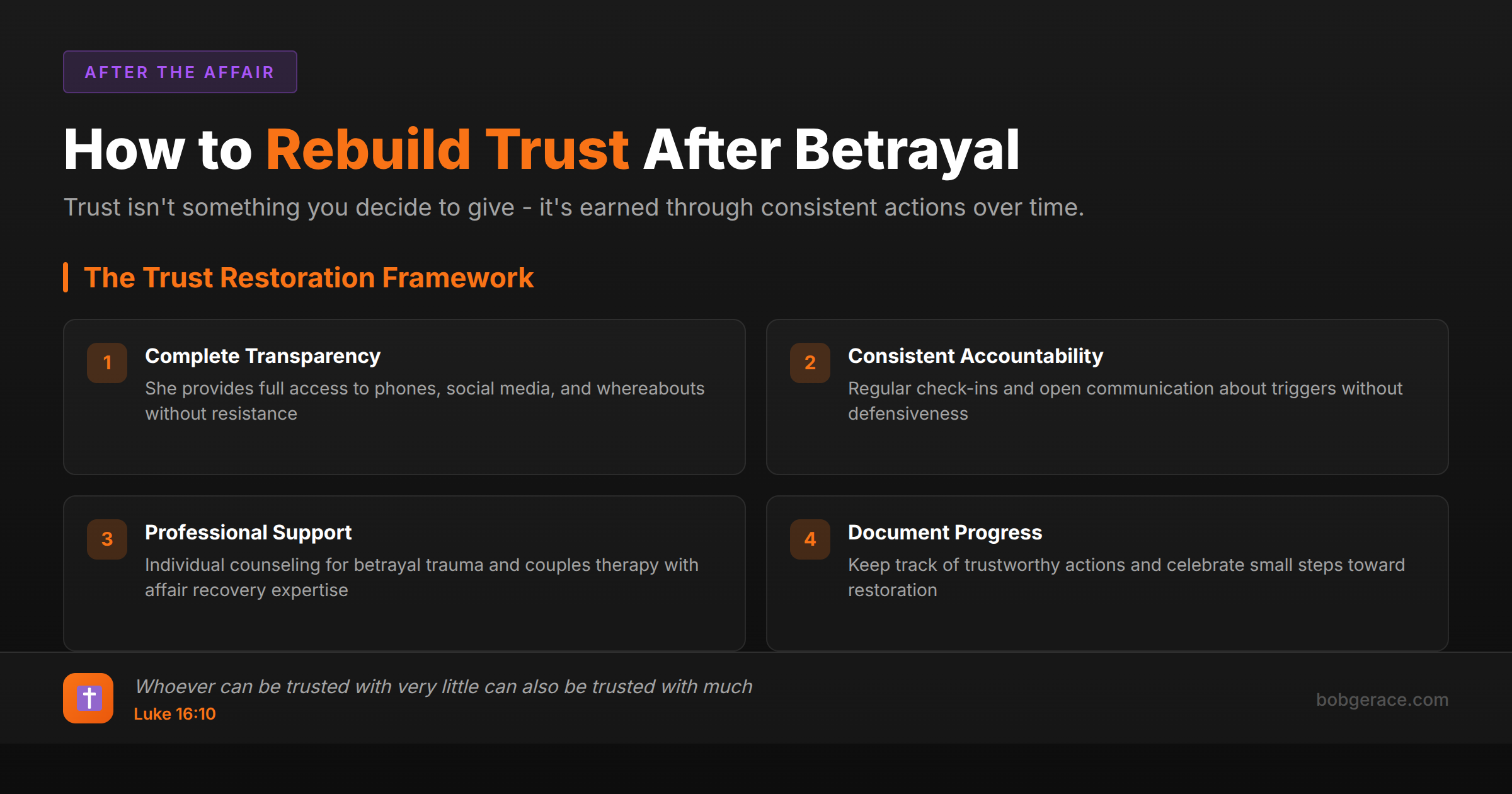
Trust after betrayal isn't something you simply decide to do - it's rebuilt through consistent actions over time. The harsh reality is that your wife must earn back your trust through complete transparency, accountability, and demonstrable change in her behavior and choices. This process requires both of you to do the work. She needs to understand the depth of damage caused and commit to rebuilding what was broken. You need to create space for healing while remaining open to the possibility of restoration. Trust returns gradually as she proves trustworthy through her daily choices, not just her words.
The Full Picture
Let me be straight with you - what you're asking is one of the hardest questions a man can face. The woman you pledged your life to has shattered that sacred trust, and now you're wondering if you can ever feel safe with her again.
Trust isn't a light switch you flip back on. It's more like a bridge that's been blown up and needs to be rebuilt brick by brick. And here's the thing most people won't tell you: you can't rebuild it alone. Your wife has to be an active, willing participant in this reconstruction project.
The first reality check is this - trust must be earned, not demanded. If she's pressuring you to "just get over it" or "move on already," she doesn't understand the magnitude of what she's done. Healing from betrayall trauma takes time, and anyone who truly loves you will respect that timeline.
You need to see several things consistently: complete transparency with her phone, social media, and whereabouts; genuine remorse that shows she understands the pain she's caused; active participation in counseling or recovery work; and a willingness to answer your questions without defensiveness, even when it's uncomfortable.
The process isn't linear. You'll have good days where hope feels possible and terrible days where the betrayal feels fresh. That's normal. What matters is the overall trajectory and whether she's proving herself trustworthy through her actions, not just her promises.
Remember, choosing to work on trust doesn't make you weak or foolish. It makes you brave. But it also doesn't mean you have to trust blindly or ignore red flags in the name of forgiveness.
What's Really Happening
From a clinical perspective, what you're experiencing is betrayal trauma - a form of PTSD that occurs when someone we depend on for safety violates our trust. Your nervous system is now hypervigilant, constantly scanning for threats, which is why trusting feels impossible right now.
The neuroscience is clear: betrayal rewires your brain. Your amygdala (fear center) becomes hyperactive while your prefrontal cortex (logical thinking) goes offline. This isn't weakness - it's your brain protecting you from further harm.
Rebuilding trust requires what we call "earned security." This happens through predictable, consistent actions over time that gradually retrain your nervous system to feel safe again. Your wife needs to understand that transparency isn't punishment - it's medicine for your traumatized attachment system.
Research shows successful affair //blog.bobgerace.com/marriage-intelligence-network-data-driven-recovery/:recovery requires specific conditions: the unfaithful partner must demonstrate genuine remorse, provide complete transparency, cut all contact with the affair partner, and actively participate in rebuilding the relationship. Without these elements, trust cannot be safely restored.
The timeline varies, but studies indicate it typically takes 12-18 months of consistent trustworthy behavior before betrayed partners begin to feel secure again. Some days will be harder than others - this is normal and doesn't indicate failure. Healing isn't linear, and your brain needs time to create new neural pathways of safety and connection.
What Scripture Says
God's Word has much to say about trust, betrayal, and restoration. The Bible doesn't minimize the pain of betrayal or rush the process of healing.
Trust is earned through faithfulness: "Whoever can be trusted with very little can also be trusted with much, and whoever is dishonest with very little will also be dishonest with much" (Luke 16:10). Your wife must prove herself faithful in small, daily choices before trust in bigger areas can return.
Genuine repentance produces fruit: "Produce fruit in keeping with repentance" (Matthew 3:8). True repentance isn't just feeling sorry - it's a complete change of direction that shows up in actions. You have the right to look for this fruit before extending trust.
Wisdom protects us: "The simple believe anything, but the prudent give thought to their steps" (Proverbs 14:15). God doesn't call you to be naive. Requiring transparency and accountability isn't unforgiving - it's wise stewardship of your heart.
God models patient restoration: "The Lord is not slow in keeping his promise, as some understand slowness. Instead he is patient with you, not wanting anyone to perish, but everyone to come to repentance" (2 Peter 3:9). Even God waits for genuine repentance before restoration.
Love and wisdom work together: "I pray that your love may abound more and more in knowledge and depth of insight" (Philippians 1:9). True love includes discernment. You can love your wife while still requiring her to rebuild trust through her actions.
Healing takes time: "He heals the brokenhearted and binds up their wounds" (Psalm 147:3). God understands your pain and won't rush your healing process.
What To Do Right Now
-
1
Establish clear boundaries - She must provide complete transparency with phones, social media, whereabouts, and cut all contact with the affair partner
-
2
Require consistent accountability - Regular check-ins, shared passwords, and open communication about triggers and concerns without defensiveness
-
3
Get professional help - Both individual counseling for betrayal trauma and couples therapy with someone experienced in affair recovery
-
4
Document trustworthy actions - Keep track of positive changes and consistent behavior to help you recognize genuine progress over time
-
5
Communicate your needs clearly - Tell her specifically what you need to feel safe and what behaviors rebuild vs. damage trust
-
6
Practice self-care daily - Your healing matters too; invest in your physical, emotional, and spiritual health throughout this process
Related Questions
You Don't Have To Navigate This Alone
Rebuilding trust after betrayal is one of the hardest things you'll ever do. Get the personalized guidance you need to heal your marriage or find clarity about your next steps.
Get Help Now →