How long does recovery take?
5 min read
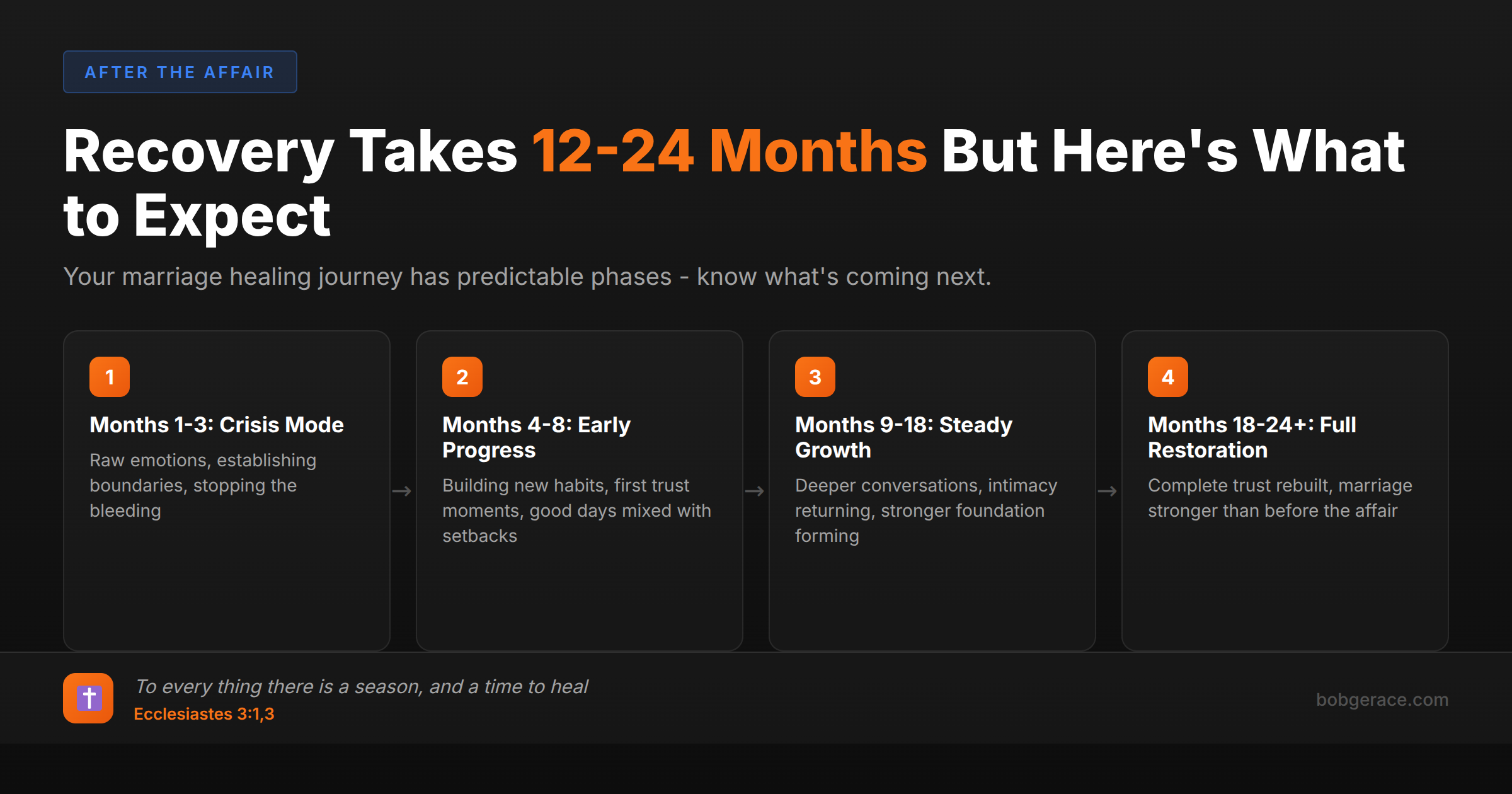
Recovery from an affair typically takes 12-24 months for most couples, but this timeline varies significantly based on multiple factors. The process isn't linear - you'll experience good days and setbacks throughout the journey. Three key factors determine your timeline: the depth of commitment from both spouses, the extent of the betrayal, and whether you're getting proper guidance. Some couples see major breakthroughs in 6-8 months, while others need 2-3 years for complete healing. The betrayed spouse often needs longer to fully trust again, and that's completely normal. Remember, healing happens in phases, not overnight.
The Full Picture
Recovery from infidelity follows predictable phases, but the timeline is unique to every marriage.
Phase 1: Crisis and Discovery (0-3 months) This is the immediate aftermath - shock, anger, disbelief. Everything feels chaotic. The betrayed spouse experiences trauma-like symptoms while the unfaithful spouse often feels guilt and confusion. Don't expect rational conversations or major decisions during this phase.
Phase 2: Emotional Roller Coaster (3-12 months) Feelings swing wildly between hope and despair. Some days you'll think you're making progress, others you'll feel back at square one. This is normal. The betrayed spouse asks detailed questions about the affair, while the unfaithful spouse must demonstrate consistent transparency and patience.
Phase 3: Rebuilding and Integration (12-24 months) New patterns emerge. Trust begins returning in small increments. Conversations become more productive and less reactive. You start creating new memories together and developing rituals that reinforce your commitment.
Factors That Speed Recovery: - Immediate, complete honesty from the unfaithful spouse - No contact with the affair partner - Professional guidance from a qualified coach or counselor - Both spouses committed to the process - Strong support system - Willingness to address underlying marriage issues
What Slows Recovery: - Continued deception or trickle truth - Ongoing contact with affair partner - Blame-shifting or minimizing the affair - Rushing the healing process - Isolation from support systems
What's Really Happening
From a clinical perspective, affair recovery involves rewiring both neurological and relational patterns that took years to establish. The betrayed spouse's brain literally processes infidelity as a threat to survival, activating the same neural pathways as physical danger.
This explains why recovery can't be rushed. The brain needs time to create new neural pathways associated with safety and trust. Research shows it takes an average of 18 months for the intense emotional reactivity to significantly decrease, though some level of sensitivity may persist longer.
The unfaithful spouse undergoes their own neural rewiring, developing new patterns of transparency, empathy, and emotional regulation. This process requires consistent practice over time - you can't think your way into new behaviors, you must practice them repeatedly.
I often see couples frustrated that they're not 'over it' after a few months. Understanding that recovery involves actual brain changes helps normalize the timeline. The good news is that couples who commit to the process often report stronger marriages than before the affair, but this transformation requires patience and realistic expectations about the time //blog.bobgerace.com/christian-marriage-coaching-investment-why-free-fails/:investment required.
What Scripture Says
Scripture provides both comfort and perspective on the healing timeline after betrayal. God understands that deep wounds take time to heal and that restoration is a process, not an event.
Ecclesiastes 3:1-3 reminds us: *'To every thing there is a season, and a time to every purpose under the heaven: A time to heal, and a time to build up.'* Your marriage has its own season of healing that cannot be rushed.
Psalm 147:3 offers hope: *'He heals the brokenhearted and binds up their wounds.'* God is actively involved in your healing process, working in His perfect timing, not yours.
2 Corinthians 4:16-17 provides perspective on the daily struggle: *'Though outwardly we are wasting away, yet inwardly we are being renewed day by day. For our light and momentary troubles are achieving for us an eternal glory.'* Some days will feel like setbacks, but internal renewal continues.
Romans 8:28 anchors us in hope: *'And we know that in all things God works for the good of those who love him.'* Your recovery timeline is part of God's larger plan for your marriage.
Isaiah 43:19 speaks to new beginnings: *'See, I am doing a new thing! Now it springs up; do you not perceive it?'* God can create something beautiful from the ashes of betrayal, but new growth follows natural seasons.
Galatians 6:9 encourages persistence: *'Let us not become weary in doing good, for at the proper time we will reap a harvest if we do not give up.'* Your faithful work toward healing will bear fruit in God's timing.
What To Do Right Now
-
1
Set realistic expectations - plan for 12-24 months minimum and celebrate small progress along the way
-
2
Track your healing in phases rather than days - note improvements in communication, trust, and emotional stability over months
-
3
Create weekly check-ins to assess progress without getting stuck in daily emotional fluctuations
-
4
Establish non-negotiable boundaries (no contact with affair partner, complete transparency) that remain consistent throughout recovery
-
5
Build a support network including professional guidance, trusted friends, and spiritual community for the long journey
-
6
Focus on your own healing and growth rather than trying to control or rush your spouse's process
Related Questions
- Can a marriage survive infidelity?
- Will I ever get over this?
- What is the typical betrayal trauma recovery timeline?
- When do triggers decrease in intensity?
- What does full recovery actually look like?
- What is the 'trust timeline' post-affair?
- How long does real transformation take?
- What does real transformation look like?
- How long does real change actually take?
- What does healing timeline look like?
Also find Bob on
Subscribe for weekly videos on Christian marriage.
Your Timeline Isn't Generic
A coach who knows your marriage can tell you what's normal for where you actually are — and what to do next when the timeline doesn't feel like it's moving.
Talk to Bob →