What is Paul's teaching in 1 Corinthians 7?
5 min read
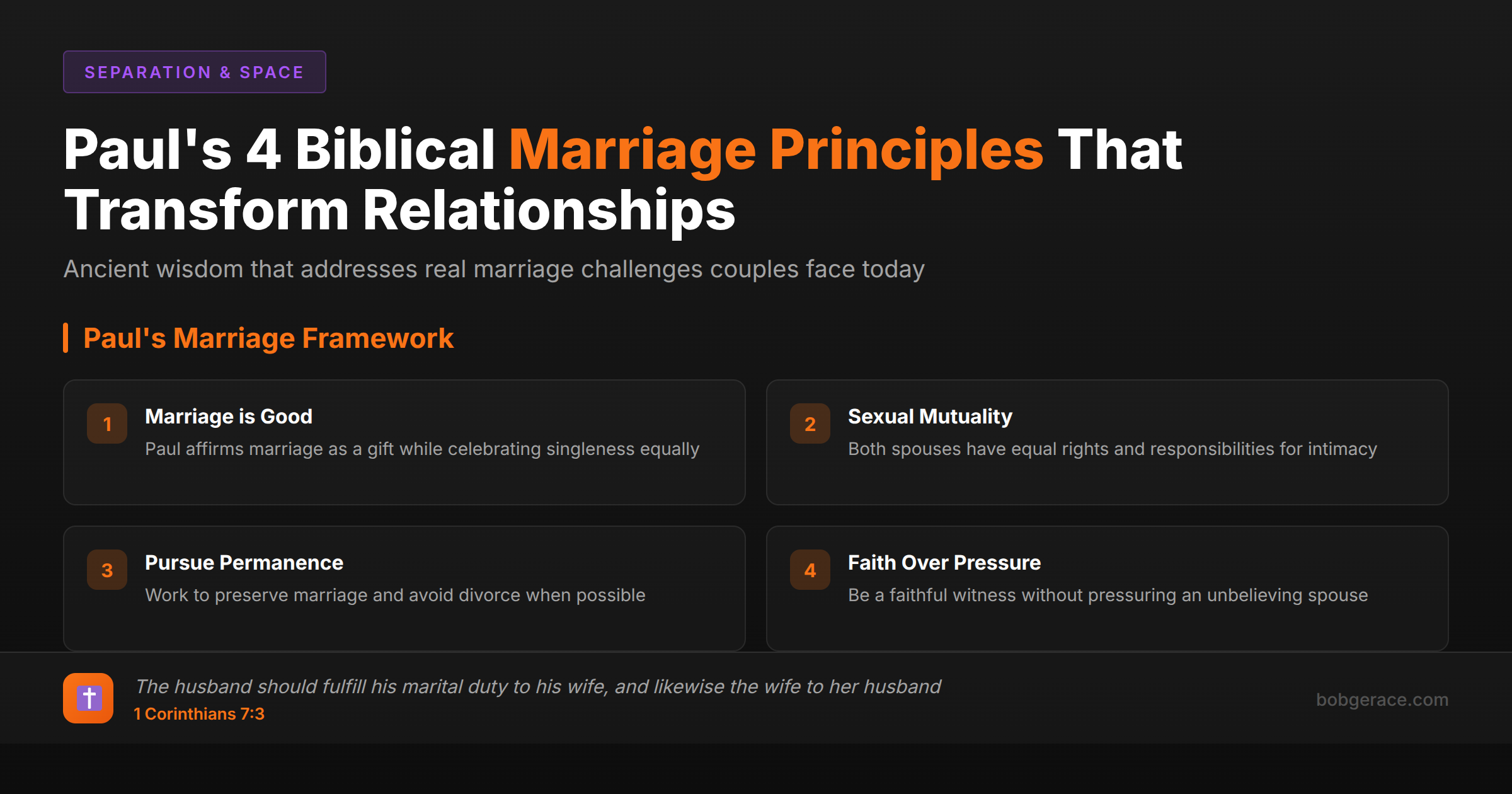
Paul's teaching in 1 Corinthians 7 addresses marriage, divorce, and singleness with remarkable balance and practical wisdom. He affirms that marriage is good while also celebrating singleness as a gift from God. Paul teaches that sexual intimacy within marriage is both a right and responsibility for both spouses, that divorce should be avoided when possible, and that believers married to unbelievers should remain faithful unless the unbeliever chooses to leave. This chapter isn't just theoretical theology—it's pastoral counsel for real people facing real marriage challenges. Paul addresses sexual purity, the permanence of marriage, mixed-faith marriages, and how to honor God whether married or single. His guidance remains profoundly relevant for couples today.
The Full Picture
First Corinthians 7 is Paul's most comprehensive treatment of marriage and singleness in the New Testament. Written to address specific questions from the Corinthian church, this chapter reveals Paul's balanced approach to marriage—neither dismissing it as inferior nor elevating it above singleness.
The Historical Context
The Corinthians were dealing with sexual immorality and confusion about marriage in their pagan culture. Some were apparently advocating complete celibacy, even within marriage, while others were treating sexual relationships casually. Paul addresses both extremes with biblical wisdom.
Paul's Core Principles
Paul establishes several foundational truths: Marriage is honorable and necessary for most people to avoid sexual sin. Sexual intimacy within marriage is not just permissible but commanded. Both singleness and marriage are gifts from God, each with unique advantages for serving Christ. Divorce should be the exception, not the norm.
Practical Applications
Paul doesn't speak in abstract terms. He addresses widows considering remarriage, believers married to unbelievers, virgins wondering if they should marry, and married couples struggling with their responsibilities to each other. His counsel is both idealistic and realistic, acknowledging human weakness while calling believers to God's standards.
This chapter destroys the false notion that Christianity is anti-marriage or anti-sex. Instead, it presents marriage as a holy institution requiring mutual love, respect, and sacrifice—a living picture of Christ's relationship with the church.
What's Really Happening
From a clinical perspective, Paul's teaching in 1 Corinthians 7 demonstrates remarkable psychological insight into human sexuality and relationship dynamics. His emphasis on mutual sexual responsibility within marriage aligns perfectly with modern research on marital satisfaction and intimacy.
Sexual Mutuality and Mental Health
Paul's instruction that neither spouse should deprive the other sexually (except by mutual consent for prayer) reflects what we now know about the connection between sexual intimacy and emotional bonding. Regular physical intimacy releases oxytocin and other bonding hormones that strengthen marital attachment and reduce anxiety and depression.
The Wisdom of Committed Relationships
Paul's concern about sexual immorality leading people toward marriage shows his understanding of human nature. Research consistently shows that committed, monogamous relationships provide greater emotional security, better mental health outcomes, and more satisfying sexual experiences than casual relationships.
Managing Competing Loyalties
Paul's discussion of the "divided interests" of married versus single people reflects the psychological reality of competing attachments. Married individuals must balance their relationship with God alongside their earthly marriage, which can create stress but also provides opportunities for spiritual growth through sacrifice and service.
Realistic Expectations
Paul's acknowledgment that marriage involves "trouble in this life" demonstrates his realistic understanding of relationship challenges. This honesty helps couples develop appropriate expectations and prepare for the inevitable difficulties that strengthen rather than destroy marriages when handled biblically.
What Scripture Says
First Corinthians 7 provides clear biblical principles for marriage and singleness that remain authoritative for believers today.
Sexual Intimacy in Marriage "The husband should fulfill his marital duty to his wife, and likewise the wife to her husband. The wife does not have authority over her own body but yields it to her husband. In the same way, the husband does not have authority over his own body but yields it to his wife" (1 Corinthians 7:3-4). Paul establishes mutual sexual responsibility within marriage as a divine command, not merely a suggestion.
The Permanence of Marriage "To the married I give this command (not I, but the Lord): A wife must not separate from her husband. But if she does, she must remain unmarried or else be reconciled to her husband. And a husband must not divorce his wife" (1 Corinthians 7:10-11). Marriage is intended to be permanent, with reconciliation as the goal when separation occurs.
Mixed-Faith Marriages "If any brother has a wife who is not a believer and she is willing to live with him, he must not divorce her. And if a woman has a husband who is not a believer and he is willing to live with her, she must not divorce him" (1 Corinthians 7:12-13). Believers should remain faithful even when married to unbelievers.
Both Marriage and Singleness Are Gifts "I wish that all of you were as I am. But each of you has your own gift from God; one has this gift, another has that" (1 Corinthians 7:7). Neither marriage nor singleness is superior—both are gifts from God to be embraced.
What To Do Right Now
-
1
Study 1 Corinthians 7 together with your spouse, discussing how Paul's principles apply to your specific marriage challenges and circumstances
-
2
Evaluate your sexual relationship in light of Paul's teaching about mutual responsibility and regular intimacy within marriage
-
3
If you're in a mixed-faith marriage, commit to being a faithful witness through your actions rather than pressuring your spouse to convert
-
4
Discuss with your spouse how to balance your service to God with your responsibilities to each other and your family
-
5
Pray for wisdom to embrace your marital calling as a gift from God, accepting both its joys and its inevitable troubles
-
6
Seek pastoral counsel if you're facing separation or divorce, exploring every biblical avenue for reconciliation first
Related Questions
- What does Scripture say about divorce?
- What did Jesus say about divorce?
- What's the exception clause?
- What is 'Pauline privilege'?
- Does adultery justify divorce?
- If I divorce, can I remarry?
- Does God want me to stay in this marriage?
- What does biblical forgiveness require of me?
- What does faithfulness require when she won't reciprocate?
Also find Bob on
Subscribe for weekly videos on Christian marriage.
Ready to apply this to your actual marriage?
Understanding Paul's teaching is one thing. Calibrating it to your specific situation—your wife, your history, where you actually are—takes a human who knows your story.
Talk to Bob →