What is Jesus' teaching in Matthew 5 vs. Matthew 19?
6 min read
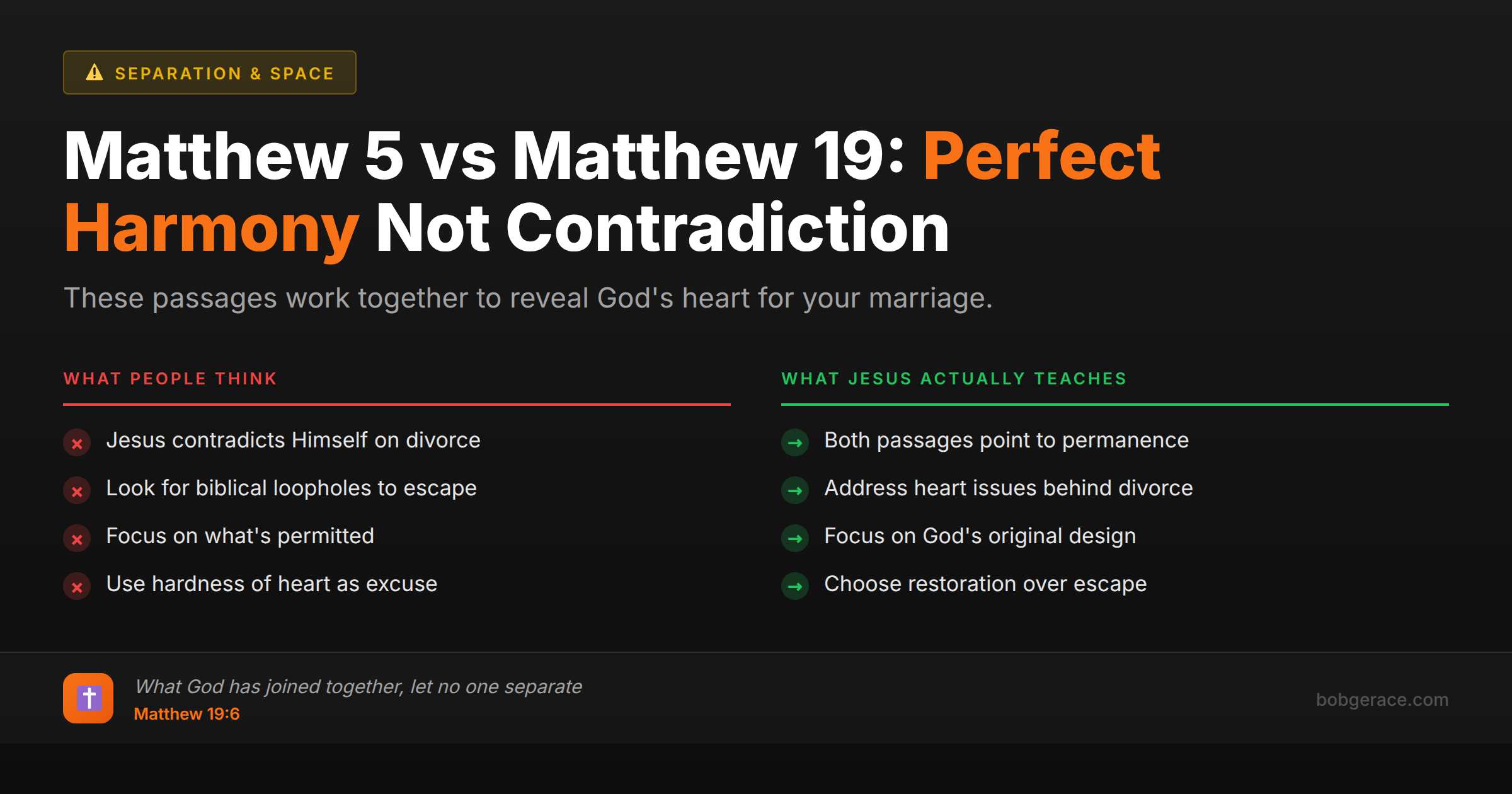
Jesus' teachings in Matthew 5 and Matthew 19 complement each other perfectly. In Matthew 5:32, Jesus addresses the heart issue - divorce causes adultery except in cases of sexual immorality. In Matthew 19:3-9, He responds to the Pharisees' trap question by pointing back to God's original design for marriage as permanent union. These aren't contradictory teachings but different angles of the same truth. Matthew 5 focuses on the moral consequences of divorce, while Matthew 19 emphasizes God's original intent. Both passages show Jesus elevating marriage above the casual divorce culture of His time, while acknowledging that sexual immorality creates a biblical exception. The key is understanding that Jesus consistently points toward restoration and God's heart for permanent, covenant marriage.
The Full Picture
Understanding Jesus' teachings on divorce requires looking at both Matthew 5 and 19 together, not in isolation. These passages address different audiences with different concerns, but they reveal the same heart of God for marriage.
Matthew 5:32 comes during the Sermon on the Mount, where Jesus is teaching His disciples about kingdom living. He's not answering a trick question - He's laying out the moral foundation for His followers. When He says divorce causes adultery "except for sexual immorality," He's addressing the devastating consequences of broken covenant.
Matthew 19:3-9 occurs later when Pharisees try to trap Jesus with a legal question about divorce. They want Him to take sides in the rabbinic debate between Hillel (liberal divorce) and Shammai (restrictive divorce). Instead, Jesus goes back to Genesis - God's original design.
The Pharisees were obsessed with *when* divorce was permissible. Jesus redirected them to *why* God instituted marriage in the first place. "What God has joined together, let no one separate" isn't just a wedding ceremony line - it's a declaration of God's creative intent.
Both passages share the same exception clause ("sexual immorality"), but they approach it differently. Matthew 5 warns about the consequences of breaking covenant. Matthew 19 celebrates the beauty of keeping covenant. Together, they show us that while God provides grace for the broken, His heart is always for restoration and permanence in marriage.
What's Really Happening
From a therapeutic perspective, these two passages address different psychological and relational dynamics that I see constantly in marriage counseling. Matthew 5 speaks to the trauma and moral injury that divorce creates - what Jesus calls "causing adultery" isn't just about legal status, it's about the deep psychological wounds that broken covenant inflicts.
When couples come to me citing these passages as contradictory, they're usually in crisis mode, looking for biblical permission to divorce. But Jesus isn't giving legal loopholes - He's addressing the heart issues that destroy marriages. The "hardness of heart" Jesus mentions in Matthew 19:8 is what I call emotional callousness - the gradual shutdown that happens when couples stop fighting for their relationship.
The exception clause in both passages (sexual immorality) isn't primarily about creating an escape hatch. It's acknowledging that sexual betrayal represents such a fundamental breach of covenant that it essentially dissolves the marriage bond. However, even in cases of adultery, I've seen couples choose forgiveness and rebuild stronger marriages.
What's fascinating is that Jesus consistently points toward God's original design rather than getting caught up in damage control. This reflects sound therapeutic principle - we heal best when we focus on the goal (healthy marriage) rather than just managing the problems (grounds for divorce). Both passages call couples to a higher standard while acknowledging human brokenness.
What Scripture Says
Scripture presents a consistent view of marriage and divorce when we examine these passages in context:
God's Original Design: *"Therefore a man shall leave his father and his mother and hold fast to his wife, and they shall become one flesh."* - Genesis 2:24
Jesus' Heart for Permanence: *"Therefore what God has joined together, let no one separate."* - Matthew 19:6
The Reality of Human Hardness: *"Because of your hardness of heart Moses allowed you to divorce your wives, but from the beginning it was not so."* - Matthew 19:8
The Exception Clause: *"And I say to you: whoever divorces his wife, except for sexual immorality, and marries another, commits adultery."* - Matthew 19:9
The Moral Consequences: *"But I say to you that everyone who divorces his wife, except on the ground of sexual immorality, makes her commit adultery, and whoever marries a divorced woman commits adultery."* - Matthew 5:32
God's Heart for Restoration: *"For I hate divorce," says the Lord, the God of Israel"* - Malachi 2:16
These verses work together to show that while God provides grace for broken situations, His desire is always for covenant faithfulness and restoration. The exception clause acknowledges reality while pointing toward the higher calling of forgiveness and rebuilding.
What To Do Right Now
-
1
Study both passages together, not in isolation - ask what they reveal about God's heart for marriage
-
2
If you're facing betrayal, seek wise counsel before making permanent decisions about divorce
-
3
Focus on God's original design for your marriage rather than looking for biblical loopholes
-
4
Address the "hardness of heart" in your relationship through counseling and spiritual growth
-
5
Choose forgiveness and restoration whenever possible, following Christ's example of grace
-
6
Get professional help to work through the trauma and rebuilding process if there's been sexual betrayal
Related Questions
- What does Scripture say about divorce?
- What did Jesus say about divorce?
- What's the exception clause?
- Does adultery justify divorce?
- What is the Deuteronomy 24 background?
- What did the Pharisees believe about divorce?
- What does biblical forgiveness require of me?
- Does the Bible require me to stay after an affair?
- What does faithfulness require when she won't reciprocate?
Also find Bob on
Subscribe for weekly videos on Christian marriage.
Ready to Apply This to Your Marriage?
Knowing what Jesus taught is one thing. Figuring out what it means for your specific situation—your history, your wife, your next move—is another. That's what coaching does.
Talk to Bob →