What's the exception clause?
6 min read
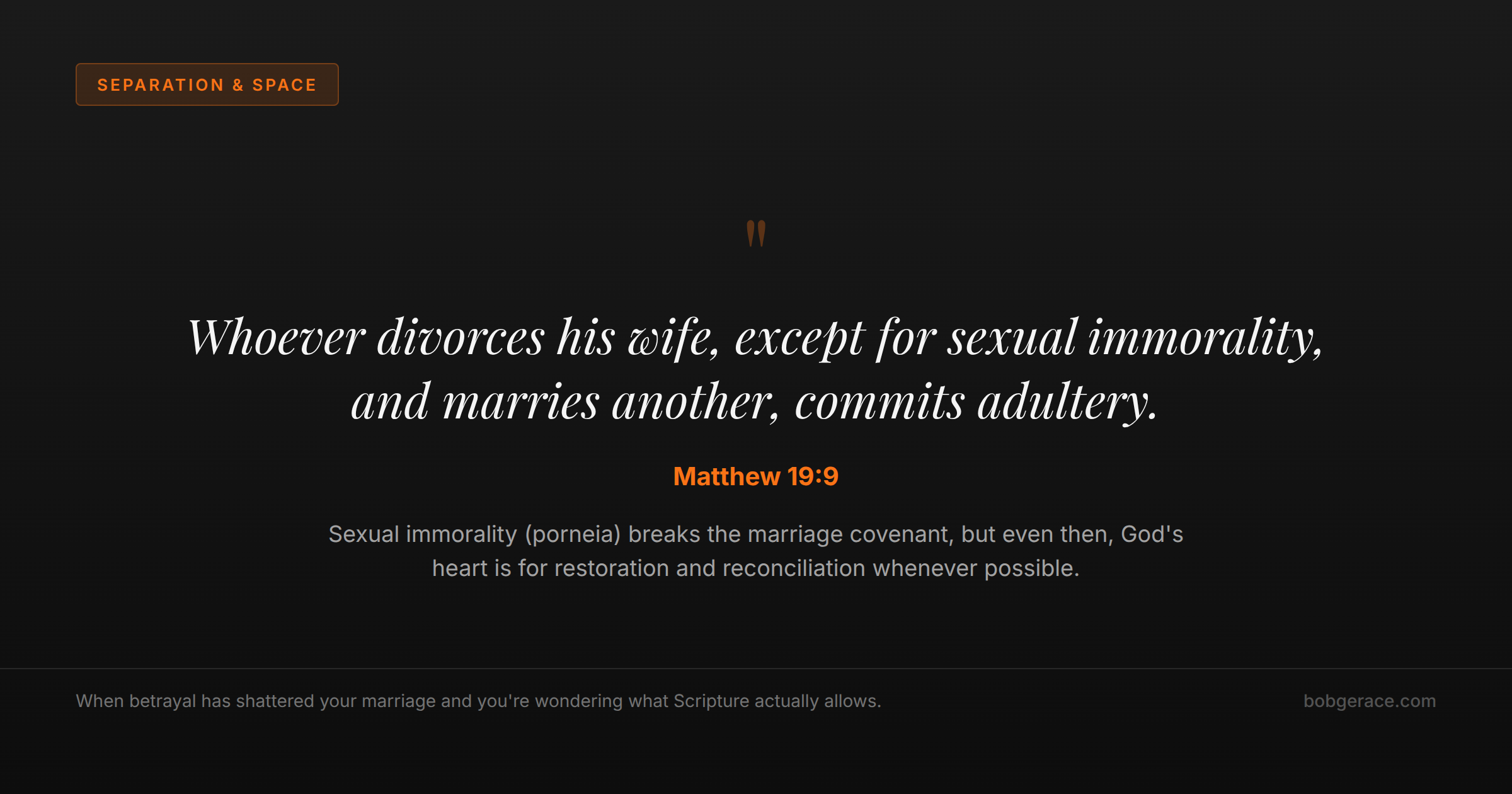
The exception clause refers to Jesus's words in Matthew 19:9: 'And I say to you: whoever divorces his wife, except for sexual immorality, and marries another, commits adultery.' This single phrase has generated centuries of debate among Christians about when divorce and remarriage are biblically permissible. The Greek word 'porneia' (sexual immorality) is broader than just adultery - it encompasses various forms of sexual unfaithfulness including adultery, prostitution, and other sexual sins that violate the marriage covenant. However, even with this exception, Jesus emphasizes that divorce should never be taken lightly, and reconciliation should always be the first goal when possible.
The Full Picture
The exception clause appears only in Matthew's Gospel (19:9 and 5:32), not in Mark or Luke's parallel accounts. This has led to extensive theological discussion about its meaning and application. Some scholars argue this clause was Matthew's addition for his Jewish audience, while others see it as an authentic word of Jesus that the other Gospel writers didn't include.
Three Main Interpretations:
1. The Betrothal View: Some believe 'porneia' refers specifically to unfaithfulness during the Jewish betrothal period, not marriage itself.
2. The Sexual Immorality View: The most common interpretation sees this as permission for divorce in cases of adultery or other serious sexual sins.
3. The Unlawful Marriage View: Others argue 'porneia' refers to marriages that were never valid according to Jewish law (like incestuous relationships).
What's crucial to understand is that even if the exception clause permits divorce in cases of sexual immorality, it doesn't mandate it. Many couples have worked through infidelity and rebuilt their marriages stronger than before. The clause provides permission, not a prescription.
The context matters enormously. The Pharisees were testing Jesus with a trick question about the competing rabbinic schools' views on divorce. Jesus redirected them back to God's original design for marriage as a permanent covenant, while acknowledging that human sinfulness sometimes makes divorce necessary.
Remember, Jesus consistently taught about forgiveness, redemption, and restoration. The exception clause should be understood within this broader framework of grace and healing.
What's Really Happening
From a therapeutic perspective, couples facing infidelity often get fixated on whether they have 'biblical grounds' for divorce rather than focusing on what would actually promote healing and restoration. This can create a legalistic mindset that misses the heart of what Jesus was teaching.
Infidelity creates what we call 'attachment trauma' - a deep wound to the emotional bond between spouses. The betrayed partner experiences symptoms similar to PTSD: intrusive thoughts, hypervigilance, emotional numbing, and difficulty trusting. The unfaithful partner often struggles with shame, guilt, and their own underlying issues that led to the betrayal.
While the exception clause may provide biblical permission for divorce, research consistently shows that couples who work through infidelity with proper support often emerge with stronger marriages. This process typically takes 2-5 years and requires both partners' commitment to healing.
The key factors for successful recovery include: the unfaithful partner taking full responsibility, demonstrating genuine remorse, and being completely transparent going forward. The betrayed partner must be willing to work toward forgiveness (which is a process, not an event) and engage in their own healing journey.
I've seen couples use the exception clause as either a weapon or an escape hatch, rather than truly seeking God's heart for their situation. The question shouldn't just be 'Can I get divorced?' but 'What does love, healing, and faithfulness look like in this specific situation?' Sometimes that leads to reconciliation, sometimes to separation with hope for restoration, and sometimes to divorce - but always with careful consideration, prayer, and wise counsel.
What Scripture Says
Scripture provides a consistent framework for understanding marriage, divorce, and God's heart for restoration:
God's Original Design: *'Therefore a man shall leave his father and mother and hold fast to his wife, and they shall become one flesh.'* - Genesis 2:24
Jesus's Teaching on the Exception: *'And I say to you: whoever divorces his wife, except for sexual immorality, and marries another, commits adultery.'* - Matthew 19:9
Paul's Additional Guidance: *'But if the unbelieving partner separates, let it be so. In such cases the brother or sister is not enslaved. God has called you to peace.'* - 1 Corinthians 7:15
The Call to Forgiveness: *'Be kind to one another, tenderhearted, forgiving one another, as God in Christ forgave you.'* - Ephesians 4:32
God's Heart for Restoration: *'The Lord is not slow to fulfill his promise as some count slowness, but is patient toward you, not wishing that any should perish, but that all should reach repentance.'* - 2 Peter 3:9
Wisdom in Decision-Making: *'Without counsel plans fail, but with many advisers they succeed.'* - Proverbs 15:22
The biblical framework shows that while God hates divorce (Malachi 2:16), He also understands human frailty and provides exceptions. The emphasis throughout Scripture is on forgiveness, restoration, and seeking God's wisdom through trusted counselors and spiritual leaders.
What To Do Right Now
-
1
Seek immediate pastoral counseling to process your situation with biblical wisdom and care
-
2
If infidelity has occurred, establish complete transparency and accountability for the unfaithful spouse
-
3
Focus on your own healing and relationship with God rather than rushing into major decisions
-
4
Engage in professional marriage counseling with a therapist who respects Christian values
-
5
Separate temporarily if needed for safety and clarity, but don't make permanent decisions while in crisis
-
6
Pray consistently for God's guidance and surround yourself with mature Christian friends who will speak truth in love
Related Questions
- What does Scripture say about divorce?
- Does adultery justify divorce?
- What did Jesus say about divorce?
- What is 'porneia' and what does it include?
- Does the exception clause allow divorce or require it?
- If I divorce, can I remarry?
- Should I forgive adultery?
- Does the Bible require me to stay after an affair?
- What does biblical forgiveness require of me?
- What's the difference between forgiveness and reconciliation?
Also find Bob on
Subscribe for weekly videos on Christian marriage.
Not Sure How This Applies to Your Marriage?
Theology is one thing. Your actual situation — what she did, what you're wrestling with, whether this changes anything — is another. A coach who knows your story can help you think through what's true and what's wise here.
Talk to Bob →