Is divorce a sin?
6 min read
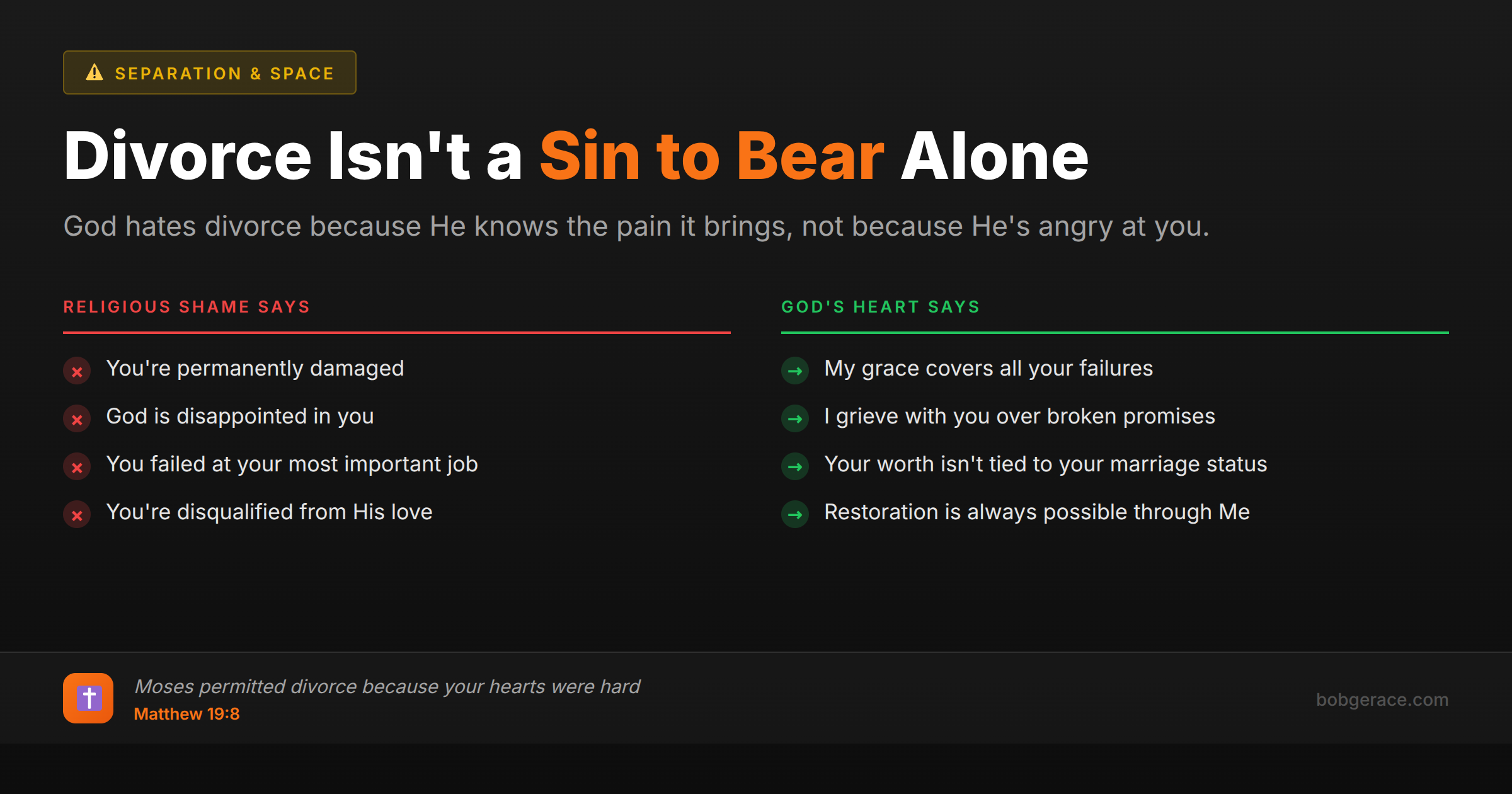
Divorce itself isn't classified as a sin in Scripture, but it represents the breakdown of God's design for lifelong marriage. The Bible is clear that God hates divorce (Malachi 2:16) because it destroys what He intended to be permanent, yet Jesus acknowledged that divorce happens due to hardness of heart (Matthew 19:8). The real issue isn't whether divorce is technically sinful, but that it reflects our fallen world where covenant promises get broken. God's heart breaks over broken marriages, not because He's angry at divorced people, but because He knows the pain and destruction that follows. If you're facing divorce, God's grace is sufficient, His love is unconditional, and restoration - whether of your marriage or your heart - is always possible through Christ.
The Full Picture
Let's cut through the religious noise and get to the heart of this question. Divorce isn't listed among the sins in Scripture like adultery, theft, or murder. Instead, it's described as something God hates - not because He's looking to condemn people, but because He knows the devastation it brings.
Think of it this way: God doesn't hate cancer, but He hates what cancer does to families. Similarly, God doesn't hate divorced people, but He hates what divorce does to His design for marriage and family. The distinction matters enormously.
Jesus addressed this directly when the Pharisees tried to trap Him. He pointed back to God's original design - one man, one woman, for life - but then acknowledged that divorce certificates were given "because of hardness of heart." This wasn't God's Plan A, but He made provision for it in a broken world.
Here's what's really happening: Marriage is meant to be a living picture of Christ's relationship with the church - permanent, sacrificial, covenant love. When marriages fail, that picture gets distorted. The tragedy isn't just relational; it's spiritual and generational.
But - and this is crucial - God's grace is bigger than our failures. Many people in Scripture had complicated marriage situations. David, Solomon, even the woman at the well whom Jesus treated with incredible compassion. God doesn't write people off because their marriages didn't work out.
The question isn't really whether divorce is a sin. The better question is: How do we honor God in our marriages today, and how do we extend His grace to those whose marriages have fallen apart? Both matter deeply to God's heart.
What's Really Happening
From a clinical perspective, the question "Is divorce a sin?" often masks deeper psychological wounds and religious trauma. Many clients come to therapy carrying enormous shame, believing they've committed an unforgivable act simply because their marriage ended.
This shame becomes toxic when it prevents people from processing grief, learning from relationship patterns, or building healthy future relationships. The psychological impact of viewing divorce as sin often causes more damage than the divorce itself.
What I see clinically is that marriages typically end due to a complex web of factors: attachment injuries, unresolved trauma, communication breakdowns, addiction, abuse, or fundamental incompatibilities that weren't addressed. Reducing this complexity to "sin" oversimplifies the human experience and can prevent healing.
The healthiest approach focuses on responsibility without shame. Yes, both partners usually contribute to marital breakdown in some way. But taking responsibility for your part doesn't require carrying the burden of "sinfulness" that many religious communities impose.
Interestingly, clients who can separate their identity from their marital status heal faster and build stronger subsequent relationships. They learn to see divorce as a painful life transition rather than a moral failure. This perspective allows them to grieve appropriately, learn from mistakes, and move forward with wisdom rather than being paralyzed by religious guilt.
The most destructive element I encounter is when religious shame prevents people from seeking help, whether therapeutic, spiritual, or practical, when their marriages are in crisis.
What Scripture Says
Scripture presents a nuanced view of divorce that's often oversimplified in religious circles. Let's look at what God actually says:
God's Heart on Divorce: "'I hate divorce,' says the Lord God of Israel" (Malachi 2:16). This isn't hatred toward divorced people, but toward the breaking of covenant promises and the pain that follows.
Jesus on Divorce: "Moses permitted you to divorce your wives because your hearts were hard. But it was not this way from the beginning" (Matthew 19:8). Jesus acknowledges that divorce happens in a fallen world while pointing back to God's original design.
Biblical Grounds for Divorce: Jesus mentioned sexual immorality: "Anyone who divorces his wife, except for sexual immorality, and marries another woman commits adultery" (Matthew 19:9). Paul added abandonment by an unbeliever (1 Corinthians 7:15).
God's Grace Toward the Divorced: Jesus showed incredible compassion to the woman at the well who had five husbands (John 4). He didn't condemn her but offered living water - hope and new life.
The Bigger Picture: "Therefore, there is now no condemnation for those who are in Christ Jesus" (Romans 8:1). Whatever mistakes we've made in marriage, God's grace is sufficient.
God's Design Still Stands: "What God has joined together, let no one separate" (Matthew 19:6). This remains the goal - marriages that reflect Christ's love for the church, permanent and sacrificial.
Scripture calls us to fight for marriage while extending grace to those whose marriages have failed. Both matter to God's heart.
What To Do Right Now
-
1
Stop carrying shame that God never intended you to bear - His grace covers all failures
-
2
If you're married and struggling, get help immediately - don't wait until it's too late
-
3
Seek biblical counseling that addresses both spiritual and practical marriage issues
-
4
Focus on your own heart and actions rather than your spouse's failures
-
5
If divorced, process your grief and learn from the experience without self-condemnation
-
6
Surround yourself with grace-filled community that supports healing and growth
Related Questions
- What does Scripture say about divorce?
- Does God hate divorce?
- What did Jesus say about divorce?
- Does adultery justify divorce?
- If I divorce, can I remarry?
- What is 'porneia' and what does it include?
- What does biblical forgiveness require of me?
- Does God want me to stay in this marriage?
- What does faithfulness require when she won't reciprocate?
Also find Bob on
Subscribe for weekly videos on Christian marriage.
Your Marriage Isn't a Theology Question
It's a real situation with a real woman and real kids. A coach who knows your specific story can help you see what's actually happening—and what to do next.
Talk to Bob →