What do affair statistics actually say?
6 min read
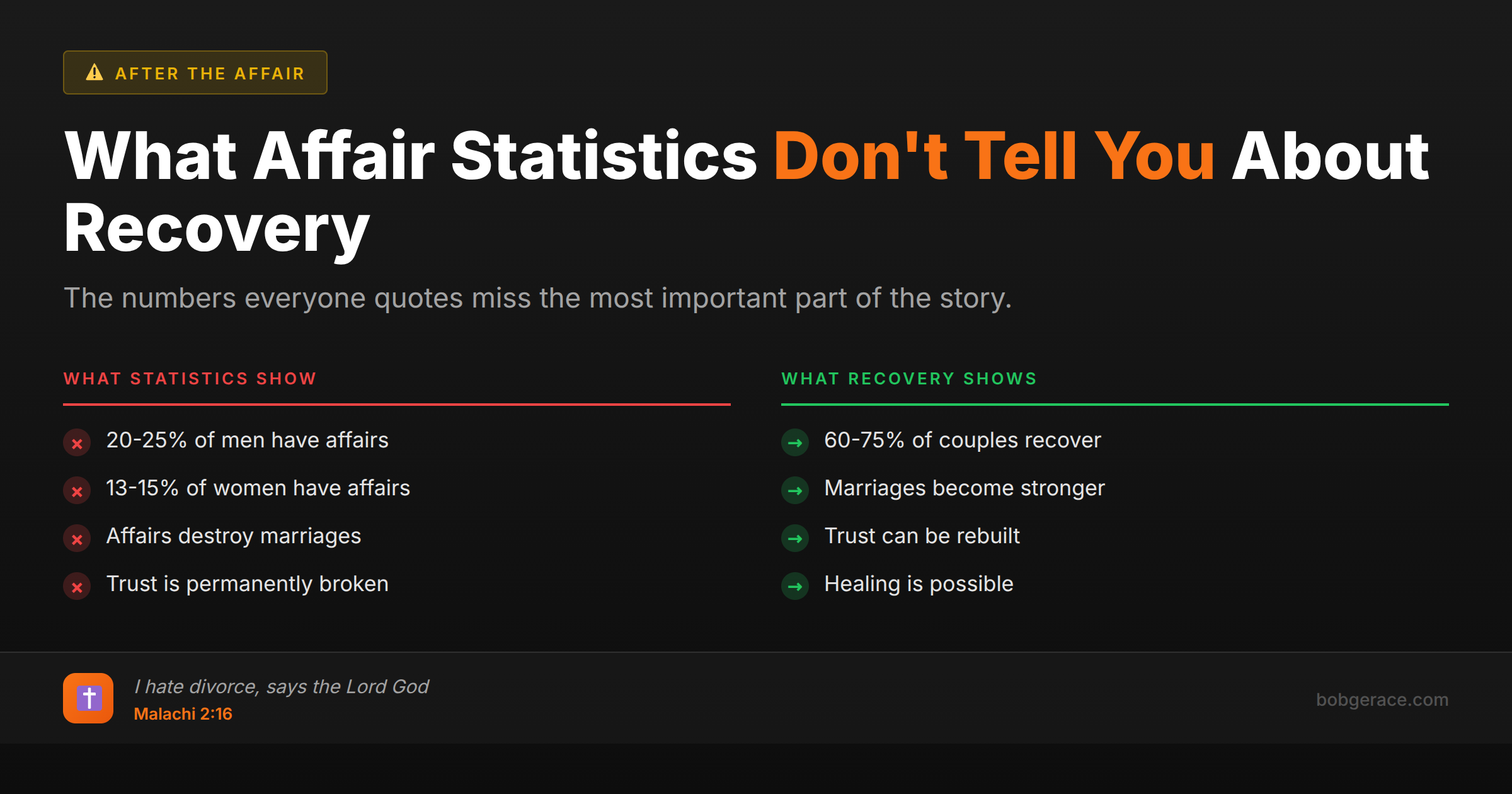
Affair statistics paint a complex picture that's both sobering and hopeful. Research consistently shows that 20-25% of married men and 13-15% of married women report having extramarital affairs during their lifetime. However, these numbers vary significantly based on how affairs are defined, the demographics studied, and whether emotional affairs are included alongside physical ones. What's more important than the raw numbers is what the research reveals about patterns and recovery. Studies show that marriages can and do survive infidelity - with proper intervention, 60-75% of couples who work through an affair report their marriage becoming stronger than before. The key factors aren't the statistics themselves, but how couples respond, seek help, and commit to the rebuilding process.
The Full Picture
The Numbers Behind Infidelity
When we dig into affair statistics, we need to understand what we're actually measuring. The most cited research comes from the General Social Survey, which has tracked American behavior since 1972. Their data shows that approximately 20-25% of married men and 13-15% of married women admit to having extramarital sexual relationships during their marriage.
But here's where it gets complicated - and more concerning. When researchers expand the definition to include emotional affairs, sexting, or online relationships, those numbers jump dramatically. Some studies suggest that up to 35-40% of marriages deal with some form of infidelity when we include these broader categories.
Demographic Patterns
The research reveals some clear patterns. Affairs are more common in certain situations: marriages with significant age gaps, couples who married young, those with substantial income differences, and relationships where one partner travels frequently for work. Interestingly, affairs peak during midlife transitions - particularly around ages 35-45 for both men and women.
What's encouraging is the trend data. Despite what popular culture might suggest, affair rates have remained relatively stable over the past 30 years and may even be declining slightly among younger generations.
The Recovery Reality
Here's what gives me hope in this work: research consistently shows that marriages can not only survive affairs but emerge stronger. Studies indicate that 60-75% of couples who receive proper counseling and commit to the process report improved marriages post-affair. The key word there is "commit" - recovery requires both partners to do the hard work of rebuilding trust, communication, and intimacy.
What's Really Happening
As a therapist who has worked with hundreds of couples dealing with infidelity, I can tell you that statistics only tell part of the story. What matters more than the numbers is understanding the underlying dynamics that make affairs possible and the factors that determine recovery outcomes.
In my clinical experience, affairs rarely happen in healthy, connected marriages. They're typically symptomatic of deeper issues: emotional disconnection, unresolved conflicts, individual mental health struggles, or major life transitions. The affair becomes the //blog.bobgerace.com/christian-marriage-identity-crisis-stop-living-from-wounds/:crisis that forces couples to address problems they've been avoiding for years.
What's particularly important to understand is that affair recovery follows predictable stages. Initial discovery brings trauma-like symptoms for the betrayed partner - and yes, it is actual trauma. The unfaithful partner often experiences their own crisis as reality sets in. But with proper support, most couples can navigate through the shock phase into productive healing work.
The couples who recover successfully share common characteristics: they seek help quickly, the unfaithful partner takes full responsibility, both commit to complete transparency, and they're willing to address the underlying marital issues that created vulnerability. Those who try to "just move on" without doing this deeper work typically struggle long-term.
Perhaps most importantly, recovery isn't about returning to the marriage you had - it's about building something entirely new together.
What Scripture Says
Scripture doesn't sugarcoat the reality of adultery or its consequences, but it also provides a clear path toward healing and restoration. God's design for marriage is sacred, and violations of that covenant are serious - but they're not beyond redemption.
The Seriousness of the Covenant
"'I hate divorce,' says the Lord God of Israel" (Malachi 2:16). Marriage represents the covenant relationship between Christ and His church, making faithfulness not just a personal commitment but a reflection of God's character. When Jesus addressed adultery in Matthew 5:27-28, He made clear that faithfulness involves both our actions and our hearts.
The Reality of Forgiveness
"Be kind and compassionate to one another, forgiving each other, just as in Christ God forgave you" (Ephesians 4:32). The call to forgiveness doesn't minimize the betrayal or eliminate consequences, but it opens the door to healing. Peter's question about forgiving "seven times" receives Jesus's response of "seventy-seven times" (Matthew 18:22) - pointing to the limitless nature of grace in restoration.
The Process of Restoration
"If your brother or sister sins, go and point out their fault, just between the two of you. If they listen to you, you have won them over" (Matthew 18:15). Biblical restoration requires acknowledgment of wrong, genuine repentance, and commitment to change. "Godly sorrow brings repentance that leads to salvation and leaves no regret" (2 Corinthians 7:10).
The Hope of Renewal
"Therefore, if anyone is in Christ, the new creation has come: The old has gone, the new is here!" (2 Corinthians 5:17). Scripture consistently points toward the possibility of redemption and renewal, even from the deepest betrayals.
What To Do Right Now
-
1
Stop seeking more statistics and start focusing on your specific situation - numbers won't heal your marriage
-
2
Get professional help immediately from a therapist experienced in affair recovery, not general counseling
-
3
If you're the unfaithful spouse, take full responsibility without minimizing or blaming circumstances
-
4
If you're the betrayed spouse, prioritize your emotional and physical health while processing the trauma
-
5
Establish complete transparency and accountability systems - no exceptions or gradual disclosure
-
6
Commit to the long-term process understanding that recovery typically takes 18-24 months minimum
Related Questions
Don't Navigate This Crisis Alone
Statistics can't save your marriage, but the right guidance and support can. Get the expert help you need to move from crisis to recovery.
Get Help Now →