What are the most common reasons women have affairs?
6 min read
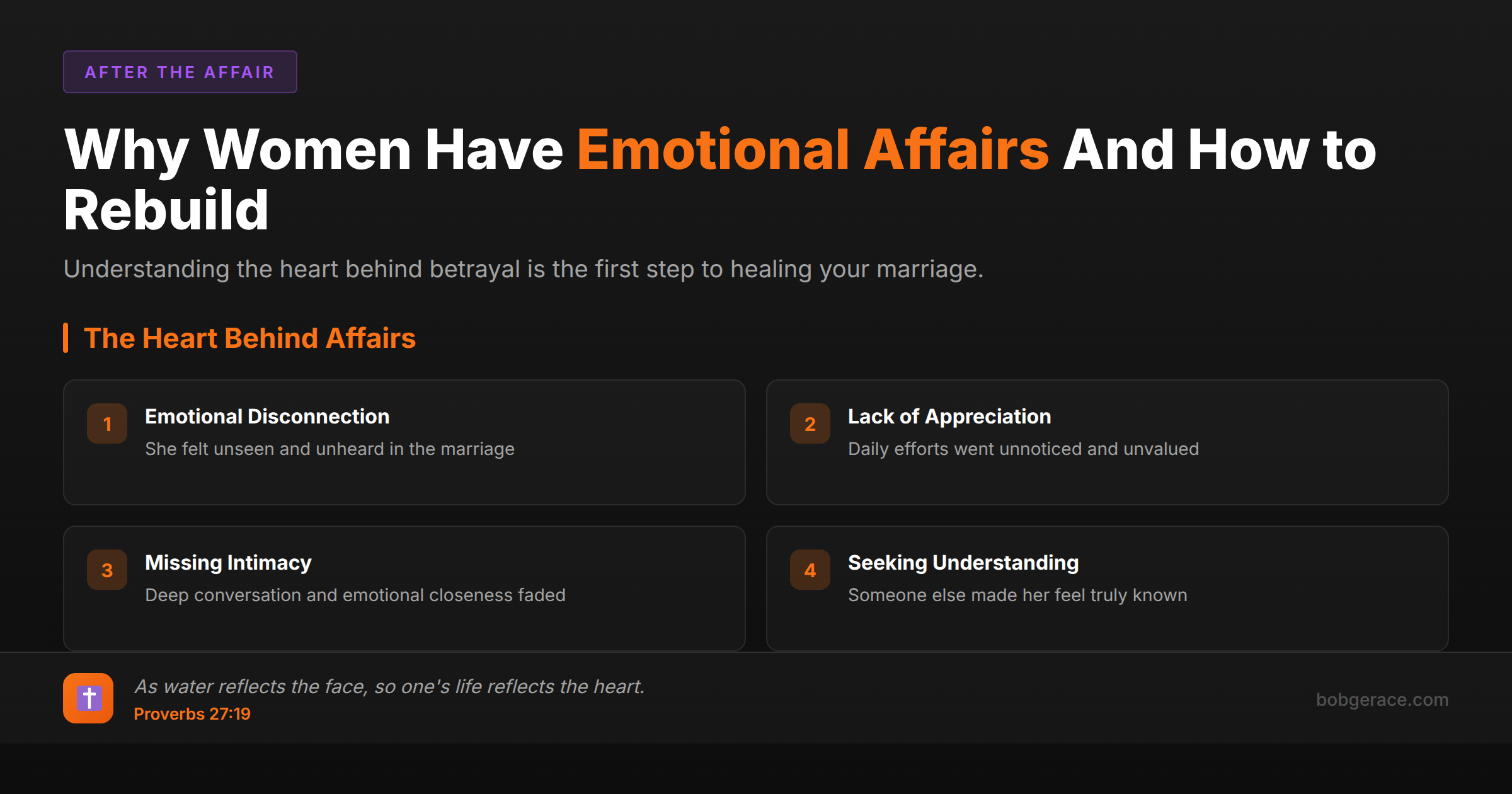
Research consistently shows that women typically have affairs for emotional reasons rather than purely physical ones. The most common factors include feeling emotionally disconnected from their spouse, lack of appreciation or validation, insufficient emotional intimacy, and unmet needs for communication and understanding. Unlike men who may have affairs primarily for physical reasons, women generally seek emotional fulfillment, feeling valued, and deeper connection. Other significant factors include feeling taken for granted, experiencing a lack of romance or affection, going through major life transitions, or finding someone who makes them feel understood and appreciated in ways their marriage currently doesn't.
The Full Picture
Understanding why women have affairs requires looking beyond surface explanations to deeper relational dynamics. Research from marriage therapists and relationship studies reveals several consistent patterns.
The primary driver is emotional disconnection. When women feel like roommates rather than lovers with their husbands, when conversations become purely functional, or when emotional intimacy erodes, vulnerability to outside connection increases significantly. This isn't about weakness—it's about fundamental human needs for connection and understanding.
Feeling unappreciated and taken for granted ranks as another major factor. Women who consistently give to their families, manage households, and support their husbands without recognition or gratitude often feel invisible in their own marriages. When someone outside the marriage notices and appreciates them, it can feel like coming alive again.
Physical and emotional intimacy deficits also play crucial roles. This goes beyond just sexual frequency—it includes affection, quality time, meaningful conversation, and feeling desired and cherished. When these elements disappear from marriage, women may seek them elsewhere.
Life transitions create particular vulnerability periods. Career changes, children leaving home, health issues, or aging can trigger identity questions and make women more susceptible to connections that make them feel young, attractive, or valued again.
Communication breakdowns consistently appear in affair research. When women feel unheard, dismissed, or unable to express their needs effectively in marriage, they may find someone who listens and validates their experiences.
Finally, opportunity combined with emotional need creates the perfect storm. Workplace relationships, old friendships rekindled through social media, or new connections during vulnerable seasons can quickly become more than intended when emotional needs aren't being met at home.
What's Really Happening
In my practice, I see a clear pattern with women who have had affairs: they describe feeling emotionally starved in their marriages long before any outside relationship began. The affair often represents an attempt to meet legitimate needs in illegitimate ways.
What's crucial to understand is that affairs rarely happen overnight. There's typically a gradual process of emotional distance in the marriage, followed by increased connection with someone else. Women often describe the progression as friendship turning to emotional intimacy, then to romantic feelings, and finally to physical involvement.
The psychological dynamic frequently involves what I call 'comparative relief'—the other relationship feels so much easier and more fulfilling than the marriage that it becomes intoxicating. This person listens without judgment, shows interest in her thoughts and feelings, and makes her feel attractive and valued.
I also observe that women who have affairs often struggle with direct communication about their needs in marriage. Rather than clearly expressing dissatisfaction or requesting changes, they may hint, withdraw, or expect their husbands to intuitively understand what's missing. This communication pattern contributes to the emotional distance that makes affairs more likely.
The shame and guilt women experience during and after affairs is typically intense because it conflicts with their self-image and values. Many describe feeling like they're living a double life, which creates additional psychological stress and further distances them //blog.bobgerace.com/christian-marriage-identity-crisis-stop-living-from-wounds/:from their marriage.
Recovery requires addressing both the affair itself and the underlying marital dynamics that contributed to vulnerability. Simply ending the outside relationship without rebuilding emotional connection in the marriage often leads to continued marital dissatisfaction.
What Scripture Says
Scripture addresses the heart issues underlying affairs with both clarity and compassion. Proverbs 27:19 tells us, *"As water reflects the face, so one's life reflects the heart."* Affairs often reflect hearts that have grown distant from God and spouse, seeking fulfillment in wrong places.
The Bible acknowledges the power of emotional and physical temptation. 1 Corinthians 7:3-5 instructs, *"The husband should fulfill his marital duty to his wife, and likewise the wife to her husband... Do not deprive each other except perhaps by mutual consent and for a time, so that you may devote yourselves to prayer. Then come together again so that Satan will not tempt you because of your lack of self-control."* This passage recognizes that unmet needs in marriage can create vulnerability.
Jeremiah 17:9 reminds us, *"The heart is deceitful above all things and beyond cure. Who can understand it?"* Affairs often involve self-deception—rationalizing wrong choices by focusing on unmet needs rather than taking responsibility for choosing unfaithfulness.
However, Scripture also offers hope for restoration. Joel 2:25 promises, *"I will repay you for the years the locusts have eaten."* God can restore marriages devastated by infidelity when both spouses commit to His design for marriage.
Ephesians 5:25-33 provides God's blueprint for marriage relationships that prevent affairs: husbands loving wives sacrificially, wives respecting husbands, and both pursuing emotional and physical intimacy. When these biblical principles are practiced, marriages become affair-resistant.
1 John 1:9 offers the foundation for healing: *"If we confess our sins, he is faithful and just and will forgive us our sins and purify us from all unrighteousness."* Both confession and forgiveness are essential for rebuilding trust and intimacy after betrayal.
What To Do Right Now
-
1
Acknowledge the full truth about what happened and why, taking responsibility without blaming your spouse for the choice to have an affair
-
2
End all contact with the affair partner immediately and permanently—no exceptions, explanations, or gradual fade-outs
-
3
Commit to complete transparency with your spouse, including passwords, schedules, and whereabouts as you rebuild trust
-
4
Seek professional marriage counseling to address both the affair and the underlying marital issues that created vulnerability
-
5
Identify the specific unmet needs and communication patterns that contributed to the affair, developing healthier ways to address them
-
6
Focus on rebuilding emotional and physical intimacy in your marriage through consistent daily connection and investment
Related Questions
- Why did she cheat?
- Is it about sex or emotion?
- What's the difference between emotional and physical affairs?
- What is 'attachment affair' vs. 'exit affair'?
- What role did our relationship problems play?
- What role did her individual issues play?
- She says she loves me but isn't 'in love'
- When did she stop caring?
- She brings up things from years ago
- What is 'accumulated resentment'?
Also find Bob on
Subscribe for weekly videos on Christian marriage.
Your Marriage Isn't a Case Study
A coach who knows your specific situation can help you see what's actually happening in your marriage — and what to do about it.
Talk to Bob →