What is 'opportunity + dissatisfaction' model?
5 min read
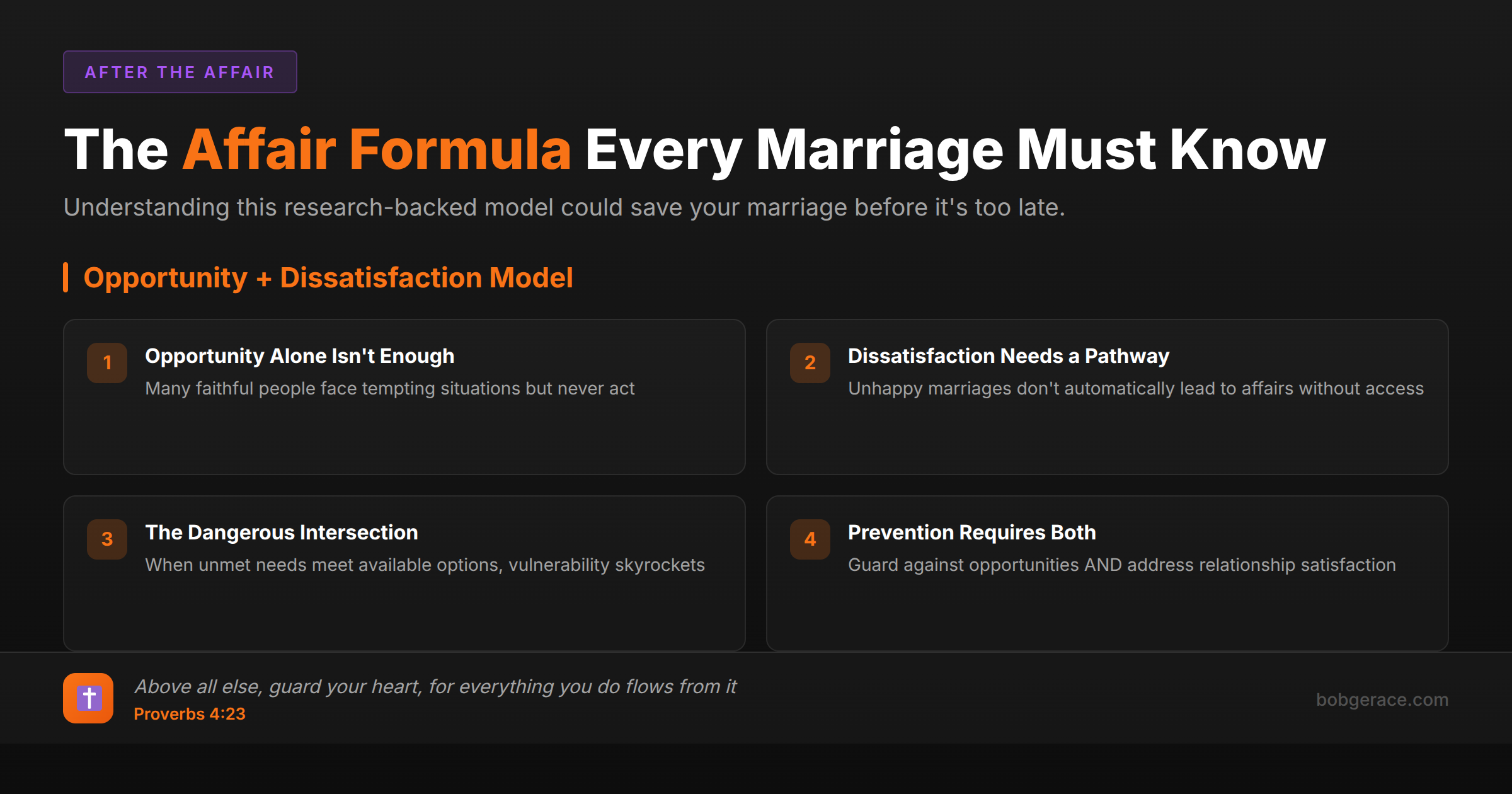
The 'opportunity + dissatisfaction' model is a research-based framework explaining how affairs develop. It suggests that infidelity occurs when two key factors intersect: available opportunity (access to potential partners, unsupervised time, situations that foster intimacy) and relationship dissatisfaction (unmet needs, emotional distance, ongoing conflict). This model helps explain why some people in unhappy marriages never have affairs (lack of opportunity) while others in seemingly good marriages do (high opportunity despite lower dissatisfaction). Neither factor alone typically leads to infidelity, but their combination creates significant vulnerability. Understanding this model helps couples identify and address both risk factors proactively.
The Full Picture
Research consistently shows that affairs don't happen in a vacuum. The opportunity + dissatisfaction model, developed through extensive studies of unfaithful partners, reveals that infidelity typically requires both available opportunity and relationship dissatisfaction to converge.
Opportunity factors include: - Work relationships with attractive colleagues - Travel or time away from spouse - Social media and online connections - Recreational activities without spouse - Life transitions creating new social circles - Situations involving emotional vulnerability or shared experiences
Dissatisfaction factors include: - Feeling emotionally disconnected from spouse - Unresolved conflict patterns - Sexual frustration or incompatibility - Feeling unappreciated or taken for granted - Major life stressors affecting the marriage - Different life goals or values becoming apparent
What makes this model particularly valuable is understanding that high opportunity can override lower dissatisfaction, and vice versa. A moderately dissatisfied spouse might never stray without significant opportunity. Conversely, someone in a decent marriage might be vulnerable if overwhelming opportunity presents itself during a temporarily difficult period.
The model also explains why affair prevention requires addressing both elements. Simply improving marriage satisfaction isn't enough if you ignore opportunity factors. Likewise, limiting opportunities without addressing underlying dissatisfaction leaves relationships vulnerable when circumstances change.
What's Really Happening
In my practice, I see this model play out consistently. Clients often ask, 'How could this happen?' The opportunity + dissatisfaction framework provides clear answers and, more importantly, a roadmap for both prevention and recovery.
What's crucial to understand is that opportunity is often underestimated. Many couples //blog.bobgerace.com/marriage-focus-systems-christian-husband/:focus solely on relationship satisfaction while ignoring how modern life creates unprecedented opportunities for emotional and physical intimacy outside marriage. Social media, workplace dynamics, and increased travel create scenarios previous generations rarely faced.
I've observed that affairs often begin during transition periods - new jobs, relocations, children leaving home, or health crises. These transitions simultaneously increase opportunities (new social circles, emotional vulnerability) and temporary dissatisfaction (stress, change-related conflict).
The model also reveals why affair prevention requires intentionality. Couples who successfully navigate high-risk periods typically have explicit conversations about boundaries, maintain strong emotional connection during stressful times, and make conscious choices about opportunity management.
For couples recovering from infidelity, this framework helps eliminate the mystery and shame. Understanding how opportunity and dissatisfaction intersected in their specific situation enables them to build targeted safeguards. It transforms the question from 'How could you do this?' to 'How do we prevent these conditions from aligning again?'
What Scripture Says
Scripture clearly addresses both elements of this model - the importance of guarding against temptation (opportunity) and maintaining strong marriages (addressing dissatisfaction).
Regarding opportunity and temptation: *"Above all else, guard your heart, for everything you do flows from it"* (Proverbs 4:23). This verse emphasizes our responsibility to actively protect ourselves from situations that compromise our integrity.
*"No temptation has overtaken you except what is common to mankind. And God is faithful; he will not let you be tempted beyond what you can bear. But when you are tempted, he will also provide a way out so that you can endure it"* (1 Corinthians 10:13). God acknowledges temptation's reality while promising we always have choices.
Regarding marriage satisfaction: *"Husbands, love your wives as Christ loved the church and gave himself up for her"* (Ephesians 5:25). This calls husbands to sacrificial, intentional love that addresses wives' deepest needs.
*"The husband should fulfill his marital duty to his wife, and likewise the wife to her husband"* (1 Corinthians 7:3). This addresses the importance of meeting each other's physical and emotional needs.
*"Above all, love each other deeply, because love covers over a multitude of sins"* (1 Peter 4:8). Strong love provides resilience against both internal dissatisfaction and external opportunities.
*"Be alert and of sober mind. Your enemy the devil prowls around like a roaring lion looking for someone to devour"* (1 Peter 5:8). This reminds us that marriage faces real spiritual opposition requiring vigilance and preparation.
What To Do Right Now
-
1
Assess current opportunities - Honestly evaluate situations in your life that could foster inappropriate emotional or physical intimacy with someone other than your spouse
-
2
Have the boundary conversation - Discuss with your spouse what boundaries you both commit to regarding opposite-sex friendships, social media, and potentially compromising situations
-
3
Address relationship dissatisfaction directly - Identify areas where you or your spouse feel disconnected, unappreciated, or unfulfilled and create specific action plans
-
4
Increase emotional intimacy - Schedule regular one-on-one time for meaningful conversation without phones, kids, or distractions to strengthen your connection
-
5
Create accountability systems - Whether through trusted friends, mentors, or counselors, establish relationships that help you maintain your commitments
-
6
Develop 'emergency protocols' - Plan how you'll handle unexpected high-risk situations like business trips, emotional crises, or times when you're particularly vulnerable to temptation
Related Questions
- What are the most common reasons women have affairs?
- What is 'attachment affair' vs. 'exit affair'?
- What role did our relationship problems play?
- What role did her individual issues play?
- Is there a typical 'affair profile' for women?
- How does attachment style relate to affair risk?
- She says she loves me but isn't 'in love'
- When did she stop caring?
- She brings up things from years ago
- What is 'accumulated resentment'?
Also find Bob on
Subscribe for weekly videos on Christian marriage.
Don't Map This Alone
A coach who knows your marriage can see which vulnerabilities actually matter in your situation—and help you close them before they compound.
Talk to Bob →