How does attachment style relate to affair risk?
6 min read
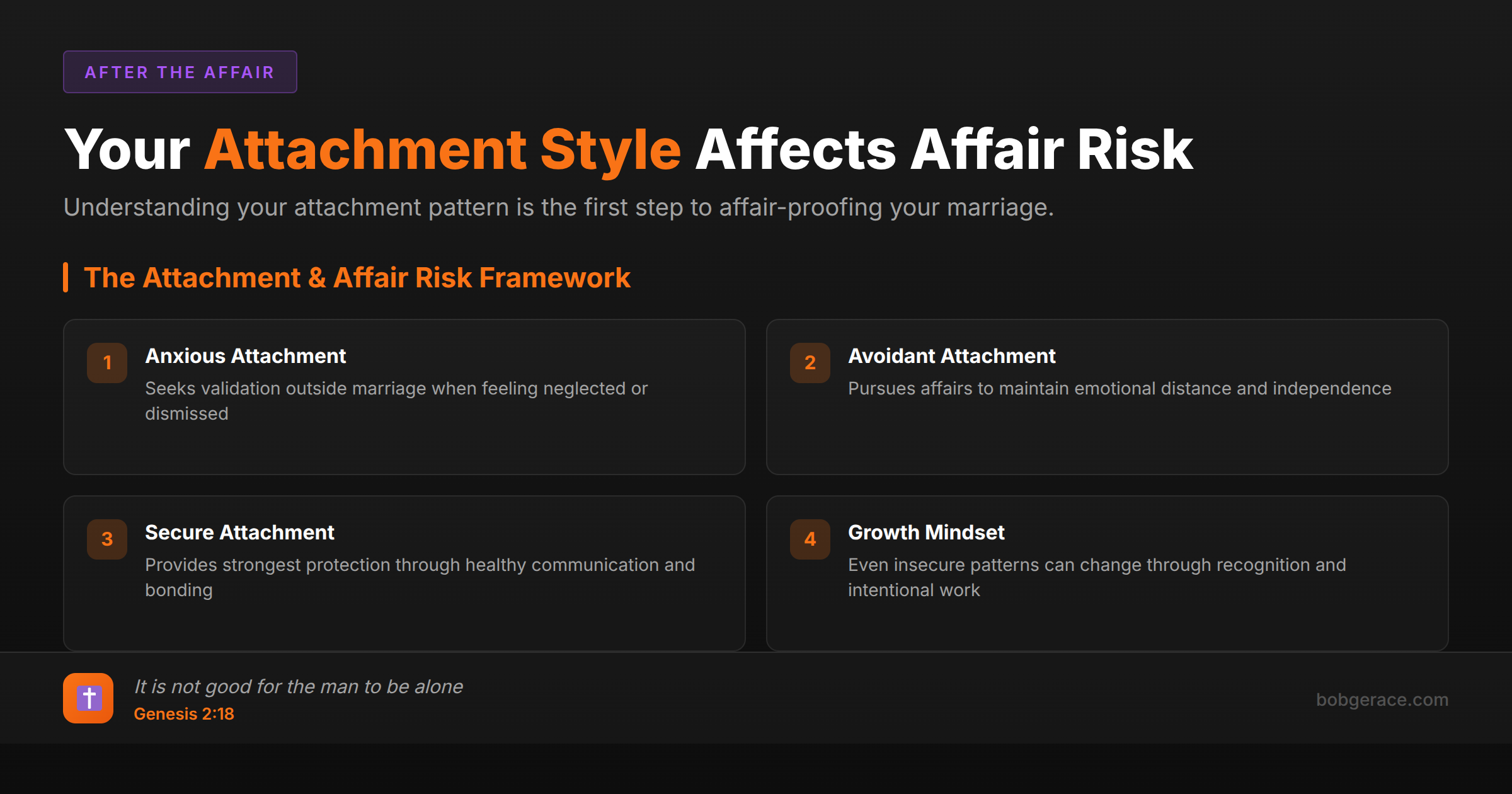
Your attachment style—formed in early childhood and reinforced through relationships—significantly impacts your vulnerability to affairs. Those with anxious attachment often seek validation outside marriage when feeling neglected, while avoidant individuals may pursue affairs to maintain emotional distance. Secure attachment provides the strongest protection against infidelity. However, attachment style isn't destiny. Even if you have an insecure attachment pattern, you can learn to recognize your triggers, communicate needs effectively, and build stronger emotional bonds with your spouse. Understanding these patterns is the first step toward creating a more secure, affair-resistant marriage.
The Full Picture
Attachment styles are deeply ingrained patterns of how we connect with others, formed in our earliest relationships and carried into marriage. Research consistently shows that certain attachment patterns create higher vulnerability to infidelity, but understanding this connection empowers you to change the trajectory of your marriage.
Anxious attachment creates the highest affair risk. If you have this style, you likely crave closeness but fear abandonment. When your spouse seems distant or unavailable, you may interpret this as rejection and seek validation elsewhere. The affair partner provides the intense attention and reassurance you're desperately seeking, temporarily soothing your attachment wounds.
Avoidant attachment presents a different but significant risk. You value independence and struggle with emotional intimacy. Affairs can feel safer than deepening your marriage because they maintain distance while meeting physical needs. You may compartmentalize the affair, convincing yourself it doesn't affect your primary relationship.
Disorganized attachment combines elements of both anxious and avoidant patterns, creating unpredictable relationship behaviors. This inconsistency can lead to impulsive decisions, including affairs, especially during times of high stress or conflict.
Secure attachment offers the strongest protection. You're comfortable with intimacy and independence, communicate needs directly, and work through problems rather than escaping them. However, even securely attached individuals can become vulnerable during major life transitions or prolonged marital neglect.
The good news? Attachment patterns can change through conscious effort and new relationship experiences. Your marriage can become the place where healing happens.
What's Really Happening
From a clinical perspective, attachment style acts as a relationship template—an unconscious blueprint that guides how we interpret our partner's behavior and respond to relationship threats. When someone has an affair, they're often trying to regulate emotions or meet needs in ways their attachment system has programmed them to seek.
Anxiously attached individuals have hyperactive attachment systems. They're constantly scanning for signs of relationship threat and tend to catastrophize their partner's behavior. A delayed text //blog.bobgerace.com/theater-response-christian-marriage-crisis-communication/:response becomes evidence of rejection. Normal relationship fluctuations feel like abandonment. The affair partner's intense focus provides the regulatory function they're seeking—proof they're worthy of love and attention.
Avoidantly attached individuals have deactivated attachment systems. They've learned that emotional needs are dangerous or unwelcome, so they suppress vulnerability and maintain distance. Affairs can serve as a way to meet physical needs without emotional risk. They may genuinely believe they can compartmentalize the affair without it affecting their marriage.
What's crucial to understand is that these patterns operate largely outside conscious awareness. The person having an affair often doesn't recognize how their attachment wounds are driving their behavior. They may rationalize their choices, but underneath, they're following deeply ingrained patterns of seeking safety or connection.
The therapeutic goal isn't to excuse the affair but to understand the underlying attachment needs driving the behavior. When couples can identify and address these core patterns, they can build a marriage that actually meets both partners' attachment needs, dramatically reducing future affair risk.
What Scripture Says
Scripture reveals God's design for secure attachment within marriage, offering both warning and hope for those struggling with insecure patterns.
God created us for connection: "The Lord God said, 'It is not good for the man to be alone. I will make a helper suitable for him'" (Genesis 2:18). Your need for attachment isn't weakness—it's how God designed you. The challenge is learning to meet those needs within the covenant of marriage rather than seeking them elsewhere.
Jesus modeled secure attachment with His disciples, showing consistent love while maintaining healthy boundaries. "As the Father has loved me, so have I loved you. Now remain in my love" (John 15:9). This demonstrates how secure love provides both connection and stability—the foundation every marriage needs.
Scripture warns against the deception of seeking connection outside marriage: "Can a man scoop fire into his lap without his clothes being burned?" (Proverbs 6:27). Affairs promise to meet attachment needs but ultimately create more insecurity and pain.
God offers healing for our deepest wounds: "He heals the brokenhearted and binds up their wounds" (Psalm 147:3). Your attachment injuries—whether from childhood or previous relationships—can be healed through God's love and expressed through your marriage covenant.
The call is to sacrificial love that creates security: "Husbands, love your wives as Christ loved the church and gave himself up for her" (Ephesians 5:25). When both spouses commit to meeting each other's attachment needs through consistent, sacrificial love, they create the secure bond that protects against infidelity.
What To Do Right Now
-
1
Identify your attachment style through honest self-reflection or assessment tools, paying attention to your typical responses to relationship stress
-
2
Recognize your specific triggers that activate insecure attachment responses, such as your spouse being busy or emotionally distant
-
3
Communicate your attachment needs clearly to your spouse instead of expecting them to guess or hoping someone else will meet them
-
4
Create daily connection rituals that provide consistent attachment security, like morning check-ins or evening debriefs without distractions
-
5
Develop healthy self-soothing strategies for when your attachment system is activated, such as prayer, deep breathing, or positive self-talk
-
6
Seek professional help if attachment wounds are severely impacting your marriage or if you're struggling with affair temptation
Related Questions
- What role did her individual issues play?
- What is 'attachment affair' vs. 'exit affair'?
- What attachment needs was the affair meeting?
- What does affair as 'attachment substitute' mean?
- How do attachment injuries make affairs more likely?
- What is 'anxious-avoidant trap' and did we have it?
- What is anxious attachment and am I doing it right now?
- What attachment style did I develop in childhood?
- What is 'earned secure' vs. 'earned insecure'?
- How do childhood attachment wounds show up in marriage?
Also find Bob on
Subscribe for weekly videos on Christian marriage.
Your Attachment Pattern Isn't Your Marriage's Fate
A coach who knows your specific history can help you rewire the patterns that put you at risk—without guessing what applies to you.
Talk to Bob →