Can deactivated attachment reactivate?
6 min read
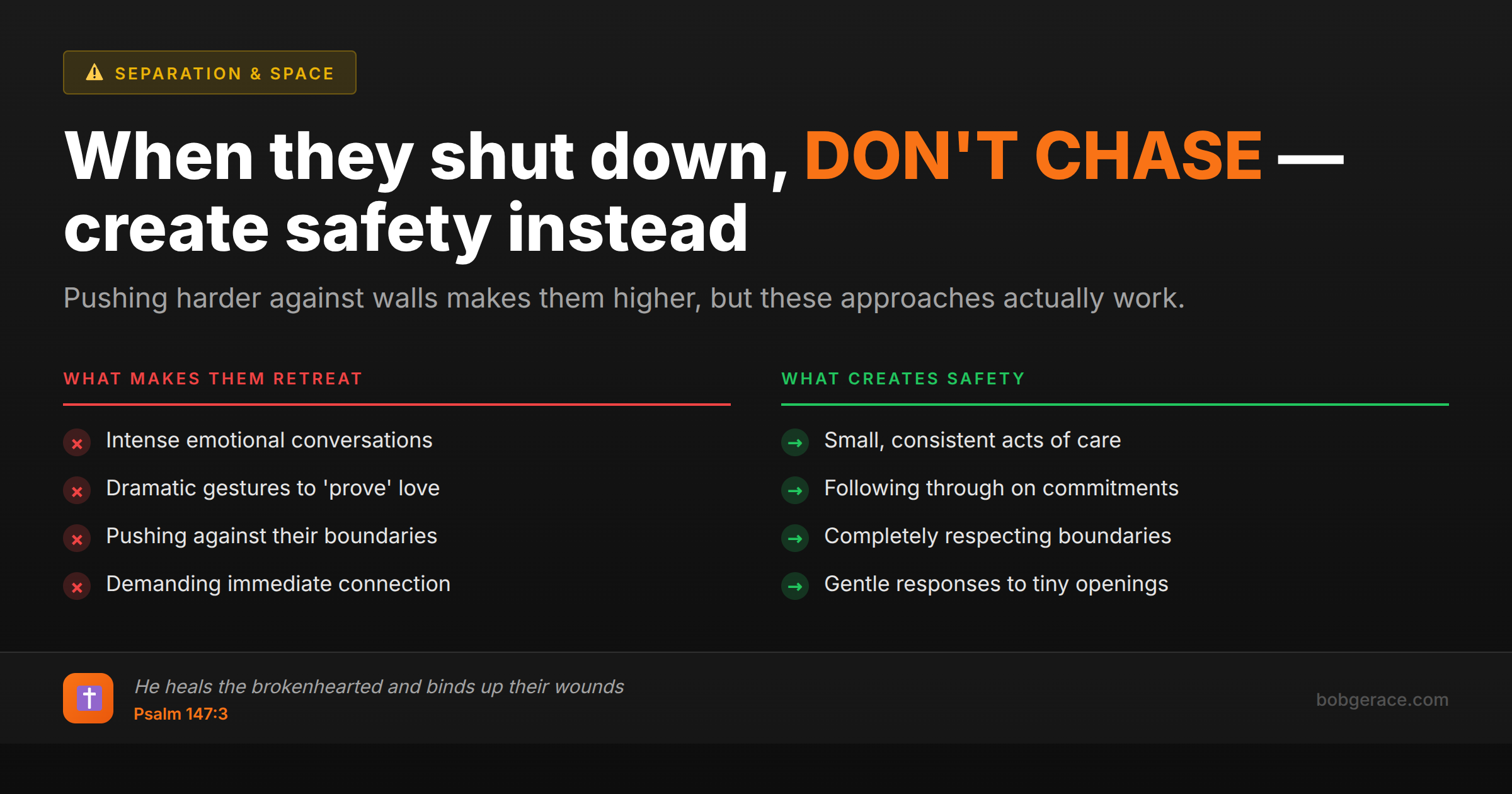
Yes, deactivated attachment can absolutely reactivate, but it requires time, patience, and intentional effort from both partners. When someone has emotionally shut down to protect themselves from repeated hurt or disappointment, their attachment system hasn't disappeared—it's gone into protective mode. Reactivation typically happens gradually through consistent, safe interactions that rebuild trust. Small gestures of care, reliable follow-through on commitments, and creating emotional safety are key. The deactivated partner needs to experience that vulnerability won't lead to more pain. This process can't be rushed or forced, but with genuine effort and often professional guidance, emotional connection can be restored.
The Full Picture
Deactivated attachment is a protective mechanism, not a permanent state. When your spouse has emotionally withdrawn, they haven't lost the capacity for connection—they've buried it under layers of self-protection.
Think of it like this: if you keep touching a hot stove, eventually you'll stop reaching toward it altogether. That's what happens in marriage when someone experiences repeated emotional injuries. Their attachment system says, "This is dangerous. Shut down to survive."
The good news is that attachment systems are designed to reactivate when safety returns. But here's what most people get wrong—they try to force reactivation through grand gestures or emotional appeals. That actually makes things worse because it feels threatening to someone who's in protective mode.
Reactivation happens through small, consistent actions that demonstrate safety. Your spouse needs to learn, through experience, that being emotionally available won't result in more pain. This means following through on small commitments, respecting boundaries, and showing up predictably.
The process isn't linear. You'll see moments of connection followed by withdrawal. This is normal—your spouse is testing whether it's truly safe to open up. Each positive interaction deposits trust in the relationship bank account.
Time frames vary dramatically. Some people begin reactivating within weeks, others take months or even years. The depth of the hurt, how long they've been deactivated, and the consistency of safe interactions all factor into the timeline. Pushing for faster results typically backfires and extends the process.
What's Really Happening
From a clinical perspective, deactivated attachment represents a neurobiological adaptation to perceived relational threat. The brain's threat-detection system has essentially classified the marriage as unsafe, triggering protective mechanisms that prioritize survival over connection.
What we see in brain imaging is fascinating—when attachment is deactivated, there's reduced activity in areas associated with social bonding and increased activity in regions linked to self-protection. But here's the crucial point: these changes are adaptive, not pathological, and they can be reversed.
Reactivation requires what we call "corrective emotional experiences"—interactions that contradict the brain's expectation of threat. These must be frequent enough and consistent enough to override the established neural pathways that favor self-protection.
The biggest mistake I see couples make is trying to reactivate attachment through emotional intensity—long conversations, dramatic apologies, or grand romantic gestures. This activates the threat-detection system because intensity feels dangerous to someone who's been hurt. Instead, reactivation happens through calm, predictable, genuinely caring interactions that fly under the radar of the threat-detection system.
Successful reactivation also requires the deactivated partner to gradually take small risks—sharing a minor concern, expressing a preference, or showing brief moments of affection. As these small vulnerabilities are met with care rather than criticism or dismissal, the attachment system slowly comes back online.
What Scripture Says
Scripture gives us profound hope about God's ability to restore what seems dead or lost. The principle of restoration runs throughout the Bible, showing us that what appears finished can be renewed through patient, loving action.
"He heals the brokenhearted and binds up their wounds" (Psalm 147:3). God specializes in healing hearts that have been wounded and shut down. This includes the emotional wounds that cause someone to deactivate their capacity for connection.
"And I will give you a new heart, and a new spirit I will put within you. And I will remove the heart of stone from your flesh and give you a heart of flesh" (Ezekiel 36:26). Even hearts that have become stone-like through repeated hurt can be made tender again through God's transforming work.
"Love is patient, love is kind... it is not irritable or resentful; it does not rejoice at wrongdoing, but rejoices with the truth. Love bears all things, believes all things, hopes all things, endures all things" (1 Corinthians 13:4-7). The kind of love that reactivates attachment mirrors God's patient love—it doesn't demand immediate response but continues showing up faithfully.
"Therefore encourage one another and build one another up" (1 Thessalonians 5:11). Reactivation happens through encouragement and building up, not through pressure or criticism.
"A gentle tongue is a tree of life, but perverseness in it breaks the spirit" (Proverbs 15:4). Gentle words and actions are what heal broken spirits and reactivate the capacity for connection.
"The steadfast love of the Lord never ceases; his mercies are new every morning" (Lamentations 3:22-23). Like God's faithful love, the consistent demonstration of care and reliability is what opens closed hearts.
What To Do Right Now
-
1
Stop trying to force emotional connection through intense conversations or dramatic gestures—these feel threatening to deactivated attachment
-
2
Focus on small, consistent acts of care and reliability—follow through on minor commitments, show up when you say you will
-
3
Respect their boundaries completely—pushing against walls makes them higher, honoring boundaries creates safety
-
4
Look for tiny moments of openness and respond gently—a brief comment, fleeting eye contact, or small request for help
-
5
Work on your own emotional regulation—your calm, steady presence is what creates the safety needed for reactivation
-
6
Get professional help if needed—sometimes an experienced therapist can guide the process more effectively than going it alone
Related Questions
- What is 'deactivation' and did I cause it?
- What is 'emotional disengagement'?
- Is her shutdown protective or permanent?
- What attachment injuries lead to this kind of withdrawal?
- What happened to her attachment to me?
- Can neural bonding pathways reopen?
- What are 'attachment injuries' and how many did I cause?
- How do I become a safe person again?
- What does 'earned security' mean and how do I help her get there?
- What conditions need to be in place for desire to return?
Also find Bob on
Subscribe for weekly videos on Christian marriage.
Your Marriage Isn't a Textbook Case
Reactivation timelines, what safety actually looks like in your house, whether you're pushing too hard or not hard enough—Bob works with guys on the specifics of their situation, not generic advice.
Talk to Bob →