What attachment injuries lead to this kind of withdrawal?
6 min read
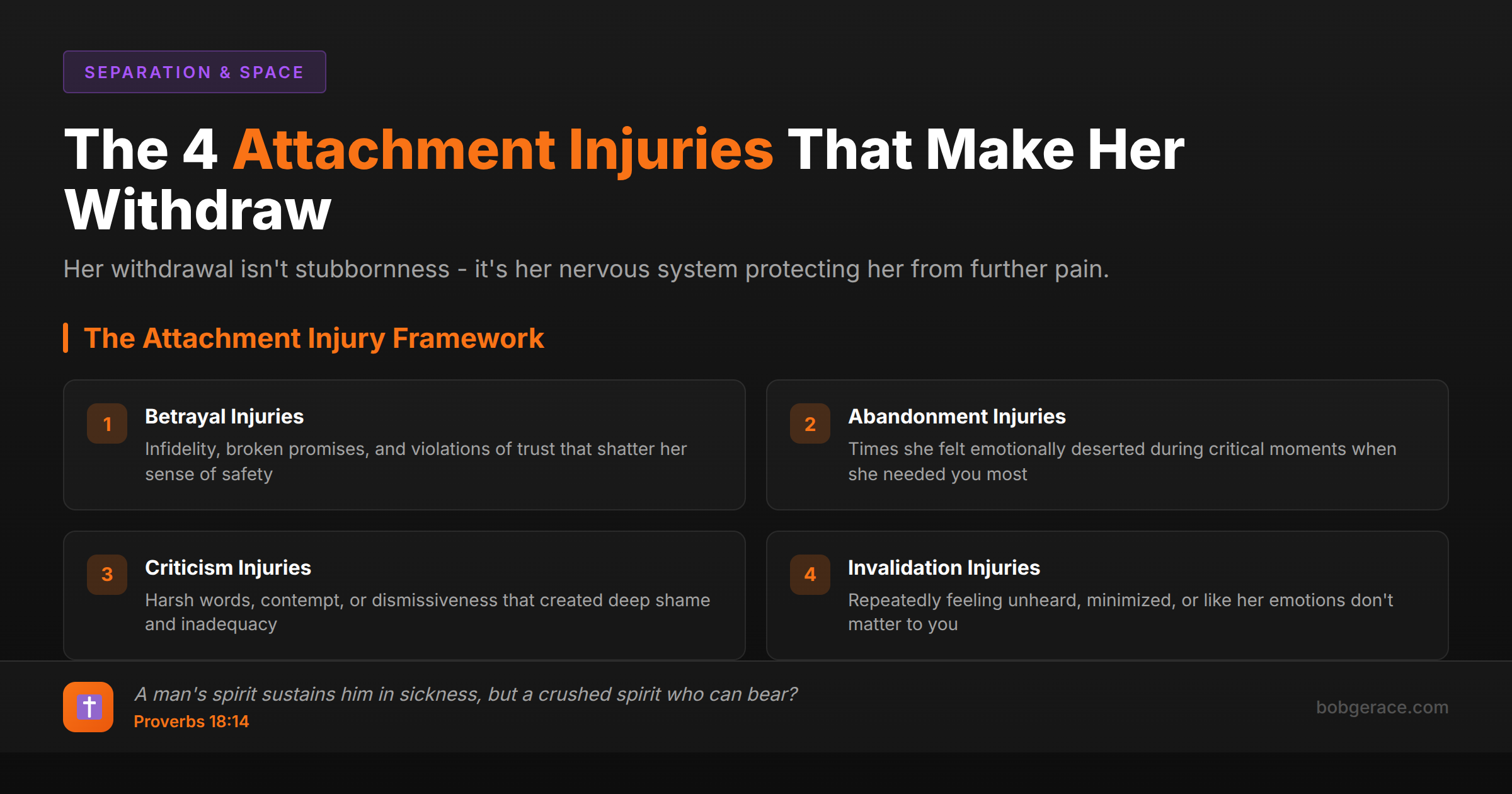
When your wife has withdrawn, specific attachment injuries are usually at the root. These include betrayals of trust like infidelity or broken promises, abandonment experiences where she felt emotionally deserted during critical moments, and criticism injuries from harsh words or contempt that created deep shame. Sexual injuries, financial betrayals, and feeling repeatedly dismissed or invalidated also create profound attachment wounds. These injuries don't just hurt in the moment - they rewire her nervous system to expect danger in intimate relationships. Her withdrawal isn't stubbornness; it's her attachment system protecting her from further injury. Understanding which specific injuries occurred is crucial because each type requires different healing approaches.
The Full Picture
Attachment injuries are specific incidents or patterns that violate the fundamental trust and safety in your marriage bond. Unlike regular conflicts that couples can resolve through communication, attachment injuries cut deeper - they threaten the very foundation of connection and security your wife needs to remain emotionally present.
The most common attachment injuries that lead to withdrawal include:
Betrayal injuries - Infidelity, emotional affairs, or major deceptions that shatter trust. Even "smaller" betrayals like broken promises about important matters can create lasting wounds when they happen repeatedly.
Abandonment injuries - Times when she needed you most but you weren't emotionally or physically available. This might be during pregnancy complications, family crises, or personal struggles where she felt completely alone.
Criticism and contempt injuries - Harsh words, name-calling, or expressions of disgust that created deep shame. These attacks on her character or worth can be devastating to the attachment bond.
Sexual injuries - Pressure, rejection, or any sexual experience that felt coercive or dismissive of her needs and boundaries.
Invalidation injuries - Consistently having her feelings, perceptions, or experiences dismissed or minimized, leading her to believe her inner world doesn't matter to you.
What makes these injuries so damaging is their timing and context. They often occur during vulnerable moments when her attachment system was most open and trusting. The deeper the vulnerability, the more profound the injury and subsequent protective withdrawal.
What's Really Happening
From an attachment perspective, withdrawal after injury is a brilliant survival strategy. When the attachment system detects threat from the person meant to provide safety, it shifts from connection-seeking to self-protection. This isn't conscious - it's happening at a neurobiological level.
The specific type of injury matters enormously for treatment. Betrayal injuries activate hypervigilance and create intrusive thoughts about further deception. The injured partner's nervous system remains on high alert, scanning for signs of additional betrayal. Abandonment injuries, conversely, often trigger a collapse response - emotional shutdown to avoid the pain of being left again.
What many couples don't understand is that attachment injuries create implicit memories stored in the body and nervous system. Your wife may withdraw even when things seem fine because her system remembers the danger, even if her conscious mind wants to connect. This explains why reassurance alone doesn't work - the injury exists below the level of rational thought.
Healing requires three elements: acknowledgment of the specific injury and its impact, consistent safety-building behaviors over time, and often professional help to process the trauma. The injured partner needs to see genuine understanding of how the injury affected them, not just remorse about the incident itself. Without this deep acknowledgment, the attachment system remains guarded, and withdrawal continues as necessary protection.
What Scripture Says
Scripture acknowledges that wounds in close relationships cut deepest and require careful attention to heal. Proverbs 18:14 reminds us, "A man's spirit sustains him in sickness, but a crushed spirit who can bear?" Attachment injuries crush the spirit because they come from someone who should provide safety and love.
Proverbs 27:6 tells us, "Faithful are the wounds of a friend, but the kisses of an enemy are deceitful." The deepest pain comes from those closest to us, which is why attachment injuries are so devastating. When the person meant to be faithful wounds us, it creates confusion and protective withdrawal.
God calls husbands to understand this vulnerability: 1 Peter 3:7 instructs, "Husbands, live with your wives in an understanding way, showing honor to the woman as the weaker vessel, since they are heirs with you of the grace of life, so that your prayers may not be hindered." This "weaker vessel" isn't about inferiority but about emotional sensitivity and the need for gentle care.
Ephesians 4:29 provides the standard for healing communication: "Let no corrupting talk come out of your mouths, but only such as is good for building up, as fits the occasion, that it may give grace to those who hear." Healing attachment injuries requires words that build up rather than tear down.
The promise for healing comes from Isaiah 61:3: God gives "a beautiful headdress instead of ashes, the oil of gladness instead of mourning, the garment of praise instead of a faint spirit." With patient, consistent love that reflects God's faithfulness, even deep attachment wounds can heal.
Colossians 3:12-13 shows the path forward: "Put on then, as God's chosen ones, holy and beloved, compassionate hearts, kindness, humility, meekness, and patience, bearing with one another and, if one has a complaint against another, forgiving each other; as the Lord has forgiven you, so you also must forgive."
What To Do Right Now
-
1
Stop trying to convince her the injury wasn't that bad or should be over by now - this only deepens the wound and increases withdrawal
-
2
Identify the specific attachment injury honestly - ask yourself when she first started withdrawing and what happened around that time
-
3
Acknowledge the injury's impact on her without defending your intentions - focus on understanding her experience, not explaining yours
-
4
Create consistent safety through your actions - small, reliable behaviors matter more than grand gestures when rebuilding attachment trust
-
5
Give her control over the pace of reconnection - pushing for intimacy or connection before she feels safe will trigger more withdrawal
-
6
Seek professional help from an attachment-focused therapist who understands trauma - some injuries are too deep to heal without skilled guidance
Related Questions
- What is 'attachment injury' and did I cause one?
- What is 'deactivation' and has she done it?
- When does a wife's attachment system shut off completely?
- What is 'emotional disengagement'?
- Why does she seem numb/flat/dead inside?
- Can deactivated attachment reactivate?
- What are 'attachment injuries' and how many did I cause?
- How do attachment injuries from childhood show up now?
- How do childhood attachment wounds show up in marriage?
- What attachment injuries did I experience?
Also find Bob on
Subscribe for weekly videos on Christian marriage.
Bring Your Specific Marriage to Bob
You know the pattern. A coach who knows your story can help you see which injuries matter most in your marriage and how to actually repair them.
Talk to Bob →