What do kids understand at different ages?
5 min read
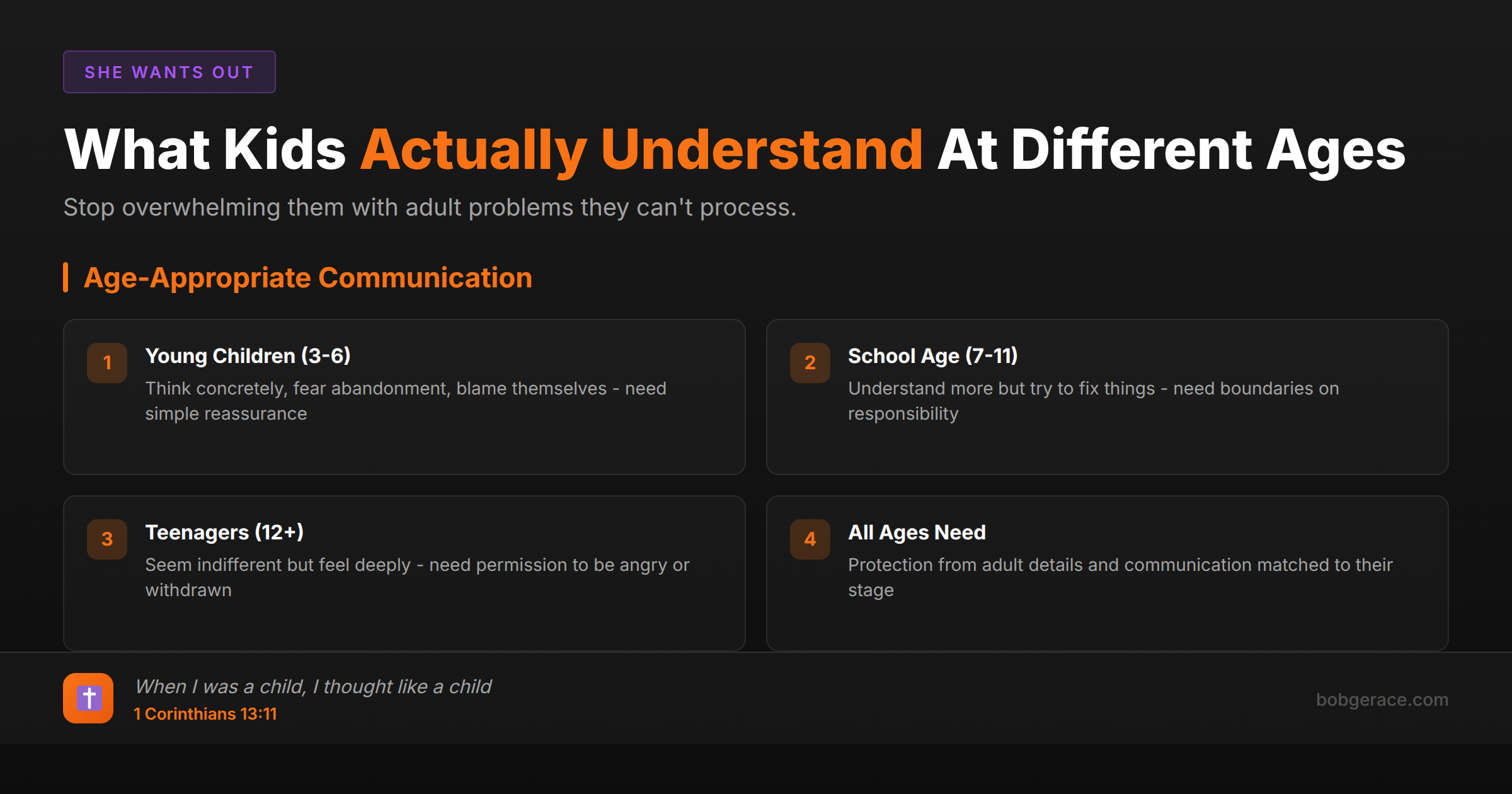
Your kids understand way more than you think they do - and way less than you fear. Even toddlers pick up on tension, anger, and stress between parents, though they can't process what it means. School-age kids know something's wrong but often blame themselves. Teenagers understand the situation but lack the emotional tools to handle it maturely. The key isn't hiding your marital struggles completely - that's impossible. It's understanding what your child can actually comprehend at their developmental stage, then communicating and behaving accordingly. A 4-year-old needs reassurance that mommy and daddy's problems aren't their fault. A 14-year-old needs honesty without adult details and clear boundaries about not being put in the middle.
The Full Picture
Ages 2-4 (Toddlers/Preschoolers) Your little ones are emotional sponges. They absorb tension, raised voices, and changes in routine without understanding why. They know when mommy cries or daddy sleeps on the couch, but they interpret everything through their limited worldview. Most importantly, they assume they caused whatever's happening.
• They understand emotions but not reasons • They need extra reassurance and consistent routines • They'll act out through behavior, not words • Simple explanations work: "Mommy and Daddy are having grown-up problems, but we both love you very much"
Ages 5-8 (Early Elementary) These kids are developing logical thinking but still see the world in black and white. They know something's seriously wrong but lack the context to understand adult relationships. They're old enough to ask direct questions but not mature enough to handle complex answers.
• They understand conflict but think in terms of "good guy/bad guy" • They need reassurance they won't be abandoned • They'll try to fix things or choose sides • Keep explanations simple and focus on what won't change
Ages 9-12 (Tweens) This is the danger zone. They understand enough to know the marriage is in trouble but not enough to process it maturely. They're developing their own identity and moral compass, so they're watching how you handle crisis.
• They understand consequences and permanence • They need honesty without adult details • They'll worry about practical things: money, moving, changing schools • They need clear boundaries about not being your confidant or messenger
Ages 13-17 (Teenagers) Teens understand almost everything adults do, but their brains aren't fully developed for emotional regulation. They see hypocrisy clearly and will call you out. They're also dealing with their own identity formation, which makes family instability particularly disruptive.
• They understand relationship dynamics but lack emotional maturity • They need respect for their intelligence without adult responsibilities • They'll have strong opinions and may take sides • They need to see healthy conflict resolution, not perfection
What's Really Happening
From a developmental perspective, children's understanding of family conflict follows predictable patterns based on cognitive and emotional development. Research shows that chronic parental conflict affects children differently across developmental stages, with each age group having specific vulnerabilities.
Cognitive Processing by Age Young children (2-6) operate from an egocentric worldview, literally believing they cause everything around them. When parents fight, they assume responsibility. Their developing nervous systems are particularly vulnerable to chronic stress, which can impact brain development and attachment security.
School-age children (7-11) can understand cause and effect but struggle with emotional regulation. They're developing their sense of justice and fairness, which makes parental conflict particularly confusing when they love both parents.
Adolescents have adult-level cognitive abilities but adolescent-level emotional regulation. Their developing prefrontal cortex means they can analyze the situation like adults but respond emotionally like children. This creates internal conflict and often manifests as anger, withdrawal, or acting out.
Attachment and Security Regardless of age, children's primary need is security and predictability. When the parental relationship is unstable, it threatens their core sense of safety. They need to know that even if the marriage is struggling, their relationship with each parent remains stable.
Children also learn relationship patterns by watching parents. How you handle conflict, communicate under stress, and treat each other becomes their blueprint for future relationships. This makes your behavior during marital crisis a teaching moment with lifelong implications.
Protective Factors Research consistently shows that children cope better with family stress when parents maintain consistent routines, avoid putting children in loyalty conflicts, and demonstrate that the adults are handling the adult problems.
What Scripture Says
Scripture places a high value on protecting and nurturing children, especially during difficult times. God's heart for children is clear throughout the Bible, and as fathers, we're called to lead our families with wisdom and gentleness.
Ephesians 6:4 - "Fathers, do not exasperate your children; instead, bring them up in the training and instruction of the Lord." When our marriages are struggling, it's easy to exasperate our children through our own stress, anger, or inconsistency. This verse calls us to be mindful of how our behavior affects them.
Matthew 18:3 - "And he said: 'Truly I tell you, unless you change and become like little children, you will never enter the kingdom of heaven.'" This reminds us that children see the world differently than adults. Their perspective is not deficient - it's different. We need to meet them where they are, not expect them to understand adult complexities.
Proverbs 22:6 - "Start children off on the way they should go, and even when they are old they will not turn from it." How we handle this crisis becomes part of their foundation. They're watching to see if faith, love, and commitment matter when things get hard.
1 Corinthians 13:11 - "When I was a child, I talked like a child, I thought like a child, I reasoned like a child. When I became a man, I put the ways of childhood behind me." This acknowledges that childhood thinking is appropriate for children. We shouldn't expect them to process adult situations with adult wisdom.
Psalm 127:3 - "Children are a heritage from the Lord, offspring a reward from him." Even in marital crisis, our children remain God's gifts to us. They deserve protection, not to be casualties of adult failures.
God calls us to be shepherds of our children's hearts, protecting them while teaching them truth appropriate to their stage of development.
What To Do Right Now
-
1
Observe your child's behavior for signs of stress: sleep problems, regression, clinginess, or acting out - these tell you more than their words
-
2
Create age-appropriate explanations for tension they're witnessing without giving adult details or blaming anyone
-
3
Establish and maintain consistent routines, especially bedtime, meals, and special time with each parent
-
4
Never put your child in the middle by asking them to carry messages, choose sides, or comfort you emotionally
-
5
Reassure them regularly that both parents love them and that adult problems are not their fault or responsibility
-
6
Get your own support so you're not leaning on your children emotionally - find a counselor, pastor, or trusted friend
Related Questions
- How do I tell the kids?
- What do I say when kids ask what's happening?
- What are signs my kids are struggling?
- What language is appropriate for each developmental stage?
- How do I be a good dad through this?
- What do kids need most from dad during divorce?
- How do I co-parent during this?
- How do I not badmouth her when I'm furious?
- How does parental conflict affect child attachment?
- What is 'parentification' and am I doing it to them?
Also find Bob on
Subscribe for weekly videos on Christian marriage.
Your Kids, Your Marriage, Your Situation
A coach who knows your family's ages, your specific tension points, and what's actually happening in your home can help you protect your kids while you fix this. You don't have to guess what's safe to say.
Talk to Bob →