What does 'head' mean in Greek?
6 min read
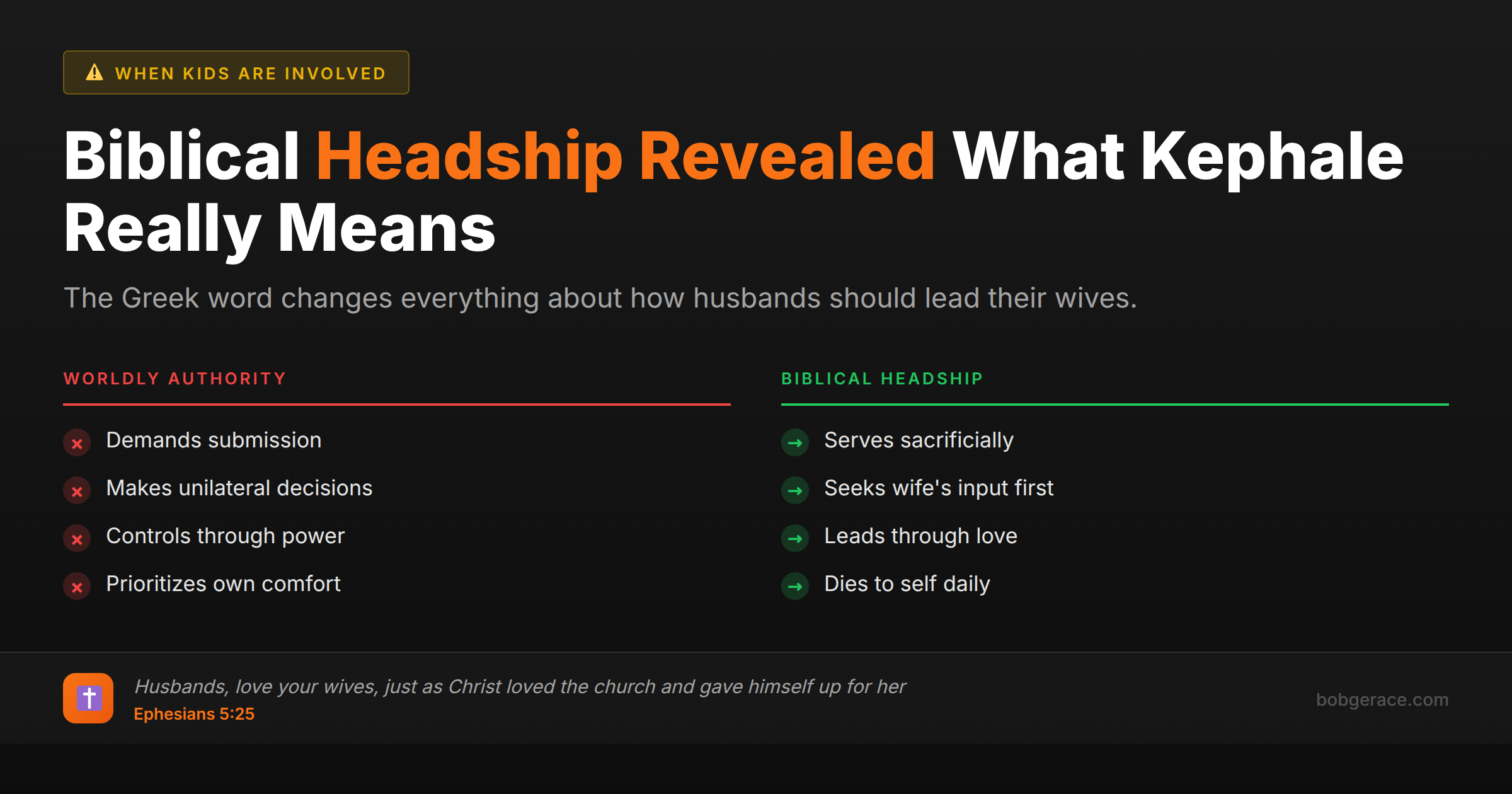
The Greek word 'kephale' (κεφαλή) translated as 'head' in passages like Ephesians 5:23 carries nuanced meanings beyond modern English understanding. While it can mean 'authority,' its primary biblical usage emphasizes 'source' or 'origin' - like the head of a river. This fundamentally changes how we understand marital headship from domination to origination and provision. In biblical context, kephale describes someone who takes responsibility for another's wellbeing, much like Christ being the 'head' of the church means He's its source of life and protection. This isn't about hierarchy but about sacrificial love and servant leadership that seeks the other's flourishing above one's own comfort.
The Full Picture
The Greek word kephale (κεφαλή) appears in the New Testament with layered meanings that our English word 'head' doesn't fully capture. Understanding this term is crucial because it shapes how couples view marriage roles and responsibilities.
Primary Meanings of Kephale: - Source or origin - Like the head of a river where water flows from - Chief or prominent one - Not necessarily in authority, but in importance - Representative - One who stands for or speaks on behalf of others - Provider or sustainer - The source from which life and provision flow
The confusion comes when we impose modern concepts of authority onto ancient language. In Paul's time, kephale rarely meant 'ruler' or 'boss' in the way we might think. Instead, it described someone who took responsibility for another's wellbeing.
Cultural Context Matters: First-century readers would have understood kephale through their cultural lens. A 'head' was someone who used their position to serve, protect, and provide - not to control or dominate. This is why Paul immediately follows his instruction about husbands being 'head' with commands to love sacrificially.
The Christ Connection: When Paul says Christ is the 'head' of the church, he's not describing a dictator but a source of life, love, and provision. Christ doesn't rule the church through force but serves it through sacrifice. This is the model for husbands - not authoritarian control but sacrificial service that seeks the wife's flourishing above personal comfort or convenience.
What's Really Happening
In my practice, I see how misunderstanding 'kephale' devastates marriages. Couples who interpret 'headship' as male dominance create toxic dynamics that destroy intimacy and partnership.
The Psychological Impact: When husbands use 'biblical headship' to justify controlling behavior, wives often develop learned helplessness, resentment, and emotional withdrawal. The marriage becomes a hierarchy instead of a partnership, leading to decreased marital satisfaction for both spouses.
Healthy Interpretation: Couples who understand kephale as 'source' or 'servant leader' create marriages characterized by mutual respect, shared decision-making, and sacrificial love from both partners. The husband takes initiative in serving and protecting, while both spouses contribute their strengths to the relationship.
Red Flags I See: - Using 'I'm the head' to end discussions - Making unilateral decisions without consultation - Treating the wife's opinions as less valuable - Using scripture to justify selfish behavior
What Actually Works: Healthy 'headship' looks like a husband who initiates difficult conversations, takes responsibility for family wellbeing, sacrifices personal desires for family good, and uses his influence to elevate and empower his wife. This creates psychological safety where both spouses can flourish, leading to deeper intimacy and stronger partnership.
What Scripture Says
Scripture consistently presents kephale as servant leadership, not authoritarian control. Let's examine key passages:
Ephesians 5:23 - 'For the husband is the head of the wife as Christ is the head of the church, his body, of which he is the Savior.' Note: Christ's headship is defined by being 'Savior' - one who sacrifices for another's benefit.
Ephesians 5:25-26 - 'Husbands, love your wives, just as Christ loved the church and gave himself up for her to make her holy, cleansing her by the washing with water through the word.' The 'head's' primary responsibility is sacrificial love that promotes the other's growth and holiness.
1 Corinthians 11:3 - 'But I want you to realize that the head of every man is Christ, and the head of the woman is man, and the head of Christ is God.' This shows a relational order based on source and responsibility, not superiority - even Christ submits to the Father.
Philippians 2:6-7 - 'Who, being in very nature God, did not consider equality with God something to be used to his own advantage; rather, he made himself nothing by taking the very nature of a servant.' True headship follows Christ's example of using position to serve, not to be served.
1 Peter 3:7 - 'Husbands, in the same way be considerate as you live with your wives, and treat them with respect as the weaker partner and as heirs with you of the gracious gift of life.' Headship includes treating wives as equal heirs and showing considerate respect.
What To Do Right Now
-
1
Study the original Greek meaning of kephale with your spouse using reliable biblical resources
-
2
Examine how you've interpreted 'headship' and confess any misuse of this concept
-
3
Ask your spouse how they want to be loved and served, then prioritize those actions
-
4
Make decisions together, with the husband taking initiative in seeking his wife's input
-
5
Practice Christ-like leadership by sacrificing personal preferences for your spouse's wellbeing
-
6
Seek counseling if past misunderstandings of headship have damaged your relationship
Related Questions
- What does 'love your wife as Christ loves the church' mean?
- What is biblical headship?
- What does submission mean?
- What is the Ephesians 5 framework?
- What did marriage look like in the 1st century context?
- What does 'mutual submission' mean?
- What does masculine leadership look like?
- How do I lead without controlling?
Also find Bob on
Subscribe for weekly videos on Christian marriage.
Ready to Apply This to Your Marriage?
Knowing what kephale means doesn't tell you how to lead your wife tomorrow morning. A coach helps you translate the concept into your actual relationship.
Talk to Bob →