What happened to marriage at the Fall?
6 min read
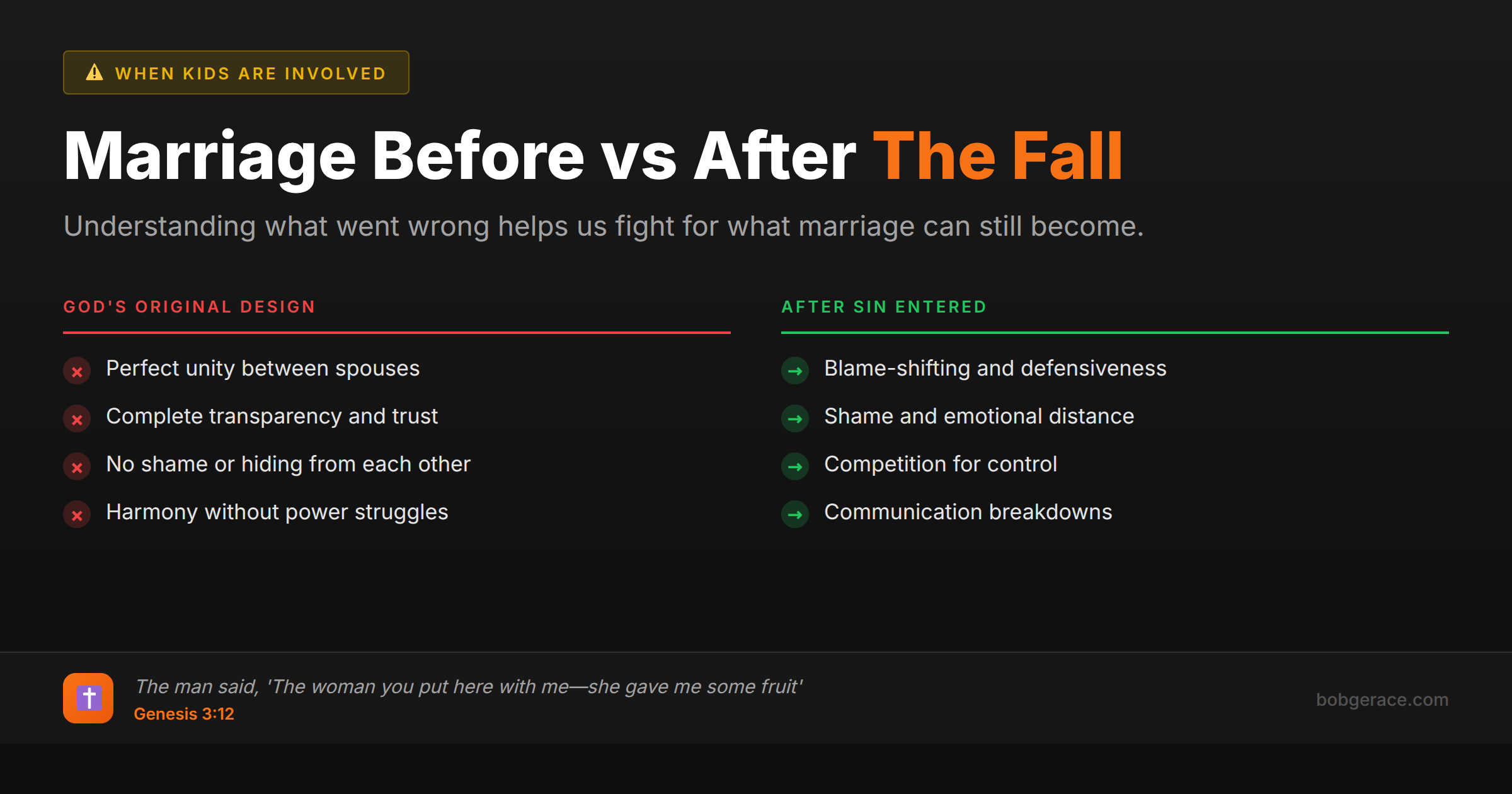
The Fall didn't just corrupt humanity—it shattered God's perfect design for marriage. What began as perfect unity, intimacy, and transparency between Adam and Eve became marked by blame, shame, and relational breakdown. Sin introduced selfishness, pride, and fear into the marriage relationship, creating patterns of conflict that every couple still battles today. Where there was once perfect harmony, now there's struggle for control, communication breakdowns, and emotional distance. But here's the hope: understanding what went wrong helps us fight for what marriage can still become through Christ.
The Full Picture
Before the Fall, marriage was God's masterpiece. Adam and Eve experienced perfect intimacy—they were "naked and unashamed" (Genesis 2:25). This wasn't just about physical nakedness; they had complete emotional, spiritual, and relational transparency. No fear, no hiding, no power struggles.
Then sin entered, and everything changed. Genesis 3 shows us the immediate aftermath: blame-shifting ("The woman you put here with me"—Genesis 3:12), shame and hiding (Genesis 3:7), and the introduction of relational tension. The curse specifically mentions that the harmony between husband and wife would be replaced by struggle and conflict (Genesis 3:16).
Sin corrupted every aspect of marriage. Communication became defensive rather than open. Trust was replaced by suspicion. Self-sacrifice gave way to self-protection. The perfect partnership became a power struggle. Love became conditional, and intimacy became guarded.
This brokenness affects every marriage today. We inherit these fallen patterns—the tendency to blame rather than own our part, to hide rather than be vulnerable, to compete rather than complement. Every argument, every moment of disconnect, every time we choose ourselves over our spouse, we're experiencing the effects of the Fall.
But the story doesn't end there. Christ came to restore what sin destroyed, including marriage. While we won't experience perfect marriage this side of heaven, we can fight against these fallen patterns and experience glimpses of what God intended.
What's Really Happening
From a clinical perspective, what we see described in Genesis 3 perfectly aligns with what I observe in couples therapy every day. The Fall introduced fundamental relational wounds that manifest as attachment injuries, defensive patterns, and emotional disconnection.
When Adam blamed Eve and even implicated God ("The woman YOU put here"), we see the birth of what we now call defensive attribution—the tendency to externalize blame when we feel threatened. This same pattern shows up in modern marriages when couples focus on their partner's faults rather than taking responsibility for their own contributions to conflict.
The shame and hiding that immediately followed sin created what we now understand as emotional walls. Instead of the vulnerable intimacy Adam and Eve once shared, they began protecting themselves through concealment and withdrawal. This is the root of every intimacy disorder I treat—the fear that if we're truly known, we'll be rejected.
The curse introduced what I call "competing narratives"—instead of shared purpose and unity, couples now struggle with conflicting desires, goals, and perspectives on their roles. This creates the power dynamics and control issues that destroy so many marriages.
However, understanding these patterns as symptoms of the Fall rather than personal defects gives couples hope. These aren't character flaws to be ashamed of—they're universal human struggles that can be addressed through intentional healing work, both spiritual and practical.
What Scripture Says
Genesis 3:7 - "Then the eyes of both of them were opened, and they realized they were naked; so they sewed fig leaves together and made coverings for themselves." The first response to sin was hiding and self-protection, replacing the complete vulnerability they once shared.
Genesis 3:12 - "The man said, 'The woman you put here with me—she gave me some fruit from the tree, and I ate it.'" Adam's response reveals how sin immediately introduced blame-shifting and defensive communication into marriage.
Genesis 3:16 - "To the woman he said... 'Your desire will be for your husband, and he will rule over you.'" This describes the ongoing tension and power struggle that would now characterize the marriage relationship.
Romans 5:12 - "Therefore, just as sin entered the world through one man, and death through sin, and in this way death came to all people, because all sinned." The effects of the Fall touch every aspect of human relationship, including marriage.
Ephesians 5:25-27 - "Husbands, love your wives, just as Christ loved the church and gave himself up for her to make her holy..." God's plan for marriage restoration involves sacrificial love that mirrors Christ's redemptive work.
1 Corinthians 13:4-7 - Paul's description of love directly counters the fallen patterns: patience instead of irritability, kindness instead of selfishness, keeping no record of wrongs instead of blame-keeping.
What To Do Right Now
-
1
Acknowledge that your marriage struggles aren't personal failures but symptoms of living in a fallen world
-
2
Identify your own defensive patterns—where do you blame, hide, or compete instead of loving sacrificially?
-
3
Practice vulnerability by sharing one area where you know you've contributed to marital conflict
-
4
Choose to take responsibility for your part in problems rather than focusing on your spouse's issues
-
5
Pray together, asking God to help you fight against fallen patterns and pursue His design for marriage
-
6
Commit to one specific way you'll choose sacrificial love over self-protection this week
Related Questions
- What is the Genesis 1-2 creation pattern?
- What does redemption do to marriage roles?
- What does 'love your wife as Christ loves the church' mean?
- What is the Ephesians 5 framework?
- What did marriage look like in the 1st century context?
- What is biblical headship?
- What does 'sins of the fathers' mean?
- How do generational patterns work spiritually?
- What does 'new creation' mean for my history?
- What is redemption of my story?
Also find Bob on
Subscribe for weekly videos on Christian marriage.
You Don't Have to Figure This Out Alone
Understanding what went wrong at the Fall is one thing. Applying it to your specific marriage—your patterns, your wife, your stuck points—is different work. That's what coaching does.
Talk to Bob →