Is church discipline appropriate here?
6 min read
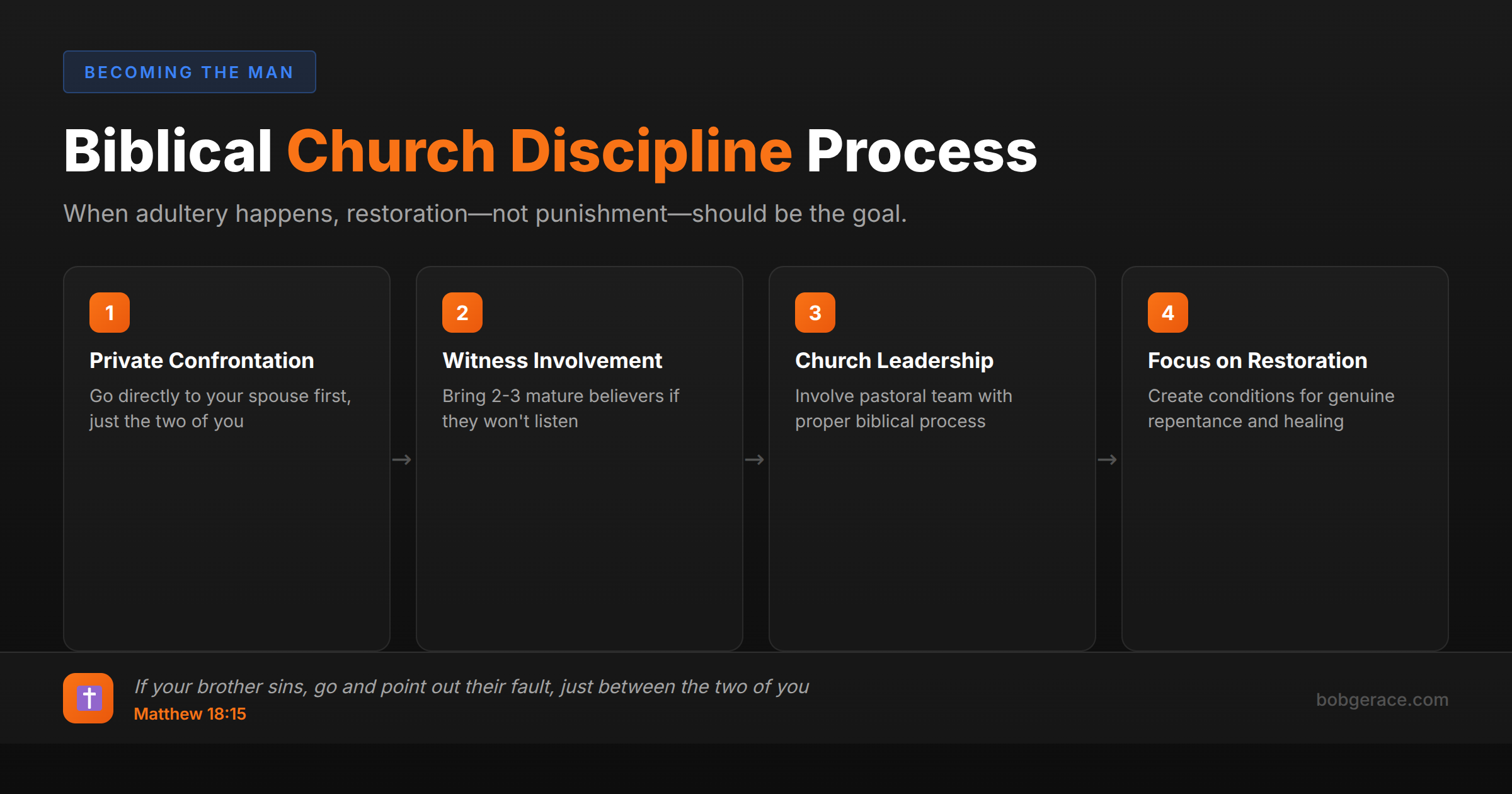
Church discipline can absolutely be appropriate when adultery has occurred, but it should be pursued with wisdom, proper process, and restoration as the ultimate goal. Scripture clearly outlines the process in Matthew 18:15-17, and Paul addresses sexual immorality directly in 1 Corinthians 5. However, this isn't about punishment—it's about bringing sin into the light, protecting the church body, and creating conditions for genuine repentance and restoration. The key is that it must be done with the right heart, following biblical procedure, and with qualified church leadership who understand both the severity of the sin and the goal of redemption.
The Full Picture
Church discipline is one of the most misunderstood aspects of biblical marriage restoration. Many couples avoid it entirely, thinking it's too harsh or embarrassing. Others rush into it as a form of revenge or manipulation. Neither approach reflects biblical wisdom.
The reality is that adultery is not just a private matter between spouses—it's a sin that affects the entire church community. When someone in church leadership or membership violates their marriage covenant through adultery, it impacts the witness and integrity of the body of Christ. This is why Scripture provides specific guidance on how to address it.
Church discipline serves three primary purposes: restoration of the sinner, protection of the church body, and vindication of God's holiness. It's never meant to be punitive or vengeful, but rather redemptive. The goal is always to bring the wayward believer to genuine repentance and full restoration to fellowship.
However, timing and approach matter tremendously. If you're in the immediate crisis of discovering adultery, church discipline shouldn't be your first step. First comes safety, stabilization, and often professional counseling. Church discipline works best when there's been time for the initial shock to settle and when both spouses have had opportunity to process what's happened.
The process also requires mature, trained church leadership who understand both the gravity of the situation and the delicate nature of marriage restoration. Not every church is equipped to handle this well, and doing it poorly can cause more damage than healing.
What's Really Happening
From a clinical perspective, church discipline can be incredibly powerful when implemented correctly, but it can also be traumatic when handled poorly. I've seen both outcomes in my practice.
When done well, church discipline provides external accountability that many couples desperately need. The unfaithful spouse often minimizes their actions or rushes toward premature forgiveness without doing the deep work required for lasting change. Church discipline creates a structured process that prevents this spiritual bypassing.
It also validates the betrayed spouse's pain in a way that private conversations often don't. When the church community acknowledges the severity of what happened, it counteracts the gaslighting and minimization that betrayed spouses often experience. This validation is crucial for their healing process.
However, I've also witnessed church discipline processes that became public shaming exercises or power struggles. This happens when church leadership lacks training in trauma-informed care or when the process becomes more about maintaining institutional authority than genuine restoration.
The key clinical consideration is readiness. Both spouses need to be emotionally and spiritually prepared for this process. The betrayed spouse should not be pressured into forgiveness on the church's timeline, and the unfaithful spouse needs to demonstrate genuine remorse before restoration becomes the focus.
Most importantly, church discipline should complement, not replace, professional therapy. The complex psychological and relational dynamics involved in adultery recovery require specialized training that most pastors don't possess.
What Scripture Says
Scripture provides clear guidance on church discipline, though it requires careful interpretation and wise application.
Matthew 18:15-17 outlines the basic process: *"If your brother or sister sins, go and point out their fault, just between the two of you. If they listen to you, you have won them over. But if they will not listen, take one or two others along, so that 'every matter may be established by the testimony of two or three witnesses.' If they still refuse to listen, tell it to the church; and if they refuse to listen even to the church, treat them as you would a pagan or a tax collector."*
1 Corinthians 5:1-5 addresses sexual immorality specifically: *"It is actually reported that there is sexual immorality among you, and of a kind that even pagans do not tolerate... And you are proud! Shouldn't you rather have gone into mourning and have put out of your fellowship the one who has been doing this?"* Paul makes it clear that the church has a responsibility to address sexual sin.
However, the goal is always restoration. 2 Corinthians 2:6-8 shows Paul advocating for the restoration of the disciplined person: *"The punishment inflicted on him by the majority is sufficient. Now instead, you ought to forgive and comfort him, so that he will not be overwhelmed by excessive sorrow. I urge you, therefore, to reaffirm your love for him."*
Galatians 6:1 provides the proper spirit: *"Brothers and sisters, if someone is caught in a sin, you who live by the Spirit should restore that person gently. But watch yourselves, or you also may be tempted."*
The key principle is that discipline must be done with gentleness, seeking restoration, not destruction.
What To Do Right Now
-
1
Evaluate your church's readiness - Ensure your church leadership is trained in handling marriage crises and has a clear, biblical process for discipline and restoration
-
2
Seek pastoral counseling first - Meet with your pastor or church leadership privately to discuss your situation and get their guidance on whether church discipline is appropriate
-
3
Follow Matthew 18 process - If pursuing discipline, ensure the biblical order is followed: private confrontation, witnesses, then church involvement
-
4
Maintain the goal of restoration - Keep the focus on repentance and restoration, not punishment or public humiliation of the unfaithful spouse
-
5
Coordinate with professional help - Ensure church discipline complements rather than replaces professional marriage counseling and individual therapy
-
6
Protect children and family - Consider the impact on children and extended family, ensuring they have appropriate support and aren't unnecessarily exposed to public proceedings
Related Questions
Navigate This Process With Wisdom
Church discipline is too important to navigate alone. Get guidance from someone who understands both biblical principles and marriage restoration.
Get Support →