What does James say about human anger?
6 min read
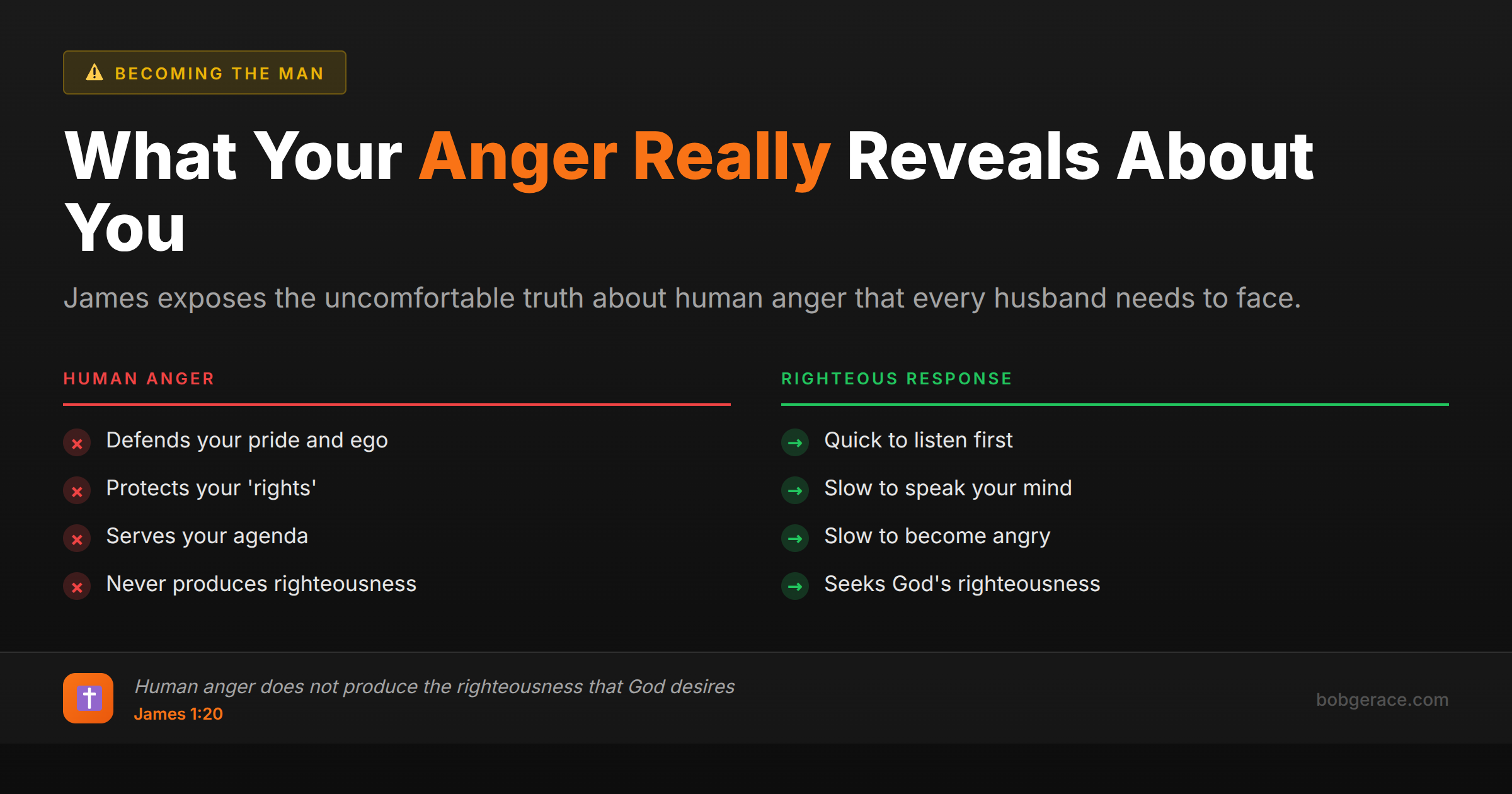
James delivers one of Scripture's most direct statements about human anger in James 1:19-20: 'Everyone should be quick to listen, slow to speak and slow to become angry, because human anger does not produce the righteousness that God desires.' This isn't a blanket condemnation of all anger, but a sobering reality check about our fallen nature. James distinguishes between righteous anger (God's anger against sin) and human anger, which is typically self-serving and destructive. When we're angry, we're usually defending our pride, our rights, or our way of doing things. That kind of anger never produces the righteousness God wants to see in our lives or marriages.
The Full Picture
James wasn't writing to condemn us—he was giving us a roadmap for healthier relationships. The context of James 1:19-20 comes right after he talks about receiving God's word with humility. There's a direct connection: when we're angry, we can't receive truth.
The Problem with Human Anger
James uses the Greek word *anthropinos* for 'human anger'—anger that comes from our flesh, our ego, our wounded pride. This isn't the clean anger Jesus showed when He cleared the temple. This is the messy, self-protective anger that erupts when someone challenges us, corrects us, or doesn't meet our expectations.
In marriage, this plays out constantly. Your spouse questions your decision, and anger flares. They don't appreciate your efforts, and resentment builds. They point out a legitimate concern, and instead of listening, you get defensive and angry.
The Alternative Approach
James gives us the formula: quick to listen, slow to speak, slow to become angry. Notice the order—listening comes first. Most of our anger in marriage comes from feeling misunderstood or unheard. But when we lead with listening, we often discover our spouse isn't attacking us—they're trying to connect with us.
'Slow to speak' means we pause before defending ourselves. We ask questions instead of making statements. We seek to understand before being understood.
'Slow to become angry' doesn't mean we become doormats. It means we recognize that our first emotional response is usually about us, not about righteousness. When we slow down, we can ask: 'Is this anger helping me love my spouse better, or is it just protecting my ego?'
What's Really Happening
From a clinical perspective, James is describing what we now understand about the neurophysiology of anger. When we experience a perceived threat—even something as simple as criticism from our spouse—our amygdala triggers a fight-or-flight response faster than our prefrontal cortex can engage rational thinking.
James's prescription of being 'quick to listen, slow to speak, slow to become angry' actually aligns perfectly with modern trauma-informed therapy approaches. By slowing down our responses, we're giving our rational mind time to catch up with our emotional reactions.
The Attachment Connection
Most marital anger stems from attachment fears. When your spouse does something that triggers feelings of abandonment, rejection, or inadequacy, anger becomes a protective strategy. You get angry to avoid feeling vulnerable or hurt. James understood this intuitively—human anger is almost always about self-protection rather than righteousness.
Breaking the Cycle
The couples I work with who successfully manage anger have learned to pause and ask themselves: 'What am I really feeling underneath this anger?' Usually, it's hurt, fear, or loneliness. When they can identify and communicate these underlying emotions instead of just expressing anger, their conversations become infinitely more productive.
James's wisdom about righteousness is crucial here. Righteous anger seeks justice and restoration. Human anger seeks vindication and control. One builds relationships; the other destroys them.
What Scripture Says
Scripture gives us a clear framework for understanding anger in relationships:
James 1:19-20 - 'My dear brothers and sisters, take note of this: Everyone should be quick to listen, slow to speak and slow to become angry, because human anger does not produce the righteousness that God desires.'
Ephesians 4:26-27 - 'In your anger do not sin: Do not let the sun go down while you are still angry, and do not give the devil a foothold.'
Proverbs 15:1 - 'A gentle answer turns away wrath, but a harsh word stirs up anger.'
Proverbs 19:11 - 'A person's wisdom yields patience; it is to one's glory to overlook an offense.'
Colossians 3:8 - 'But now you must also rid yourselves of all such things as these: anger, rage, malice, slander, and filthy language from your lips.'
1 Corinthians 13:5 - 'Love is not easily angered, it keeps no record of wrongs.'
Notice the pattern: Scripture doesn't say anger itself is sin, but it warns us about the destructive power of uncontrolled, self-serving anger. The goal isn't to never feel angry—it's to respond to anger in ways that honor God and build up our marriages rather than tear them down.
What To Do Right Now
-
1
Practice the 24-hour rule: When you feel angry with your spouse, commit to waiting 24 hours before addressing it
-
2
Ask yourself: 'What am I feeling underneath this anger?' Identify the hurt, fear, or unmet need driving the anger
-
3
Use James's formula: Listen twice as much as you speak, especially when emotions are high
-
4
Replace 'You always...' or 'You never...' with 'I feel...' when discussing problems
-
5
Pray before difficult conversations: Ask God to help you seek understanding rather than being right
-
6
Apologize quickly when your anger damages your relationship, regardless of whether you were 'justified'
Related Questions
- What does 'be angry and sin not' mean?
- What's the difference between righteous anger and unrighteous?
- Is my anger a fruit problem or root problem?
- What does Scripture say about self-control?
- What spiritual disciplines address anger?
- How do I put off the old man when he keeps showing up?
- I can't control my anger
- Why do I rage at the people I love?
- I said things I can't take back
- How do I stop exploding?
Also find Bob on
Subscribe for weekly videos on Christian marriage.
Your Anger Pattern Isn't Generic
A coach who knows your marriage can see what triggers you, how you flood, and what actually works when you're defending yourself instead of listening. You don't have to keep guessing.
Talk to Bob →