What is betrayal trauma and do I have it?
6 min read
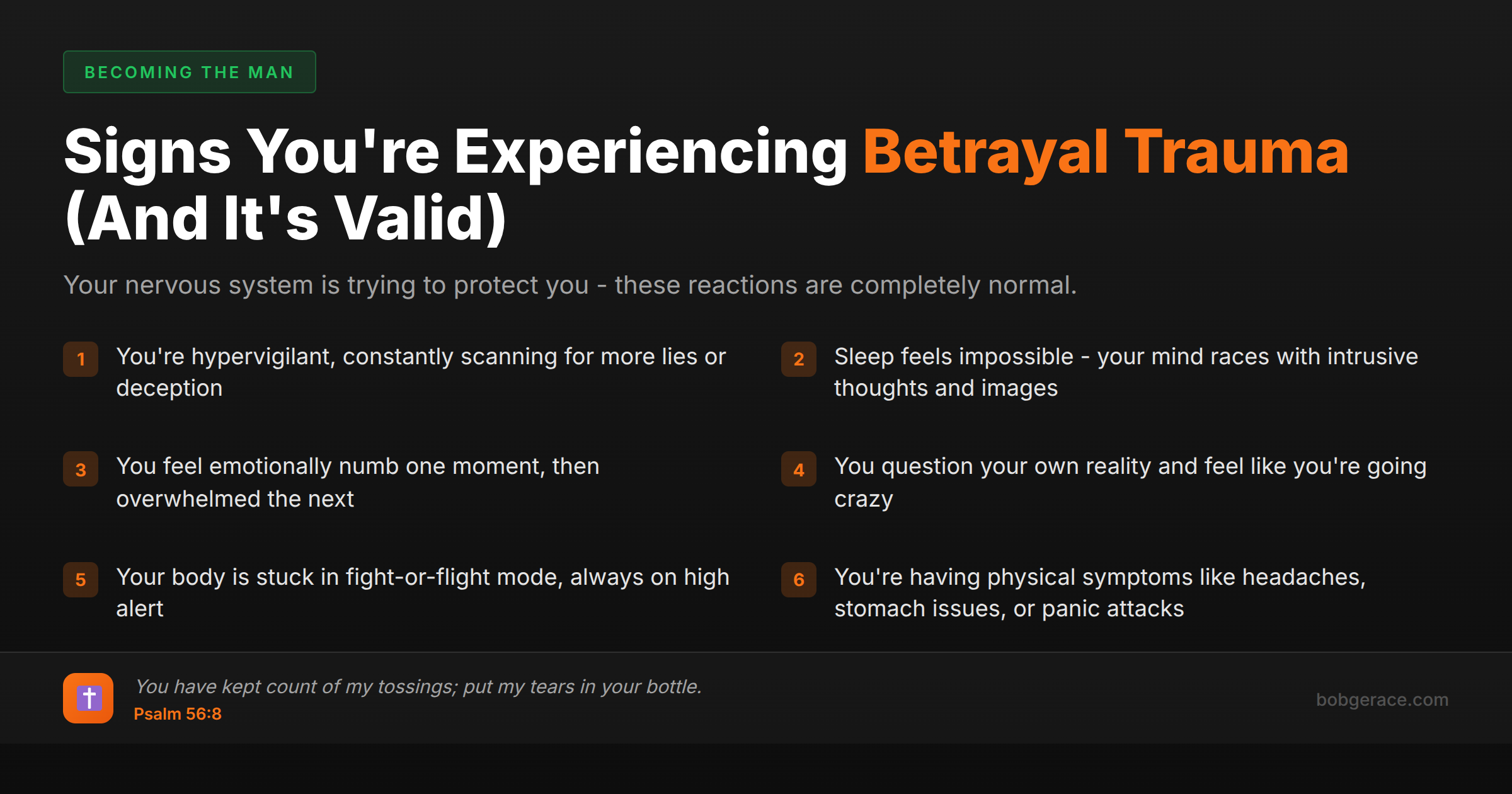
Betrayal trauma is the psychological and emotional injury that occurs when someone you depend on violates your trust in a significant way. Unlike other forms of trauma, betrayal trauma specifically involves harm caused by someone you're attached to - like a spouse's infidelity, lies, or deception. If you're experiencing symptoms like hypervigilance, difficulty sleeping, intrusive thoughts about the betrayal, emotional numbness, or feeling like you're going crazy, you may be dealing with betrayal trauma. These reactions are normal responses to abnormal situations - your nervous system is trying to protect you from further harm.
The Full Picture
Betrayal trauma isn't just feeling hurt or disappointed - it's a specific type of trauma that rewires your brain and nervous system. When the person who's supposed to be your safe harbor becomes the source of danger, your entire worldview gets shattered.
Common signs of betrayal trauma include:
- Physical symptoms: Insomnia, headaches, digestive issues, panic attacks, or feeling constantly on edge - Emotional symptoms: Rage, numbness, depression, anxiety, or rapidly cycling between emotions - Cognitive symptoms: Obsessive thoughts, memory problems, difficulty concentrating, or feeling like you're losing your mind - Relational symptoms: Hypervigilance about your partner's behavior, difficulty trusting, or isolating from others
What makes betrayal trauma particularly devastating is that it attacks your fundamental sense of safety and reality. You may find yourself constantly checking up on your partner, replaying conversations looking for lies, or feeling like you can't trust your own perceptions.
The severity of betrayal trauma depends on several factors: the nature of the betrayal, how long it went on, your partner's response when discovered, and your own history. Some women experience what feels like PTSD symptoms - and that's because betrayal trauma shares many characteristics with post-traumatic stress disorder.
Remember: Your reactions are normal responses to abnormal circumstances. You're not crazy, weak, or overreacting. Your nervous system is doing exactly what it's designed to do when faced with a threat to your safety and security.
What's Really Happening
From a clinical perspective, betrayal trauma occurs when there's a violation of trust by someone in a position of attachment or dependency. What makes this type of trauma unique is the double bind it creates: the person who hurt you is also the person you would normally turn to for comfort and safety.
Neurologically, betrayal trauma triggers your fight-flight-freeze response repeatedly. Your brain becomes hypervigilant, constantly scanning for signs of deception or danger. This is why many women report feeling exhausted - your nervous system is working overtime to protect you.
The trauma response often includes dissociation, where you might feel disconnected from your body or emotions. This is actually a protective mechanism - your psyche is trying to shield you from overwhelming pain. You might also experience what we call 'trauma bonding,' where despite the betrayal, you still feel drawn to seek comfort from the person who hurt you.
Healing from betrayal trauma requires both safety and connection. Your nervous system needs to learn that you're safe now, which often means establishing clear boundaries and seeing consistent, trustworthy behavior over time. Professional support is crucial because betrayal trauma can be particularly complex to navigate alone.
Recovery is absolutely possible, but it takes time and intentional effort. Your brain has incredible capacity for healing and rewiring itself when given the right conditions and support.
What Scripture Says
God understands betrayal intimately - He's experienced it from His own people countless times. Scripture doesn't minimize the pain of betrayal but offers us a framework for healing that addresses both the wound and the way forward.
God sees your pain: *'You have kept count of my tossings; put my tears in your bottle. Are they not in your book?'* - Psalm 56:8. Every tear you've shed matters to God. He's not asking you to get over it quickly or pretend the betrayal didn't devastate you.
Your reactions are understandable: *'Even my close friend in whom I trusted, who ate my bread, has lifted his heel against me'* - Psalm 41:9. David knew the particular anguish of betrayal by someone close. Your shock, anger, and pain are validated throughout Scripture.
God can restore your mind: *'And be not conformed to this world: but be ye transformed by the renewing of your mind'* - Romans 12:2. The trauma may have changed how your brain processes safety and trust, but God can renew and restore your thinking patterns.
Healing takes time: *'He heals the brokenhearted and binds up their wounds'* - Psalm 147:3. Notice this is an active, ongoing process. God is gentle with wounded hearts, working healing over time rather than demanding instant recovery.
You can find peace again: *'And the peace of God, which surpasses all understanding, will guard your hearts and your minds in Christ Jesus'* - Philippians 4:7. This supernatural peace can actually guard your heart and mind as you heal.
Community matters: *'Bear one another's burdens, and so fulfill the law of Christ'* - Galatians 6:2. Isolation compounds trauma, but safe community facilitates healing.
What To Do Right Now
-
1
Acknowledge that what you're experiencing is real and valid - betrayal trauma is a legitimate injury that deserves care and attention
-
2
Prioritize your physical safety and basic needs - proper sleep, nutrition, and medical care form the foundation of trauma recovery
-
3
Establish boundaries to protect yourself from further harm while your nervous system begins to regulate and heal
-
4
Connect with a trauma-informed therapist who understands betrayal trauma specifically, not just general marriage counseling
-
5
Build a support network of trusted friends, family, or support groups who can provide consistent, safe connection
-
6
Practice nervous system regulation techniques like deep breathing, prayer, gentle movement, or grounding exercises daily
Related Questions
You Don't Have to Heal Alone
Betrayal trauma is too heavy to carry by yourself. Let's create a personalized plan for your healing that honors both your pain and your hope for restoration.
Get Support →