How do I pray for the other man?
6 min read
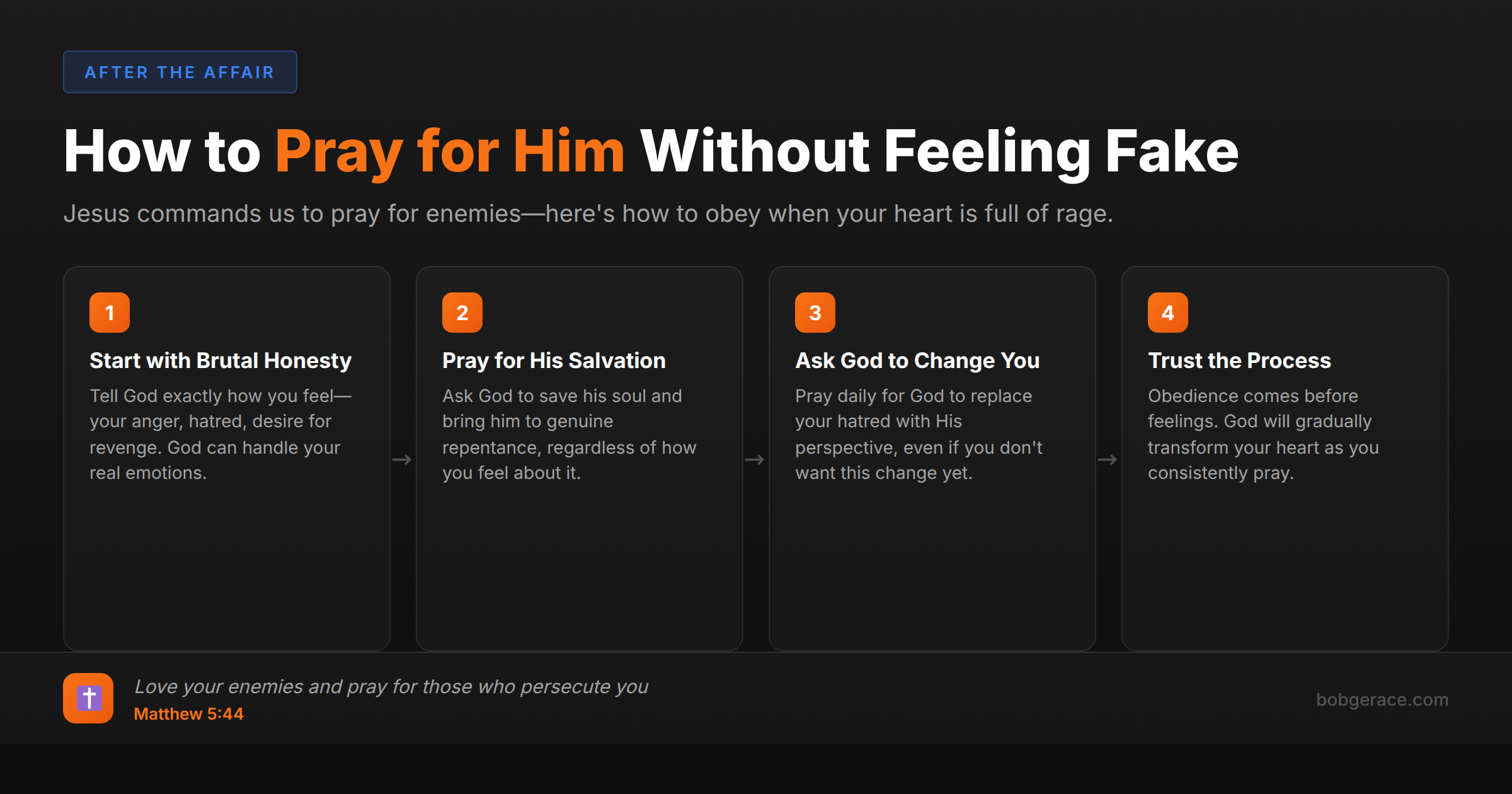
Praying for the other man isn't about excusing his actions or minimizing your pain—it's about obeying Christ's command to pray for our enemies and freeing yourself from the poison of hatred. Start with honesty: tell God about your anger, hurt, and desire for revenge. Then ask Him to change your heart, not the other man's circumstances. Begin with simple prayers for his salvation and repentance. You don't have to feel warm emotions—obedience to God's Word comes before feelings. As you consistently pray, God will gradually transform your heart from hatred to genuine concern for his soul. This process takes time and isn't about reconciliation or friendship—it's about your spiritual freedom and Christ-like character.
The Full Picture
Let me be straight with you: praying for the man who helped destroy your marriage feels impossible, even offensive. Every fiber of your being wants justice, revenge, or at minimum, for him to suffer consequences. These feelings are completely normal and human.
But here's what most men miss: this isn't really about him—it's about you and your relationship with God. When Jesus commanded us to pray for our enemies, He wasn't thinking about their comfort. He was thinking about our freedom.
Hatred is like drinking poison and expecting the other person to die. The other man may never know you're praying for him, may never care, and may never change. But you will change. Your heart will change. Your relationship with God will deepen.
The prayer process looks different for everyone, but it typically follows stages: - Rage prayers: "God, I hate this man and want him punished" - Honest prayers: "God, I don't want to pray for him, but You command it" - Obedient prayers: "God, save his soul and bring him to repentance" - Transformed prayers: "God, use this situation for Your glory and his good"
Don't rush this process. God isn't asking you to pretend you're not hurt or to minimize the damage done. He's asking you to trust Him with justice while you focus on obedience. This isn't weakness—it's the hardest, most masculine thing you can do.
What's Really Happening
From a psychological standpoint, praying for someone who has wronged you activates powerful neurological changes that promote healing. When we hold onto resentment, our brains remain in a state of chronic stress activation, flooding our systems with cortisol and adrenaline.
The act of intentional prayer, even when we don't 'feel' forgiving, begins rewiring neural pathways associated with rumination and revenge fantasies. This isn't positive thinking—it's documented neuroscience. Prayer shifts our brain activity from the reactive amygdala to the prefrontal cortex, where rational thought and emotional regulation occur.
What makes this particularly challenging for men is that our brains are wired for problem-solving and action. When someone threatens our family or marriage, every instinct screams 'fight or flight.' Prayer feels passive, even weak. But research shows that this perceived 'passivity' actually requires tremendous mental and //blog.bobgerace.com/christian-marriage-covenant-masculinity-unbreakable-standard/:emotional strength).
The cognitive dissonance between your natural desire for revenge and your obedience to pray creates what psychologists call 'moral elevation'—a profound shift in perspective that often leads to genuine healing. Men who engage in this process report decreased anxiety, improved sleep, and restored sense of personal agency.
Remember: you're not praying to become his friend or to excuse his behavior. You're praying to free yourself from the mental prison of hatred and to align with God's design for human flourishing.
What Scripture Says
God's Word is crystal clear about praying for enemies, even when it seems impossible:
"But I tell you, love your enemies and pray for those who persecute you, that you may be children of your Father in heaven." - Matthew 5:44-45
Jesus doesn't give us wiggle room here. This isn't a suggestion—it's a command that defines our identity as God's children.
"Do not repay anyone evil for evil. Be careful to do what is right in the eyes of everyone. If it is possible, as far as it depends on you, live at peace with everyone. Do not take revenge, my dear friends, but leave room for God's wrath." - Romans 12:17-19
Paul reminds us that justice belongs to God, not us. Our job is obedience, not vengeance.
"Be kind and compassionate to one another, forgiving each other, just as in Christ God forgave you." - Ephesians 4:32
Forgiveness isn't optional for Christians—it's how we received salvation.
"The Lord is not slow in keeping his promise, as some understand slowness. Instead he is patient with you, not wanting anyone to perish, but everyone to come to repentance." - 2 Peter 3:9
God desires even the other man's salvation and repentance.
These verses aren't theoretical—they're practical commands for real situations like yours. God knows how hard this is, but He also knows the freedom waiting on the other side of obedience.
What To Do Right Now
-
1
Start with brutal honesty: Tell God exactly how you feel about this man—your anger, hatred, desire for revenge. God can handle your real emotions.
-
2
Pray for his salvation: Begin each prayer asking God to save his soul and bring him to genuine repentance, regardless of how you feel.
-
3
Ask God to change your heart: Pray daily for God to replace your hatred with His perspective, even if you don't want this change yet.
-
4
Pray for his family: If he has a wife and children, pray for their healing and protection from the consequences of his choices.
-
5
Set a consistent schedule: Pray for him at the same time daily, even if it's just 30 seconds. Consistency matters more than duration.
-
6
Journal your prayers: Write down how your heart changes over weeks and months. This creates accountability and shows God's work in you.
Related Questions
- How do I love my enemy when he's sleeping with my wife?
- What does 'vengeance is mine' mean practically?
- What's the difference between justice and revenge?
- How do I handle righteous anger without sin?
- What does it mean that he's not my real enemy?
- What does 'overcome evil with good' look like here?
- I can't control my anger
- What does 'be angry and sin not' mean?
- How do I pray when I'm angry at God?
- How do I pray for my wife when she's hurting me?
Also find Bob on
Subscribe for weekly videos on Christian marriage.
This Level of Obedience Is Hard Alone
Praying for the man who broke your marriage takes a kind of strength most men don't have on their own. A coach who knows your specific story can help you walk this out without faking it.
Talk to Bob →