What is EMDR and could it help?
6 min read
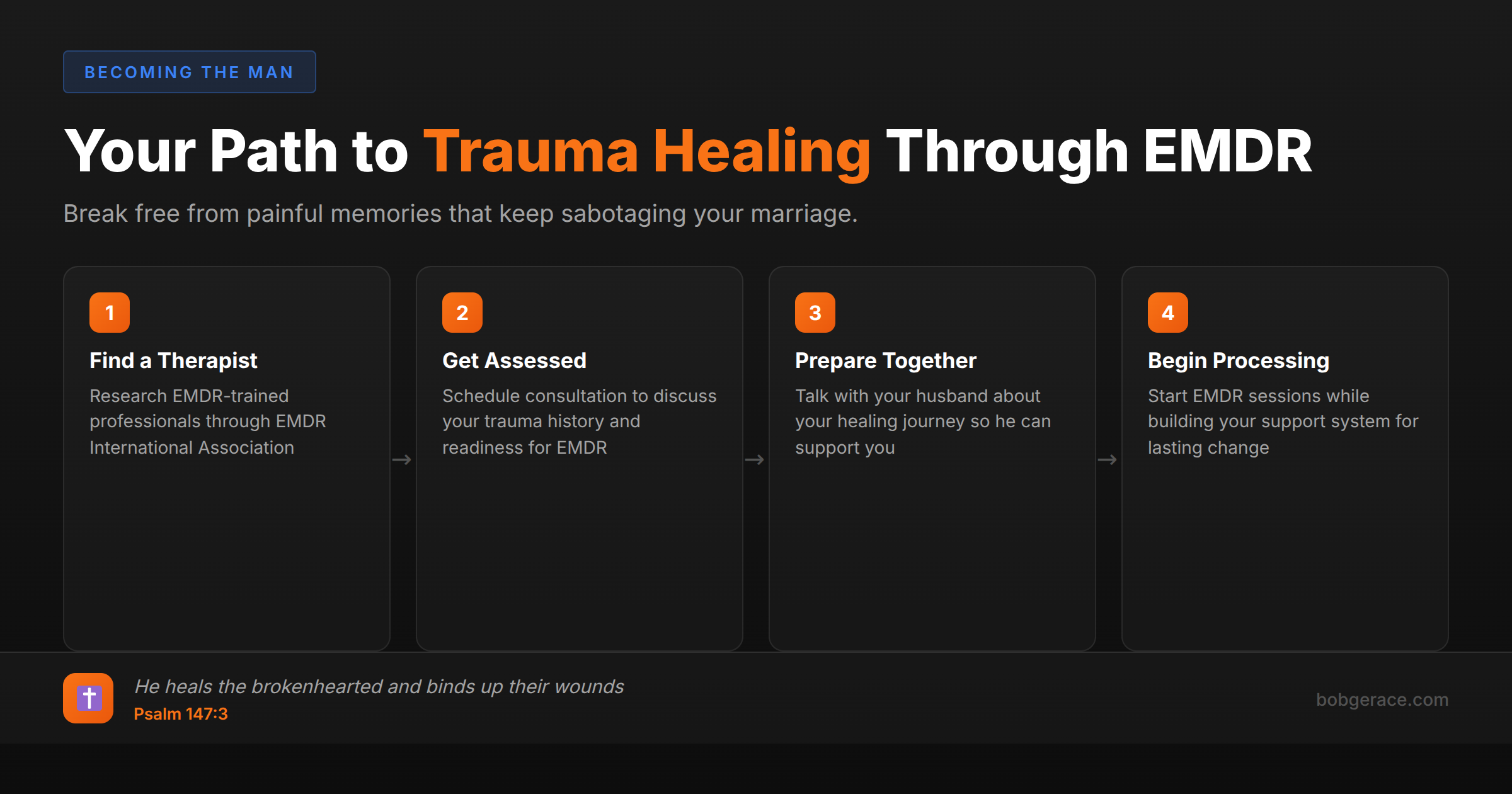
EMDR (Eye Movement Desensitization and Reprocessing) is a specialized therapy technique that helps your brain process traumatic memories that are stuck and causing ongoing emotional pain. Instead of just talking about trauma, EMDR uses bilateral stimulation—typically guided eye movements—while you recall difficult memories, helping your brain reprocess them in a way that reduces their emotional charge. For women dealing with trauma that's affecting their marriage, EMDR can be incredibly effective. Whether you're struggling with childhood abuse, sexual trauma, betrayal, or other painful experiences that keep triggering you in your relationship, EMDR helps your nervous system calm down and respond differently. Many women find that after EMDR, memories that once felt overwhelming become manageable, allowing them to be more present and connected in their marriage.
The Full Picture
Here's what you need to understand about EMDR: it's not magic, but it's remarkably effective for trauma that traditional talk therapy hasn't touched.
How EMDR Actually Works
When you experience trauma, your brain doesn't process the memory normally. Instead of filing it away as "something that happened in the past," the traumatic memory gets stuck in your nervous system, complete with all the emotions, body sensations, and beliefs from that moment. That's why a smell, sound, or situation can suddenly transport you right back to feeling terrified, ashamed, or helpless—even years later.
EMDR works by activating your brain's natural healing process. While you hold the traumatic memory in mind, your therapist guides your eyes back and forth (or uses other forms of bilateral stimulation like tapping). This mimics what happens during REM sleep when your brain naturally processes experiences. The bilateral stimulation helps your brain reprocess the stuck memory, reducing its emotional intensity and helping you develop healthier beliefs about yourself.
What Makes EMDR Different
Unlike traditional therapy where you spend months or years talking about your trauma, EMDR can produce significant results relatively quickly. You don't need to share every detail of your trauma story. The process is more about letting your brain do what it's designed to do—heal.
EMDR and Your Marriage
When trauma is affecting your marriage, EMDR can help you: - Stop being triggered by things your husband does innocently - Feel safer in intimate moments - Break cycles of emotional reactivity - Develop a stronger sense of self-worth - Trust your own perceptions and feelings
Many women find that as they heal from trauma through EMDR, they become more emotionally available, less defensive, and better able to communicate their needs clearly.
What's Really Happening
From a clinical perspective, EMDR is one of the most researched and effective treatments for PTSD and trauma-related symptoms. What makes it particularly powerful for married women is how it addresses both the explicit memories (what you consciously remember) and implicit memories (body sensations, emotional reactions, and beliefs stored below conscious awareness).
When trauma occurs, especially repeated trauma or trauma during childhood, it creates what we call "neural pathways of protection." Your brain literally rewires itself to scan for danger, even in safe situations. This is why you might find yourself constantly on edge with your husband, interpreting neutral actions as threats, or shutting down emotionally during conflict.
EMDR works by creating new neural pathways. The bilateral stimulation activates both hemispheres of your brain simultaneously, allowing the logical, present-day part of your brain to communicate with the emotional, survival-oriented part. This integration is what allows healing to occur.
What I see clinically is that women often experience what feels like a "rewiring" after EMDR. Situations that used to trigger intense fear, rage, or shutdown responses become manageable. They report feeling more "like themselves" and less controlled by their past experiences.
It's important to note that EMDR isn't about forgetting or minimizing what happened to you. Instead, it helps you remember without being re-traumatized. The memory remains, but it loses its power to hijack your present-moment experience and your relationship.
What Scripture Says
God's heart is always toward our healing and restoration. Throughout Scripture, we see His desire to bind up wounds and make all things new.
God as Our Healer
*"He heals the brokenhearted and binds up their wounds."* - Psalm 147:3
God doesn't just acknowledge our brokenness—He actively works to heal it. EMDR can be one tool He uses in this healing process, helping our minds process pain in healthy ways.
Renewed Thinking
*"Do not conform to the pattern of this world, but be transformed by the renewing of your mind."* - Romans 12:2
Trauma literally changes how our minds work, creating patterns of fear and protection. God wants to renew our thinking, and sometimes that requires professional help to retrain our brains.
Freedom from the Past
*"Therefore, if anyone is in Christ, the new creation has come: The old has gone, the new is here!"* - 2 Corinthians 5:17
While our past experiences matter, they don't have to define our present reality. God wants to free us from being trapped by old wounds.
Wisdom in Seeking Help
*"Plans fail for lack of counsel, but with many advisers they succeed."* - Proverbs 15:22
Seeking professional help isn't a lack of faith—it's wisdom. God often works through skilled counselors and therapists to bring healing.
Peace Over Trauma
*"Peace I leave with you; my peace I give you. I do not give to you as the world gives. Do not let your hearts be troubled and do not be afraid."* - John 14:27
*"You will keep in perfect peace those whose minds are steadfast, because they trust in you."* - Isaiah 26:3
God's desire is for us to experience His peace, not live in constant fear or emotional turmoil from past wounds.
What To Do Right Now
-
1
Research EMDR-trained therapists in your area through the EMDR International Association website
-
2
Schedule a consultation to discuss your specific trauma history and see if EMDR feels right for you
-
3
Talk with your husband about your healing journey so he can support you through the process
-
4
Prepare for therapy by identifying specific memories or triggers that are affecting your marriage
-
5
Create a support system beyond therapy—trusted friends, prayer partners, or a support group
-
6
Commit to the process while being patient with yourself—healing takes time but EMDR can accelerate it significantly
Related Questions
Ready to Address How Trauma is Affecting Your Marriage?
Don't let past wounds continue to hijack your present relationship. Let's work together to identify what's driving your patterns and create a path forward.
Get Support →