What does chronic anger do to my nervous system?
6 min read
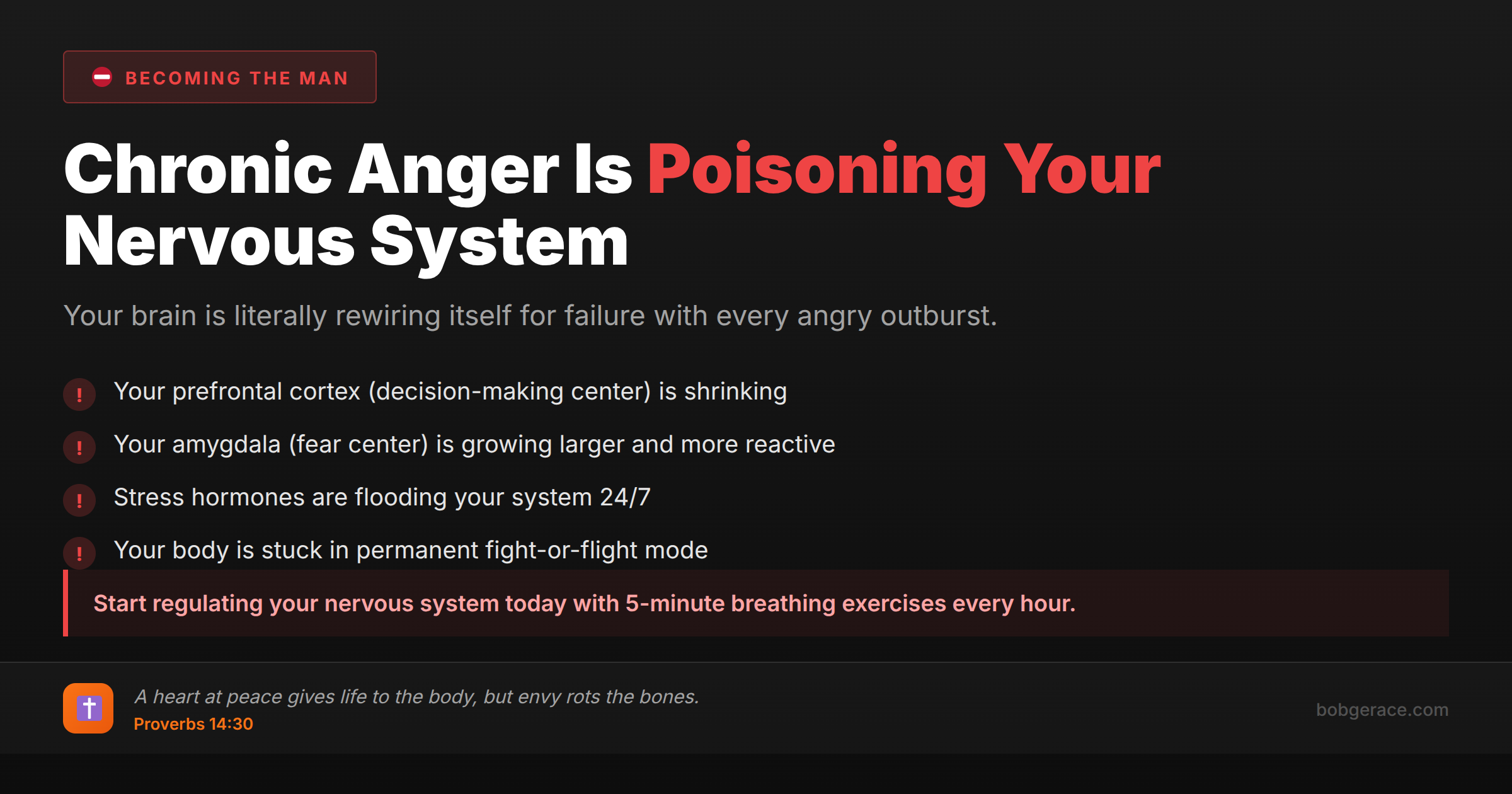
Chronic anger is literally rewiring your brain and poisoning your nervous system. When you're constantly angry, your brain gets stuck in fight-or-flight mode, flooding your system with stress hormones like cortisol and adrenaline. This chronic state of activation damages neural pathways, shrinks the prefrontal cortex (your decision-making center), and enlarges the amygdala (your fear center). Your nervous system becomes hypervigilant, constantly scanning for threats that aren't really there. This leads to anxiety, depression, memory problems, and difficulty regulating emotions. The physical toll is devastating - chronic inflammation, weakened immune system, cardiovascular damage, and digestive issues. Your body is literally breaking down under the constant assault of anger-driven stress hormones.
The Full Picture
Your nervous system wasn't designed to handle chronic anger. When anger becomes your default response, you're essentially hijacking your body's emergency response system and running it 24/7.
The Stress Hormone Cascade
Every time you get angry, your hypothalamus triggers the release of stress hormones. Cortisol, adrenaline, and norepinephrine flood your bloodstream. In short bursts, these hormones help you respond to real threats. But when they're constantly elevated due to chronic anger, they become toxic.
Brain Structure Changes
Neuroimaging studies show that chronic anger literally changes your brain structure. The prefrontal cortex - responsible for executive function, decision-making, and emotional regulation - actually shrinks. Meanwhile, the amygdala, your brain's alarm system, becomes enlarged and hyperactive. This means you lose the ability to think clearly while becoming more reactive to perceived threats.
Neural Pathway Disruption
Chronic anger disrupts the neural pathways between different brain regions. The connection between your prefrontal cortex and limbic system becomes weakened, making it harder to regulate emotions rationally. You literally lose the ability to "think before you react."
Autonomic Nervous System Dysfunction
Your autonomic nervous system, which controls involuntary functions like heart rate and digestion, becomes dysregulated. The sympathetic nervous system (fight-or-flight) dominates, while the parasympathetic system (rest-and-digest) is suppressed. This leads to chronic inflammation, digestive problems, sleep disorders, and cardiovascular strain.
The Addiction Cycle
Perhaps most dangerously, chronic anger creates its own neurochemical addiction. The adrenaline rush becomes familiar, even comfortable. Your brain starts seeking out reasons to be angry because that's the neurochemical state it knows best.
What's Really Happening
From a clinical perspective, chronic anger represents a state of nervous system dysregulation that has profound implications for both mental and physical health. I regularly see clients whose anger patterns have literally rewired their brains for reactivity rather than responsiveness.
The Neuroplasticity Factor
The good news is that neuroplasticity works both ways. Just as chronic anger can damage neural pathways, intentional practices can rebuild healthy ones. However, this requires understanding that anger management isn't just about controlling behavior - it's about healing a dysregulated nervous system.
Trauma and Anger Loops
Many clients with chronic anger are stuck in trauma loops. Their nervous systems are constantly activated because they're unconsciously scanning for threats based on past experiences. The anger feels protective, but it's actually keeping them trapped in a hypervigilant state that damages relationships and health.
The Inflammation Connection
Chronic anger triggers systemic inflammation through elevated cytokine production. This inflammation affects brain function, contributing to depression, anxiety, and cognitive decline. I often see clients whose "anger problems" are actually symptoms of inflammation-driven mood disorders.
Treatment Implications
Effective anger intervention must address the nervous system directly. Talk therapy alone isn't sufficient if the nervous system remains dysregulated. We need somatic interventions, mindfulness practices, and sometimes medication to help regulate the stress response before cognitive strategies become effective.
Recovery Timeline
Nervous system healing takes time. While clients may see behavioral improvements quickly, neurological recovery can take months to years of consistent practice. Understanding this timeline helps set realistic expectations and prevents discouragement during the healing process.
What Scripture Says
Scripture doesn't just tell us to avoid anger - it reveals the spiritual and physical consequences of harboring it.
The Physical Consequences of Anger
*"A heart at peace gives life to the body, but envy rots the bones."* - Proverbs 14:30
Solomon understood what science now confirms - emotional states directly impact physical health. Chronic anger literally "rots" our bodies from the inside out.
The Urgency of Anger Resolution
*"In your anger do not sin: Do not let the sun go down while you are still angry, and do not give the devil a foothold."* - Ephesians 4:26-27
Paul warns us not to let anger linger because it gives Satan a "foothold" - a strategic advantage in our lives. Unresolved anger creates spiritual and neurological vulnerability.
The Transformation Process
*"Do not conform to the pattern of this world, but be transformed by the renewing of your mind."* - Romans 12:2
God calls us to mind renewal - what neuroscience calls neuroplasticity. Our brains can be rewired, but it requires intentional transformation, not just willpower.
The Peace That Heals
*"And the peace of God, which transcends all understanding, will guard your hearts and your minds in Christ Jesus."* - Philippians 4:7
God's peace isn't just emotional - it's neurological protection. When we experience His peace, our nervous systems can finally rest and heal.
The Gentle Response
*"A gentle answer turns away wrath, but a harsh word stirs up anger."* - Proverbs 15:1
*"But the fruit of the Spirit is love, joy, peace, forbearance, kindness, goodness, faithfulness, gentleness and self-control."* - Galatians 5:22-23
God calls us to gentleness not as weakness, but as neurological wisdom. Gentle responses regulate both our nervous system and others'.
What To Do Right Now
-
1
Start regulating your nervous system today - Practice deep breathing for 5 minutes every hour. Breathe in for 4 counts, hold for 4, exhale for 6. This activates your parasympathetic nervous system.
-
2
Implement the 24-hour rule - Before responding to anger triggers, wait 24 hours. This gives your prefrontal cortex time to come back online and your stress hormones time to clear.
-
3
Create anger awareness triggers - Set random phone alarms throughout the day to check your emotional state. Notice tension, breathing, and thoughts without judgment.
-
4
Establish daily nervous system reset rituals - Choose one: cold shower, intense exercise, meditation, or prayer. Do this same activity daily to train your system to return to baseline.
-
5
Track your anger patterns in writing - Note triggers, physical sensations, thoughts, and outcomes. Patterns reveal where your nervous system is most vulnerable.
-
6
Seek professional help immediately if anger is damaging relationships or your health. Chronic anger often requires clinical intervention to heal the underlying nervous system dysfunction.
Related Questions
Your Nervous System Can Heal
Chronic anger is damaging more than your relationships - it's literally rewiring your brain. Don't wait until the damage becomes irreversible.
Get Help Now →