What is the 'rage circuit' and how do I rewire it?
6 min read
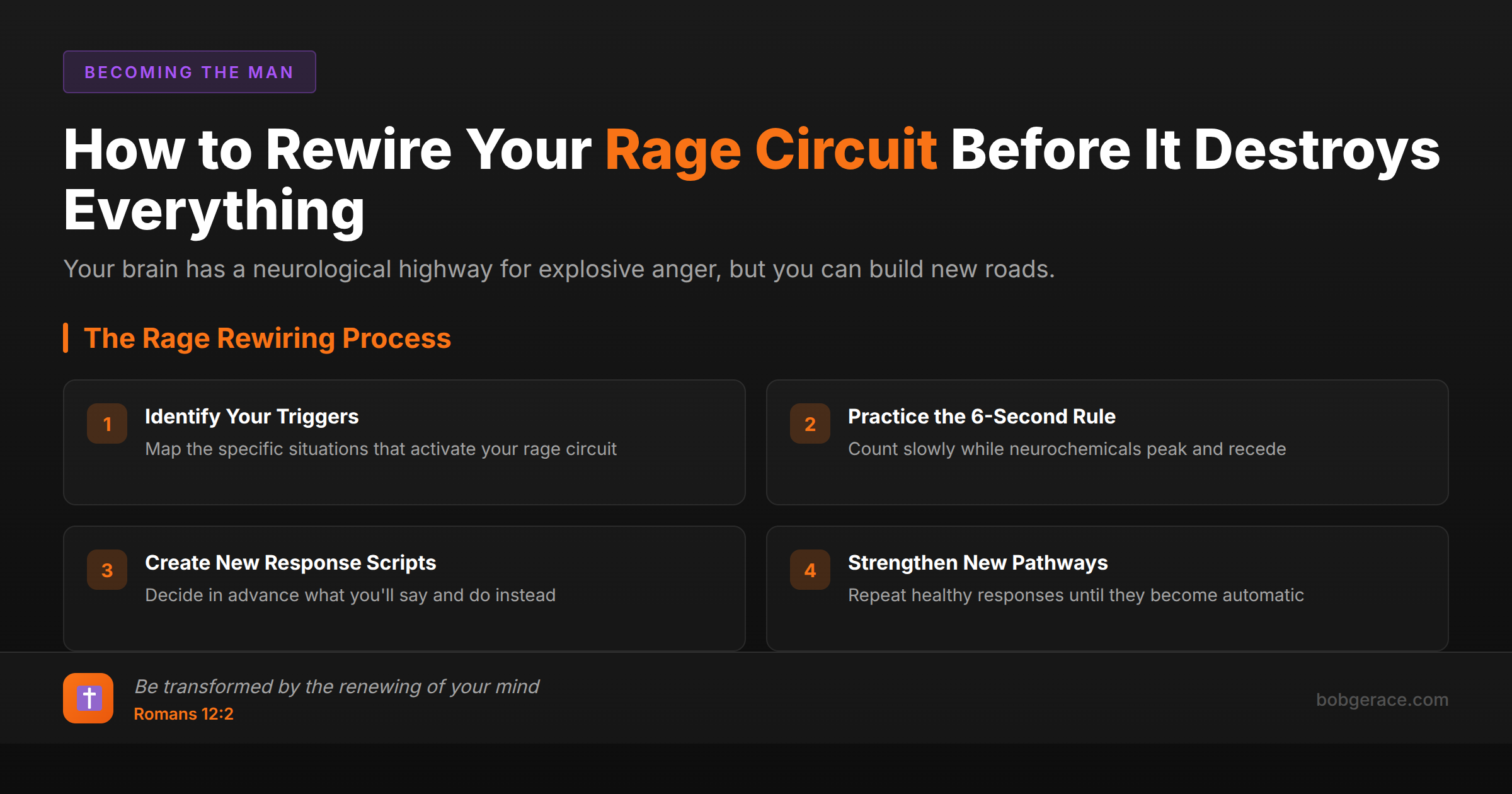
The 'rage circuit' is a neural pathway in your brain that triggers explosive anger when activated. It's essentially a well-worn highway of neurons that fire together, creating automatic rage responses to certain triggers. The good news? Your brain has neuroplasticity - the ability to form new pathways and weaken old ones. Rewiring this circuit requires intentional practice and patience. You'll need to interrupt the automatic response pattern, create new neural pathways through different responses, and strengthen these new patterns through repetition. This isn't about suppressing anger - it's about changing your brain's default response from destructive rage to healthier expressions of frustration and boundary-setting.
The Full Picture
Your brain is wired for survival, and the rage circuit is part of that ancient programming. When you perceive a threat - whether it's your spouse's tone, a messy kitchen, or feeling disrespected - your amygdala can hijack your prefrontal cortex faster than you can think "I should calm down."
Here's what happens: The trigger hits, your amygdala sounds the alarm, stress hormones flood your system, and your rage circuit fires. This pathway has been carved deep through years of use, making it the brain's go-to response. It's like water flowing down the same groove in a hillside - it naturally follows the path of least resistance.
But your brain isn't stuck. Neuroplasticity means you can literally rewire these patterns. Every time you choose a different response, you're building new neural pathways. Every time you pause instead of explode, you're weakening the old circuit and strengthening new ones.
The key insight: Your rage circuit isn't broken - it's just overdeveloped. It served a purpose at some point, probably protecting you from real threats. But now it's firing at marriage conflicts like they're life-or-death situations. The goal isn't to eliminate anger entirely - anger can be righteous and necessary. The goal is to give your prefrontal cortex time to evaluate whether this situation actually calls for a strong response, and if so, what kind.
This process takes time. You're not just changing behavior; you're literally changing your brain structure. Be patient with yourself while also being intentional about the work.
What's Really Happening
From a neuroscience perspective, the rage circuit involves several brain regions working together in a dysfunctional pattern. The amygdala, your brain's alarm system, becomes hypervigilant and starts interpreting neutral or mildly negative stimuli as major threats. Meanwhile, the prefrontal cortex - responsible for executive function and emotional regulation - gets suppressed during these rage episodes.
What makes this particularly challenging in marriages is that we often develop specific rage circuits around our spouse's behaviors. Your brain starts to anticipate conflict and primes the rage response before your partner even finishes speaking. This creates a neurological hair trigger that can turn minor disagreements into explosive fights.
The rewiring process involves two key mechanisms: synaptic pruning and neurogenesis. When you consistently choose new responses, unused neural pathways literally get pruned away while new, healthier pathways strengthen. This is why consistency matters more than perfection - you're competing with years of established neural patterns.
I often tell clients that rewiring takes 60-90 days of consistent practice to see significant changes, with continued improvement over 6-12 months. The brain needs repetition to make new patterns automatic. This is why techniques like the 6-second rule, mindfulness practices, and response rehearsal are so effective - they give you tools to interrupt the old pattern while building new ones.
What Scripture Says
God's Word speaks directly to our struggle with anger and the possibility of transformation. Romans 12:2 tells us, "Do not conform to the pattern of this world, but be transformed by the renewing of your mind." This isn't just spiritual advice - it's neuroscience. God designed your brain with the capacity for renewal and change.
Ephesians 4:26-27 gives us the framework: "In your anger do not sin: Do not let the sun go down while you are still angry, and do not give the devil a foothold." Notice it doesn't say don't get angry - it says don't sin in your anger. The rage circuit often leads us into sinful expressions of anger that damage our marriages and grieve God's heart.
James 1:19-20 provides the practical strategy: "Everyone should be quick to listen, slow to speak and slow to become angry, because human anger does not produce the righteousness that God desires." This "slow to become angry" isn't just good advice - it's a rewiring technique. You're training your brain to pause and engage your prefrontal cortex before reacting.
Proverbs 16:32 reminds us of what we're working toward: "Better a patient person than a warrior, a person who controls their temper than one who takes a city." Self-control isn't willpower - it's the fruit of a renewed mind and rewired brain patterns.
God hasn't left you powerless against destructive anger patterns. He's given you His Spirit, His Word, and a brain capable of change. The rewiring process is both spiritual transformation and neurological healing working together.
What To Do Right Now
-
1
Identify your triggers - Write down the specific situations, words, or behaviors that activate your rage circuit. Awareness is the first step to interruption.
-
2
Practice the 6-second rule - When triggered, count to six slowly. Neurochemicals peak and begin to recede in 6 seconds, giving your prefrontal cortex time to engage.
-
3
Create a new response script - Decide in advance what you'll say and do instead of raging. Practice this new response until it becomes automatic.
-
4
Use the STOP technique - Stop what you're doing, Take a breath, Observe what's happening in your body and mind, Proceed with your chosen response.
-
5
Rehearse daily - Spend 5 minutes daily visualizing triggers and practicing your new responses. You're literally building new neural pathways through mental rehearsal.
-
6
Track your progress - Keep a simple log of triggers and responses. Celebrate small wins as you notice the rage circuit losing power and new patterns strengthening.
Related Questions
- What is 'amygdala hijack' and how do I interrupt it?
- What's happening in my brain when I rage?
- What does chronic anger do to my nervous system?
- What is 'window of tolerance' and how do I widen mine?
- What's the relationship between stress and anger threshold?
- What role does cortisol play in my reactivity?
- What is 'betrayal trauma' and do I have it?
- What's happening to my nervous system right now?
- What does nervous system regulation look like?
- How do I regulate when my body is in fight-or-flight?
Also find Bob on
Subscribe for weekly videos on Christian marriage.
Your Rage Circuit Has a Story
A coach who knows your triggers, your marriage, and what's actually underneath the explosion can help you rewire this faster than guessing alone.
Talk to Bob →