What is 'healthy masculinity'?
6 min read
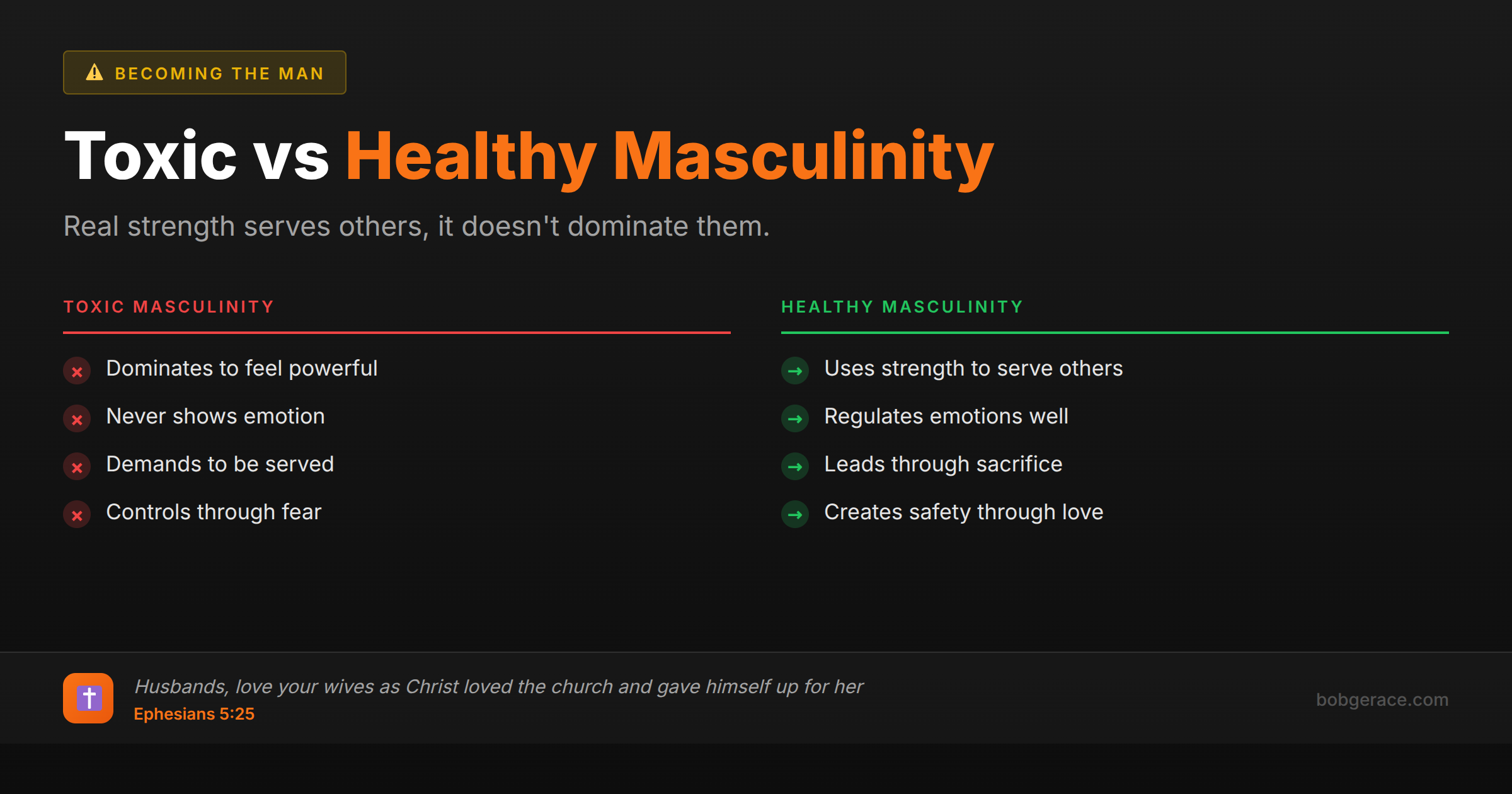
Healthy masculinity is strength channeled in service of others, not dominance over them. It's the ability to be both powerful and tender, decisive yet humble, protective without being controlling. A healthy masculine man leads through sacrifice, speaks truth with love, and uses his strength to create safety for his wife and family. This isn't about being the loudest voice in the room or never showing emotion. True masculine strength shows up in emotional regulation, moral courage, and the willingness to do hard things for the benefit of others. It's masculinity that builds up rather than tears down, that serves rather than demands to be served.
The Full Picture
Healthy masculinity has been hijacked by two extremes – toxic machismo on one side and passive abdication on the other. Neither serves your marriage or honors God's design.
The toxic version says masculinity means never being vulnerable, always being right, and using strength to get your way. This creates marriages where wives walk on eggshells and men live in isolation behind walls of pride.
The passive version says masculinity is inherently toxic, so men should suppress their natural drive, avoid making decisions, and apologize for taking up space. This creates marriages where wives feel unsupported and men feel emasculated.
Healthy masculinity finds the narrow path between these ditches. It embraces strength while rejecting dominance. It values decisiveness while remaining teachable. It protects without controlling.
A healthy masculine man knows his voice matters, but he doesn't need to be the only voice. He can make tough decisions when needed, but he seeks input from his wife. He's comfortable with his own power, which means he doesn't need to abuse it or prove it constantly.
This kind of masculinity is magnetic to wives because it provides what they deeply need – a man who is strong enough to lead when necessary, secure enough to follow when appropriate, and mature enough to know the difference. It's masculinity in service of love, not in service of ego.
What's Really Happening
From a therapeutic perspective, healthy masculinity is fundamentally about emotional regulation and secure attachment. Men who embody healthy masculinity have learned to manage their emotions without suppressing them or letting them run wild.
Neurologically, men typically process emotions differently than women, often needing more time to identify and articulate feelings. Healthy masculinity honors this difference without using it as an excuse to avoid emotional connection. These men have developed what we call 'emotional granularity' – the ability to distinguish between different emotional states and respond appropriately.
Secure attachment patterns show up clearly in healthy masculine behavior. These men can be close without being clingy, independent without being distant. They've learned that vulnerability is not weakness but rather the foundation of intimacy. Research consistently shows that couples where men can express vulnerability appropriately report higher satisfaction and stability.
The key therapeutic insight is that healthy masculinity is learned behavior, not instinct. Men develop it through modeling, practice, and often through addressing their own childhood wounds around masculinity. Many men received messages that emotional expression was weakness or that their worth was tied to performance and achievement. Healing these wounds allows authentic masculine strength to emerge.
What Scripture Says
Scripture gives us the perfect model of healthy masculinity in Christ himself. Jesus was both tender and tough, gentle with the hurting and fierce with the proud.
"Husbands, love your wives as Christ loved the church and gave himself up for her" (Ephesians 5:25). Notice it doesn't say 'rule your wife' or 'make your wife submit.' It says love her sacrificially. This is strength in service, not strength for selfish gain.
"Be watchful, stand firm in the faith, act like men, be strong. Let all that you do be done in love" (1 Corinthians 16:13-14). Biblical manhood combines courage and strength with love as the driving motivation.
"He has told you, O man, what is good; and what does the Lord require of you but to do justice, and to love kindness, and to walk humbly with your God?" (Micah 6:8). True masculine strength pursues justice and shows kindness from a place of humility.
"The fruit of the Spirit is love, joy, peace, patience, kindness, goodness, faithfulness, gentleness, self-control" (Galatians 5:22-23). Notice that gentleness and self-control are marks of spiritual maturity, not weakness.
Jesus wept at Lazarus's tomb, showed righteous anger at injustice, served his disciples by washing their feet, and faced the cross with courage. This is our model – strength that serves, power that protects, leadership that sacrifices.
What To Do Right Now
-
1
Assess your current masculine expression – are you more prone to toxic dominance or passive withdrawal?
-
2
Practice emotional awareness by naming one feeling you have each day and sharing it with your wife
-
3
Ask your wife where she needs you to step up with strength and where she needs you to step back with humility
-
4
Identify one area where you've been using strength selfishly and choose to use it sacrificially instead
-
5
Find a mentor or group of men who model healthy masculinity and learn from their example
-
6
Study how Jesus combined strength and tenderness in his interactions with people
Related Questions
Ready to Become the Man Your Marriage Needs?
Stop choosing between being weak or being a tyrant. Learn how to lead with strength and love in a way that draws your wife closer.
Work With Me →