What is 'toxic masculinity' and what isn't?
6 min read
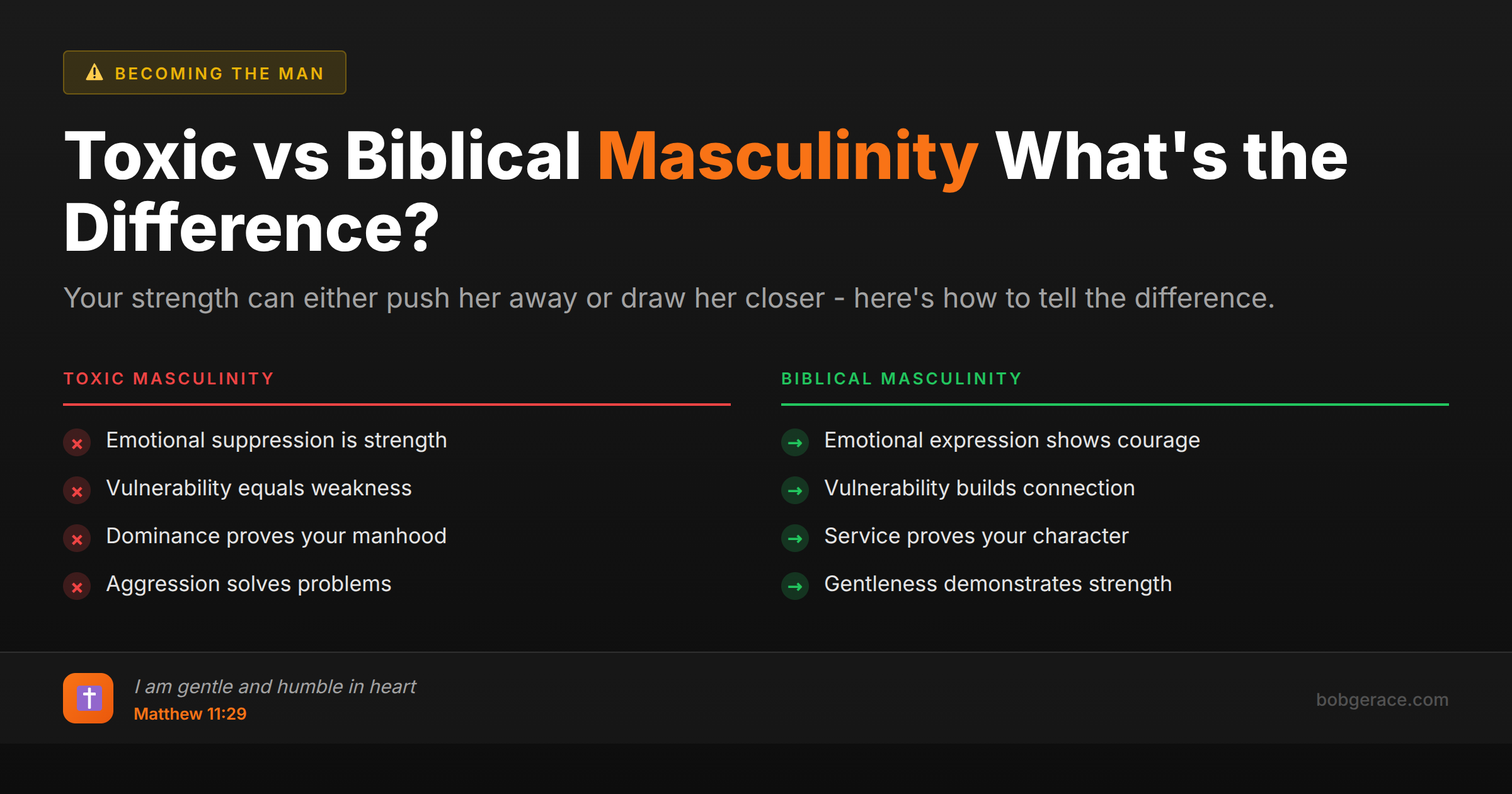
Toxic masculinity refers to cultural masculine norms that become harmful when taken to extremes - like emotional suppression, aggression as problem-solving, or viewing vulnerability as weakness. It's not masculinity itself that's the problem, but distorted expressions of it that damage relationships and personal growth. Healthy masculinity includes strength paired with gentleness, leadership with servanthood, and confidence with humility. The key difference is that toxic masculinity demands proving your manhood through dominance and emotional disconnection, while biblical masculinity calls men to use their strength to protect, provide, and nurture others. Understanding this distinction is crucial for men who want to be strong leaders in their marriages without falling into destructive patterns that push their wives away.
The Full Picture
The term 'toxic masculinity' has become a lightning rod in our culture, often misunderstood by both its critics and proponents. Let's cut through the noise and get to what really matters for your marriage.
Toxic masculinity describes masculine behaviors that have become distorted and harmful. This includes: - Emotional suppression - believing real men never cry, feel fear, or express vulnerability - Aggression as default - using anger, intimidation, or force to solve problems or maintain control - Dominance over partnership - viewing relationships as power struggles where someone must win - Performance pressure - constantly needing to prove masculinity through external achievements or behaviors - Isolation and self-reliance - refusing help or connection because it seems weak
These patterns don't make men stronger - they make them brittle. They create distance in marriage and rob men of authentic relationships.
Healthy masculinity looks different: - Emotional intelligence - feeling deeply and expressing appropriately - Protective strength - using power to serve and safeguard others - Confident vulnerability - being secure enough to admit mistakes and ask for help - Sacrificial leadership - leading through service, not dominance - Intentional connection - pursuing relationship and intimacy
The confusion comes when people think all masculine traits are toxic. That's not true. Strength, leadership, protection, and provision are good masculine qualities. The problem isn't the trait - it's when these gifts become twisted into self-serving weapons rather than other-serving tools.
Your wife doesn't need you to be less of a man. She needs you to be the right kind of man - one whose strength makes her feel safe, not threatened.
What's Really Happening
From a clinical perspective, what we label 'toxic masculinity' often stems from early messaging about what it means to be a man. Many men learned that emotions are dangerous, vulnerability equals weakness, and their value comes from performance rather than identity.
These beliefs create what I call 'defensive masculinity' - where a man's sense of self feels so fragile that any perceived threat triggers protective behaviors. This might look like shutting down emotionally when conflict arises, using anger to create distance when feeling overwhelmed, or refusing to admit fault to maintain a sense of control.
The neurobiological reality is that chronic emotional suppression actually weakens men's capacity for resilience and connection. When we consistently avoid or suppress emotional experiences, we don't build the neural pathways necessary for emotional regulation and empathy.
Healthy masculinity, by contrast, emerges from secure identity and emotional intelligence. Men who understand their inherent worth aren't threatened by showing vulnerability or admitting mistakes. They can access the full range of human emotions while still maintaining their masculine identity.
In marriage therapy, I often see men who equate emotional expression with loss of respect from their wives. The opposite is true - wives consistently report feeling more attracted to and connected with husbands who can be both strong and emotionally present. The integration of strength and tenderness, confidence and humility, creates the kind of masculine presence that wives find most appealing and trustworthy.
What Scripture Says
Scripture provides the clearest picture of healthy masculinity, showing us men who were both strong and tender, confident and humble.
Jesus is our model: 'Take my yoke upon you and learn from me, for I am gentle and humble in heart' (Matthew 11:29). Christ demonstrated perfect masculinity - bold enough to cleanse the temple, tender enough to weep with those who mourned. His strength served others, never himself.
Emotional expression is godly: 'Jesus wept' (John 11:35). The shortest verse in Scripture shows us that real men feel deeply and aren't ashamed to show it. David, called a man after God's own heart, poured out his emotions throughout the Psalms - fear, joy, anger, sorrow.
Leadership means service: 'Whoever wants to become great among you must be your servant' (Mark 10:43). Biblical leadership isn't about dominance but about laying down your life for others. This applies directly to marriage - husbands lead by serving, not by demanding submission.
Strength protects the vulnerable: 'Defend the weak and the fatherless; uphold the cause of the poor and the oppressed' (Psalm 82:3). Masculine strength exists to shield others, especially those who are vulnerable.
Gentleness is strength under control: 'But the fruit of the Spirit is love, joy, peace, forbearance, kindness, goodness, faithfulness, gentleness and self-control' (Galatians 5:22-23). Notice gentleness and self-control are both fruits of the Spirit - marks of spiritual maturity, not weakness.
Biblical masculinity combines the fierce protective love of a father with the tender care of a shepherd. It's masculinity in service to others, not in service to self.
What To Do Right Now
-
1
Identify one area where you've confused toughness with emotional shutdown - commit to expressing feelings appropriately in that area
-
2
Ask your wife how your strength makes her feel - does it create safety or fear in your relationship?
-
3
Practice vulnerable leadership by admitting a recent mistake and asking for forgiveness without defensiveness
-
4
Choose one masculine trait you possess (protection, provision, leadership) and evaluate: does this serve my wife or serve my ego?
-
5
Spend time with men who model healthy masculinity - observe how they balance strength and tenderness
-
6
Study Jesus's interactions with women in the Gospels - notice how his masculinity created safety and dignity for them
Related Questions
Ready to Become the Man Your Marriage Needs?
Don't let cultural confusion about masculinity sabotage your marriage. Get clear on what healthy masculinity looks like and how to live it out.
Work With Me →