What is 'boy psychology' vs. 'man psychology'?
6 min read
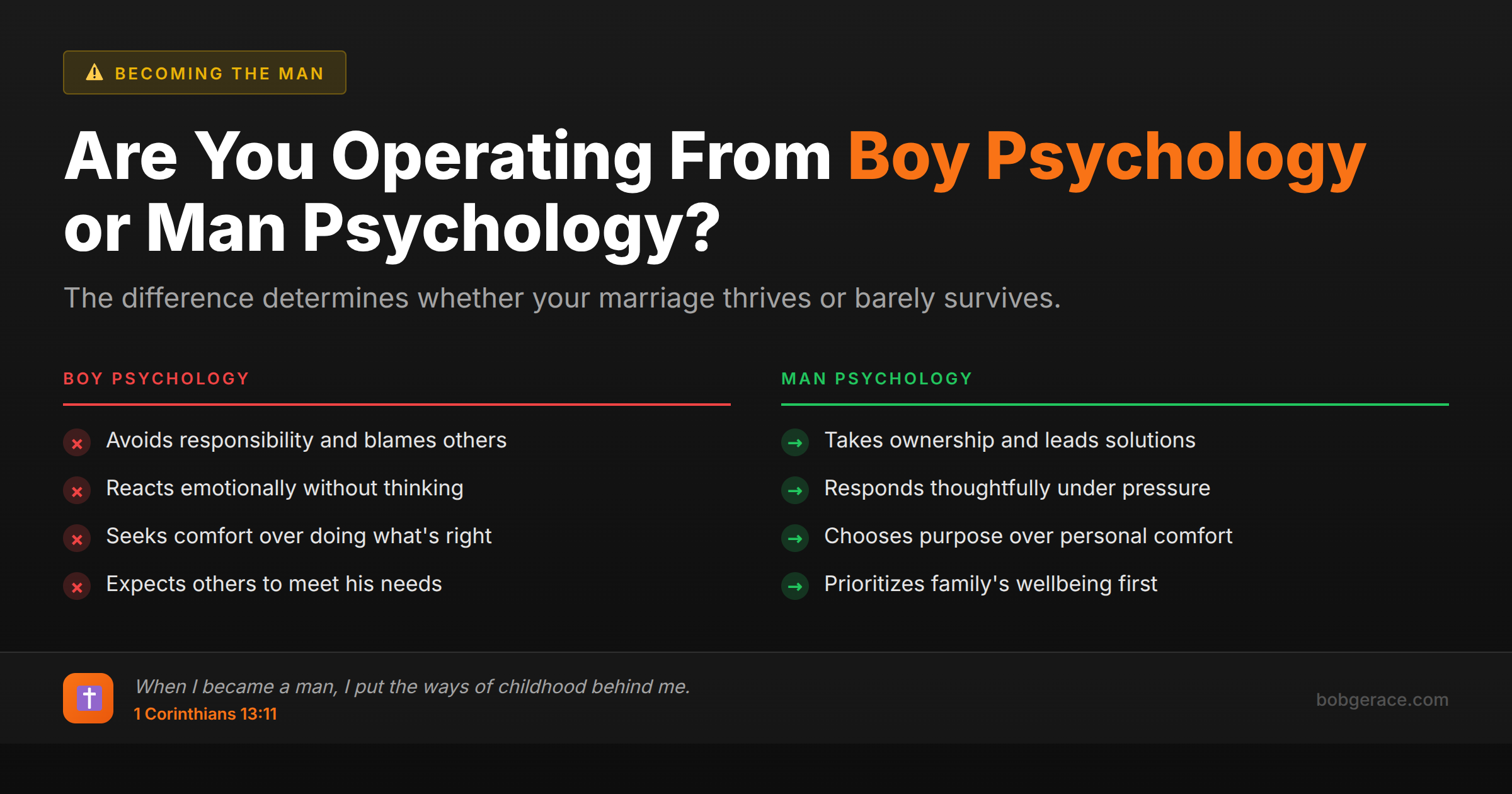
Boy psychology operates from self-centeredness, avoidance of responsibility, and emotional reactivity. It's characterized by seeking comfort, avoiding conflict, and expecting others to meet your needs without reciprocating. Man psychology, in contrast, embraces responsibility, leads with purpose, and prioritizes others' wellbeing over personal comfort. The shift isn't automatic with age—many grown men still operate from boy psychology, creating chaos in their marriages and families. True masculine development requires intentional growth, accountability, and the courage to face difficult truths about yourself. This transformation is essential for becoming the husband and leader your family needs.
The Full Picture
Boy psychology is fundamentally reactive and self-focused. Men operating from this mindset avoid difficult conversations, blame others for their problems, and expect their wives to manage their emotions. They seek immediate gratification, struggle with delayed rewards, and often feel entitled to comfort without earning it. Boy psychology says "What can I get?" and "How can I avoid pain?"
Man psychology is proactive and others-focused. Mature men take ownership of their mistakes, initiate difficult but necessary conversations, and manage their own emotional responses. They understand that leadership requires sacrifice and that true strength comes from serving others, especially their families. Man psychology asks "What can I give?" and "How can I grow through this challenge?"
The transition isn't about suppressing emotions or becoming stoic. It's about emotional regulation versus emotional reactivity. Boys react; men respond thoughtfully. Boys avoid; men engage. Boys consume; men create and provide.
This distinction shows up everywhere: in how you handle conflict with your wife, how you discipline your children, how you approach your career, and how you manage stress. Boy psychology seeks escape routes; man psychology seeks solutions. The difference determines whether you're a burden to your family or their greatest blessing.
Most importantly, this isn't about age—it's about maturity. Some 50-year-old men still operate from boy psychology, while some younger men have embraced mature masculinity. The choice is yours, but your family pays the price either way.
What's Really Happening
From a developmental psychology perspective, the transition from boy to man psychology represents what we call individuation—the process of becoming a fully integrated, autonomous adult capable of genuine intimacy and responsibility.
Boy psychology is often rooted in attachment wounds and unresolved developmental tasks. Men stuck here typically experienced either over-protective parenting that prevented them from developing resilience, or neglectful parenting that left them emotionally immature. They remain in what psychologists call a "pseudo-adult" state—physically mature but emotionally adolescent.
Neurologically, boy psychology operates primarily from the limbic system—the brain's emotional center. This creates reactive patterns, impulsivity, and difficulty with long-term thinking. Man psychology engages the prefrontal cortex, enabling executive function, emotional regulation, and strategic decision-making.
The transformation requires neuroplasticity—literally rewiring your brain through consistent new behaviors. This is why change feels uncomfortable initially. Your brain is creating new neural pathways while old patterns resist.
Clinically, I see men who remain in boy psychology struggle with anxiety, depression, and relationship dysfunction. Their wives often become "mother figures" rather than partners, creating resentment and sexual disconnection. The marriage becomes parent-child rather than husband-wife.
The good news? Transformation is possible at any age. With intentional practice, accountability, and often professional guidance, men can develop mature masculine psychology and dramatically improve their relationships and life satisfaction.
What Scripture Says
Scripture clearly distinguishes between childish and mature thinking. 1 Corinthians 13:11 states: "When I was a child, I talked like a child, I thought like a child, I reasoned like a child. When I became a man, I put the ways of childhood behind me." This isn't about age—it's about mindset transformation.
Ephesians 4:14-15 warns against remaining "infants, tossed back and forth by the waves," calling us instead to "grow to become in every respect the mature body of him who is the head, that is, Christ." Spiritual and emotional maturity go hand in hand.
God's design for masculine leadership is clear in Ephesians 5:25-28: "Husbands, love your wives, just as Christ loved the church and gave himself up for her." This is man psychology—sacrificial leadership that puts others first. Boy psychology seeks to be served; man psychology serves.
1 Timothy 3:2-5 describes mature masculinity: "self-controlled, respectable... He must manage his own family well and see that his children obey him, and he must do so in a manner worthy of full respect." This requires emotional regulation, not reactivity.
The Proverbs repeatedly contrast wisdom with foolishness, maturity with childishness. Proverbs 27:14 says "A fool gives full vent to his rage, but the wise bring calm in the end." Man psychology chooses wisdom over emotional reactions.
1 Corinthians 16:13 commands: "Be on your guard; stand firm in the faith; be courageous; be strong." This isn't toxic masculinity—it's mature masculinity that protects and provides for others through strength under control.
What To Do Right Now
-
1
Take ownership inventory: List three recent situations where you blamed others or circumstances instead of taking responsibility. Write down what you could have done differently.
-
2
Practice the pause: Before reacting emotionally to your wife or children, count to five and ask "What response would serve them best?" instead of "How do I feel right now?"
-
3
Initiate difficult conversations: Identify one important topic you've been avoiding with your wife. Schedule time to discuss it calmly and constructively.
-
4
Seek feedback: Ask your wife "How can I better serve and lead our family?" Listen without defending or explaining. Take notes.
-
5
Find masculine mentorship: Connect with an older, wiser man who models mature masculinity. Schedule regular meetings for guidance and accountability.
-
6
Daily self-examination: Each evening, ask yourself "Did I operate from boy psychology or man psychology today?" Identify specific examples and plan tomorrow's improvements.
Related Questions
- What is 'healthy masculinity'?
- What does mature masculine look like?
- What are the archetypes of mature masculine (King, Warrior, Magician, Lover)?
- What is the path from boy to man?
- What did I not receive from my father that I need?
- What does integrated masculine look like?
- What does masculine leadership look like?
- How do I become the husband she needs?
- What is emotional intelligence and why does it matter?
- Why do men struggle with emotions?
Also find Bob on
Subscribe for weekly videos on Christian marriage.
You Can't Make This Shift Alone
Moving from boy psychology to man psychology in your actual marriage—with your specific patterns and blind spots—requires someone who sees what you can't. Bob works with men one-on-one to make this real.
Talk to Bob →