What does mature masculine look like?
6 min read
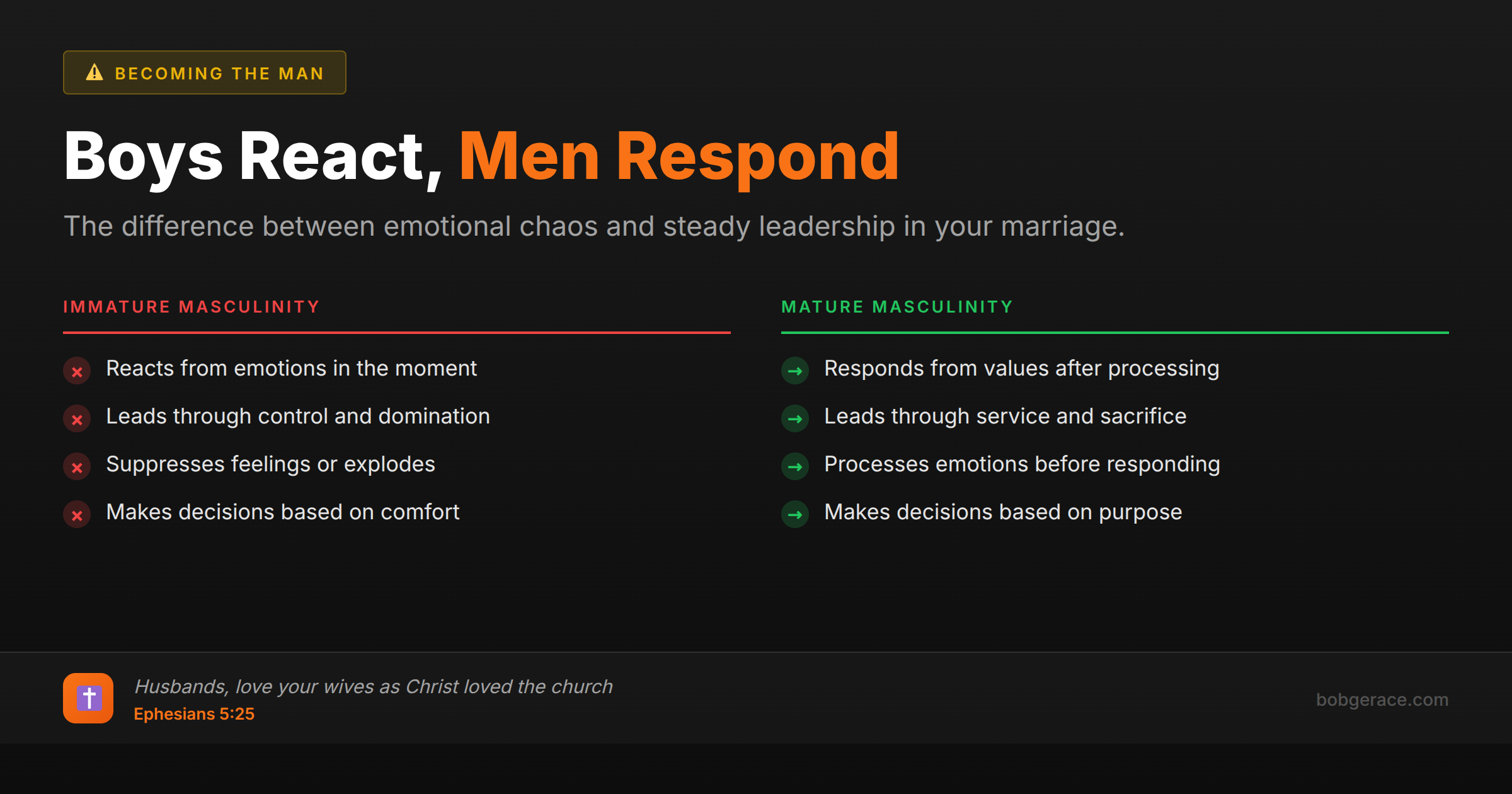
Mature masculinity is characterized by emotional regulation, clear communication, and steady leadership without domination. A mature man doesn't react from his emotions but responds from his values. He takes responsibility for his actions, creates safety for his family, and leads through service rather than control. This isn't about suppressing feelings—it's about processing them internally before responding. He's secure enough to be vulnerable when appropriate, strong enough to remain calm under pressure, and wise enough to know when to speak and when to listen. Most importantly, he operates from a foundation of faith and purpose that goes beyond himself.
The Full Picture
Mature masculinity has been twisted and confused in our culture, leaving many men unsure of what they're supposed to be. Let me be clear: mature masculinity isn't toxic masculinity, and it's not the feminized version that says men should just be more like women. It's something entirely different.
A mature man is emotionally regulated. He doesn't explode when things don't go his way. He doesn't pout, give the silent treatment, or make everyone else responsible for managing his emotions. When conflict arises, he stays present rather than shutting down or lashing out. This doesn't mean he doesn't feel anger, frustration, or disappointment—he absolutely does. But he processes these emotions internally and responds from his values rather than reacting from his feelings.
He communicates with clarity and kindness. He says what he means without being harsh. He can have difficult conversations without making them more difficult than they need to be. He listens to understand, not just to formulate his next argument. When his wife shares something with him, he doesn't immediately try to fix it unless she asks for solutions.
He leads through service, not domination. Biblical headship isn't about being the boss—it's about being willing to sacrifice for the good of your family. He makes decisions with his wife's input and considers her needs equal to his own. He's the first to apologize when he's wrong and the first to take responsibility when things go sideways.
He's consistent and reliable. His family knows what to expect from him. He follows through on his commitments, shows up when he says he will, and creates an atmosphere of safety and stability. He's the same man at home that he is in public.
What's Really Happening
From a clinical perspective, mature masculinity represents the integration of emotional intelligence with traditionally masculine traits of strength and leadership. Many men struggle with emotional dysregulation—their nervous system gets hijacked by stress, conflict, or perceived threats, leading to fight-or-flight responses that damage relationships.
Mature masculine development involves learning to regulate the autonomic nervous system. When a man can stay in his prefrontal cortex during conflict rather than dropping into his limbic system, he can think clearly, communicate effectively, and make decisions based on wisdom rather than emotion. This is neuroplasticity at work—we can literally rewire our brains for better responses.
The psychological concept of differentiation is crucial here. A mature man has a solid sense of self that doesn't require external validation or control over others to maintain. He can remain connected to his family while maintaining his individual identity. He doesn't lose himself in relationship, nor does he require distance to feel secure.
Attachment theory shows us that secure attachment in childhood creates adults who can be both intimate and autonomous. For men who didn't develop secure attachment early, this can be learned in adulthood through conscious practice and often therapeutic work. The goal is earned security—developing the capacity for healthy relationships regardless of your starting point.
Neurologically, mature masculinity involves the integration of both hemispheres of the brain—the logical, analytical left brain with the intuitive, emotional right brain. This allows for both strength and sensitivity, logic and empathy, leadership and collaboration.
What Scripture Says
Scripture gives us the clearest picture of mature masculinity through the character of Christ and the instructions given to husbands and fathers.
Ephesians 5:25-26 - "Husbands, love your wives, just as Christ loved the church and gave himself up for her to make her holy, cleansing her by the washing with water through the word." This is sacrificial love—putting her needs before your own convenience or comfort.
1 Corinthians 16:13-14 - "Be on your guard; stand firm in the faith; be courageous; be strong. Do everything in love." Notice the balance: strength and courage combined with love. This isn't weak passivity or harsh domination—it's strong love.
James 1:19-20 - "My dear brothers and sisters, take note of this: Everyone should be quick to listen, slow to speak and slow to become angry, because human anger does not produce the righteousness that God desires." Emotional regulation is a biblical mandate, not just good psychology.
1 Peter 3:7 - "Husbands, in the same way be considerate as you live with your wives, and treat them with respect as the weaker partner and as heirs with you of the gracious gift of life, so that nothing will hinder your prayers." This verse emphasizes both protection (acknowledging differences) and equality (co-heirs).
Proverbs 27:5-6 - "Better is open rebuke than hidden love. Wounds from a friend can be trusted, but an enemy multiplies kisses." A mature man can speak truth in love, even when it's difficult.
Galatians 5:22-23 - The fruit of the Spirit includes self-control, patience, and gentleness—all characteristics of mature masculinity guided by God's Spirit.
Jesus himself modeled this perfectly: strong enough to overturn tables in the temple, gentle enough to welcome children, secure enough to wash his disciples' feet, and courageous enough to face the cross.
What To Do Right Now
-
1
Practice the 24-hour rule: Before responding to any emotionally charged situation with your wife, take 24 hours to process your emotions and pray about your response.
-
2
Implement daily check-ins: Ask your wife each day 'How are you feeling?' and listen without trying to fix or minimize her experience.
-
3
Develop a personal mission statement: Write down your core values and the type of husband and father you want to be, then review it weekly.
-
4
Create accountability: Find another mature Christian man who can ask you hard questions about how you're treating your wife and family.
-
5
Start morning devotions: Begin each day with 15 minutes of prayer and Bible reading to ground yourself in God's truth before facing daily challenges.
-
6
Practice physical regulation: When you feel anger or frustration rising, take five deep breaths and count to ten before speaking or acting.
Related Questions
- What is 'healthy masculinity'?
- What is 'boy psychology' vs. 'man psychology'?
- What are the archetypes of mature masculine (King, Warrior, Magician, Lover)?
- What is the path from boy to man?
- What does masculine leadership look like?
- What does Jesus model about masculine leadership?
- How do I be strong and gentle?
Also find Bob on
Subscribe for weekly videos on Christian marriage.
Your Marriage Needs Your Version
Mature masculinity isn't a checklist—it's calibrated to your specific marriage, your wife, your blind spots. A coach sees what you can't see alone.
Talk to Bob →