What's the right amount of detail to know?
6 min read
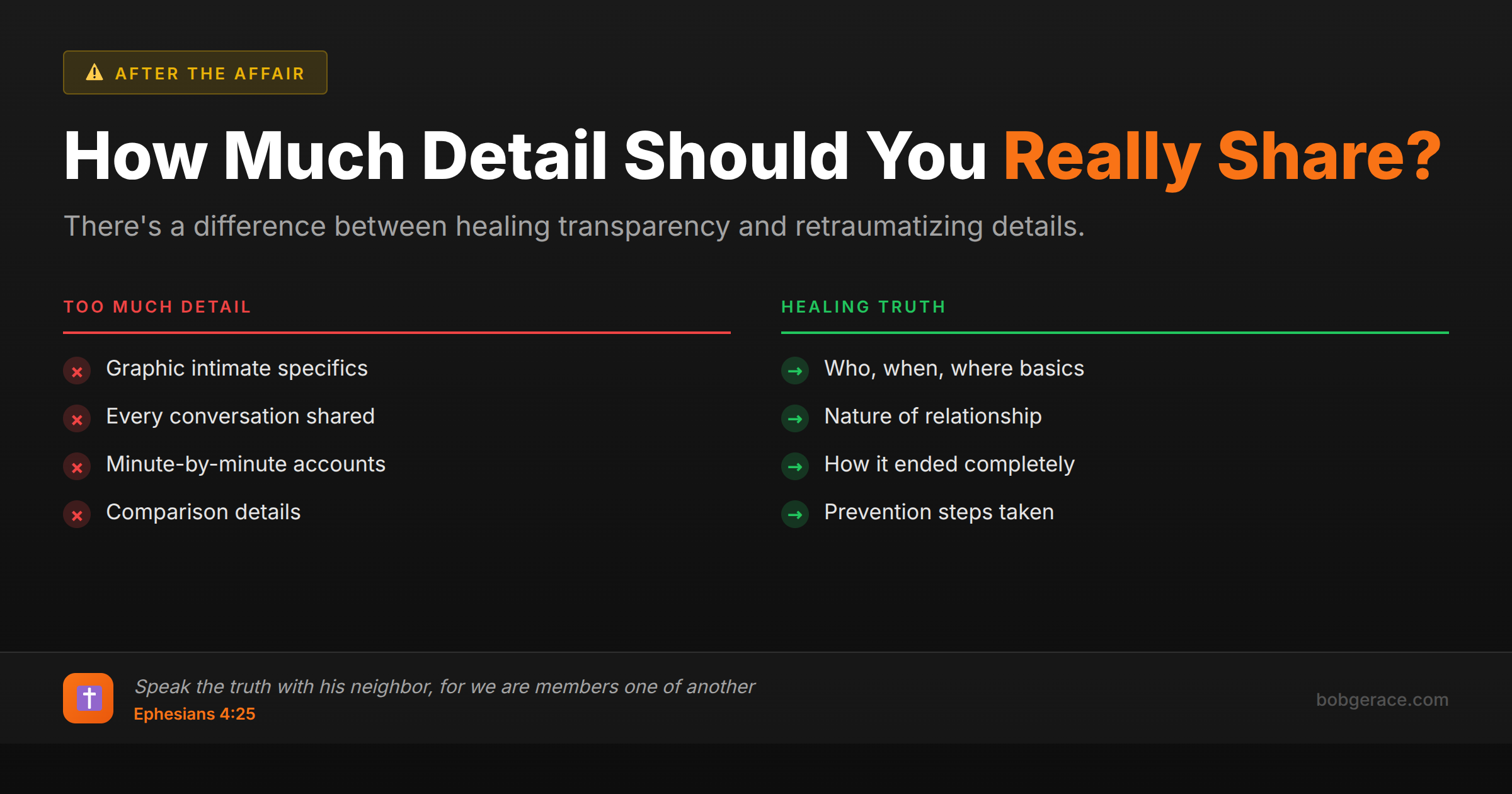
The right amount of detail is enough to restore trust without retraumatizing the betrayed spouse. Generally, this means knowing the essential facts: who, when, where, and the nature of the relationship, but not explicit intimate details. The betrayed spouse should lead this conversation, asking specific questions they need answered for healing. Most couples find that knowing the timeline, whether it was emotional or physical, how it ended, and what steps are being taken to prevent it from happening again are crucial. However, graphic sexual details typically cause more harm than healing. The goal is informed trust-building, not torture through unnecessary specifics.
The Full Picture
The disclosure process is one of the most delicate aspects of affair recovery. Too little information leaves the betrayed spouse's imagination to fill in gaps (and imagination is rarely kind). Too much graphic detail can create traumatic images that interfere with healing for years.
The betrayed spouse should control the pace and depth of disclosure. This isn't about satisfying curiosity—it's about gathering the information needed to make informed decisions about the marriage and begin rebuilding trust. Some need more details to feel secure; others need less to avoid retraumatization.
Essential information typically includes: the identity of the other person, duration and frequency of contact, locations where meetings occurred, whether protection was used (health concerns), how the affair ended, and what safeguards are now in place. Details that rarely help healing: explicit descriptions of physical intimacy, comparisons between spouses, or romantic conversations.
The unfaithful spouse must answer honestly when asked direct questions, but shouldn't volunteer graphic details unprompted. This requires wisdom, timing, and often professional guidance to navigate safely.
Remember: disclosure is a process, not a single conversation. Questions often arise weeks or months later as the betrayed spouse processes the trauma. The goal is creating an environment where truth-telling feels safe for both spouses while protecting the betrayed spouse from unnecessary additional trauma.
What's Really Happening
From a trauma perspective, disclosure must be carefully managed to avoid retraumatization while still providing the transparency needed for recovery. Betrayal trauma creates a hypervigilant state where the mind desperately seeks information to prevent future harm. This is why betrayed spouses often feel compelled to know 'everything.'
However, research shows that excessive graphic detail can actually impede recovery. Intrusive mental images from overly detailed disclosures can trigger flashbacks, interfere with intimacy restoration, and prolong the acute trauma responsee. The brain's tendency to ruminate on disturbing details can become a barrier to healing rather than a bridge to it.
The therapeutic approach focuses on 'therapeutic disclosure'—providing enough information to answer the core //blog.bobgerace.com/marriage-deep-probe-questions-root-issues/:questions driving the betrayed spouse's anxiety while avoiding gratuitous details that serve no healing purpose. This typically includes factual timelines, the nature and extent of betrayals, health-related concerns, and current safety measures.
I often guide couples through a structured disclosure process where we identify what information is truly needed for informed decision-making versus what might satisfy painful curiosity but ultimately harm recovery. The betrayed spouse's healing, not punishment of the unfaithful spouse, should guide these conversations. Professional support during this phase significantly improves outcomes and reduces the risk of disclosure becoming another traumatic event.
What Scripture Says
God calls us to truth, but also to wisdom and grace in how we handle it. The Bible provides clear guidance on both transparency and wise communication during restoration.
Truth is foundational to healing: *'Therefore, having put away falsehood, let each one of you speak the truth with his neighbor, for we are members one of another'* (Ephesians 4:25). Deception has already caused tremendous damage—continued dishonesty will only deepen the wounds.
But truth must be spoken with love and wisdom: *'Rather, speaking the truth in love, we are to grow up in every way into him who is the head, into Christ'* (Ephesians 4:15). This means being honest without being needlessly hurtful, providing information that serves healing rather than satisfying destructive curiosity.
Wisdom guides what we share and when: *'The heart of the righteous ponders how to answer, but the mouth of the wicked pours out evil things'* (Proverbs 15:28). Not every true thing needs to be shared in graphic detail. Wisdom considers the impact of our words on our spouse's healing.
God desires restoration, not destruction: *'Brothers, if anyone is caught in any transgression, you who are spiritual should restore him in a spirit of gentleness'* (Galatians 6:1). The disclosure process should serve the goal of restoration, not punishment.
Confession brings freedom, but it must be done thoughtfully: *'Therefore, confess your sins to one another and pray for one another, that you may be healed'* (James 5:16). This healing-focused confession looks different from harmful oversharing.
What To Do Right Now
-
1
Pause before demanding or sharing details - Take time to consider whether specific information will help or hinder healing
-
2
Focus on essential facts first - Address who, when, where, and the nature of the relationship before moving to intimate details
-
3
Let the betrayed spouse lead - They should control the pace and depth of disclosure based on their healing needs
-
4
Get professional guidance - A trained counselor can help navigate disclosure safely and effectively
-
5
Establish ongoing honesty - Create agreements about future transparency rather than trying to cover everything in one conversation
-
6
Prioritize healing over curiosity - Ask whether each question serves rebuilding trust or satisfies potentially harmful curiosity
Related Questions
- Do I need to know all the details?
- What does research say about disclosure?
- What is 'staggered disclosure' and why is it harmful?
- How do I stop the mental movies?
- What is 'mind movies' and how do I stop them?
- How do I deal with intrusive images?
- How do I know if he's really changing?
- What are markers of genuine remorse vs. guilt?
- How do I tell performance from genuine change?
- What does real forgiveness look like?
Also find Bob on
Subscribe for weekly videos on Christian marriage.
Get a Coach Who Knows Your Story
Disclosure isn't one-size-fits-all. A coach who knows your marriage can help you navigate what to share, what to hold back, and how to answer the questions that keep coming.
Talk to Bob →