Can I forgive before I'm ready?
6 min read
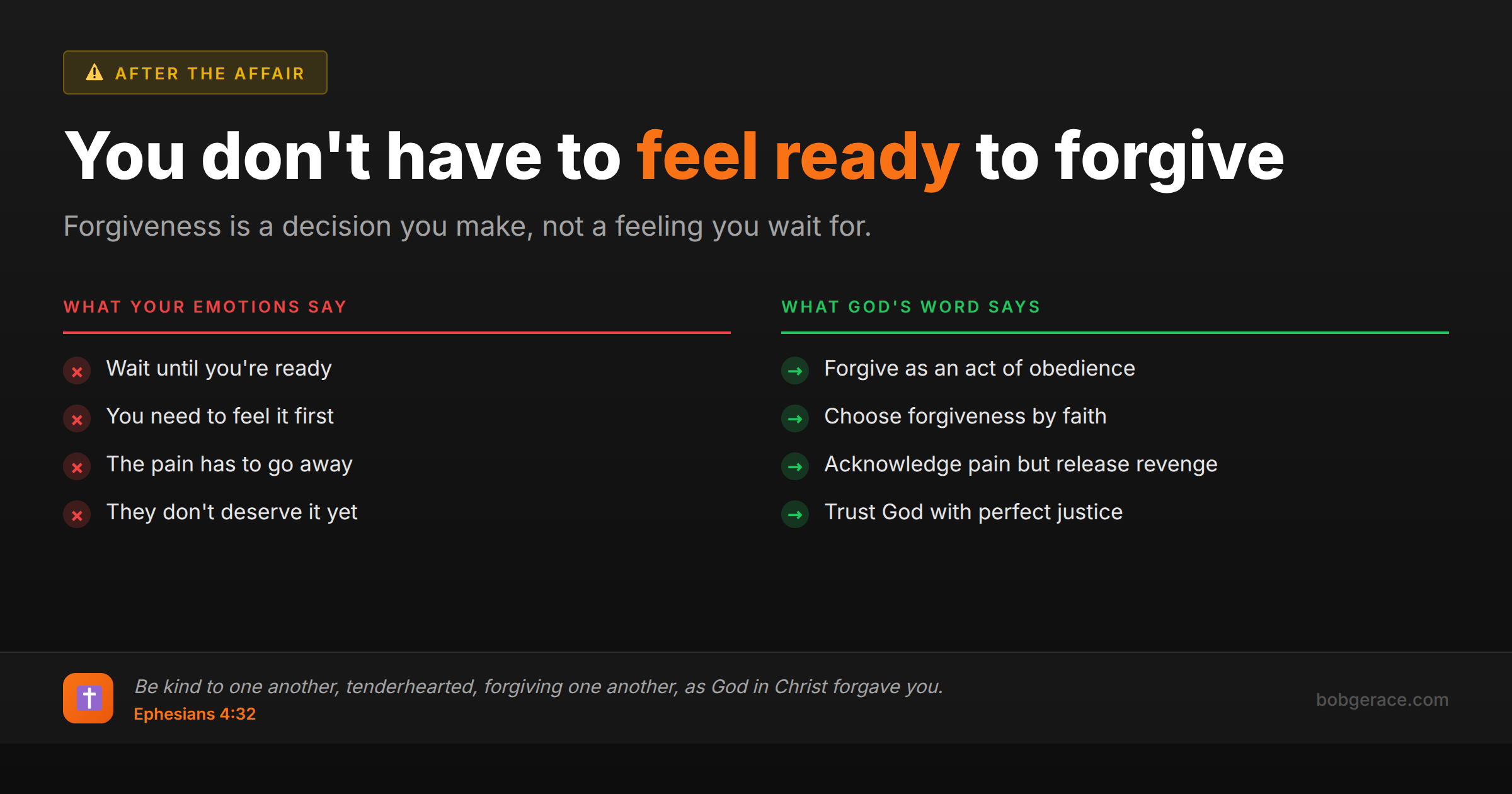
Yes, you can forgive before you feel ready - and often, that's exactly how biblical forgiveness works. Forgiveness isn't a feeling you wait for; it's a decision you make in obedience to God, even when your emotions haven't caught up yet. The Bible calls us to forgive as an act of will, not as a result of feeling prepared or having all our hurt resolved. This doesn't mean rushing the process or pretending the pain doesn't exist. True forgiveness acknowledges the depth of the hurt while choosing to release your right to revenge or retaliation. It's a decision to trust God with justice while you focus on your own healing and obedience to His commands.
The Full Picture
Here's what most people get wrong about forgiveness: they think it's supposed to feel good or come naturally when you're "spiritually mature enough." That's not biblical forgiveness - that's emotional readiness, and they're two completely different things.
Biblical forgiveness is a decision, not a feeling. When Jesus commands us to forgive, He's not asking us to manufacture warm fuzzy emotions toward someone who hurt us. He's calling us to make a deliberate choice to release our claim to vengeance and trust Him with justice instead.
The confusion comes from our culture's therapeutic approach to forgiveness, which says you need to "process your feelings" and "be ready" before you can truly forgive. While emotional processing is valuable for healing, it's not a prerequisite for obedience to God's command to forgive.
You can forgive while still hurting. You can forgive while still angry. You can forgive while still working through trauma. The act of forgiveness doesn't erase the consequences of what happened or instantly heal your emotional wounds. It's simply choosing to say, "I will not seek revenge, and I'm trusting God to handle this situation according to His perfect justice."
This is actually liberating because it means you don't have to wait until you feel "ready" to obey God. You can choose forgiveness today, right now, even if your emotions are still raw and your trust is still broken. The feelings will catch up as you walk in obedience and allow God to heal your heart over time.
What's Really Happening
From a psychological perspective, what many people call "not being ready to forgive" is actually their nervous system's protective response to trauma or betrayal. When we've been deeply hurt, our brain's threat detection system becomes hypervigilant, and forgiveness can feel like dropping our guard before it's safe to do so.
This creates what I call "forgiveness anxiety" - the fear that forgiving means we're vulnerable to being hurt again, or that we're somehow condoning the harmful behavior. But this stems from a fundamental misunderstanding of what forgiveness actually accomplishes.
Forgiveness is not reconciliation. You can forgive someone and still maintain appropriate boundaries. You can choose not to seek revenge while still protecting yourself from future harm. Understanding this distinction often removes the primary barrier people feel toward "premature" forgiveness.
Neurologically, the act of choosing forgiveness - even before you feel emotionally ready - actually begins rewiring your brain away from rumination and revenge fantasies toward healing and peace. Research shows that the decision to forgive activates different neural pathways than waiting for the feeling of forgiveness, and often leads to faster emotional recovery.
The key is understanding that emotional //blog.bobgerace.com/marriage-readiness-assessment-christian-husband-leadership/:readiness and volitional forgiveness operate on different timelines. Your emotions need time to process and heal, but your will can choose obedience to God immediately. As you practice this chosen forgiveness, your emotional healing actually accelerates because you're no longer feeding the neural pathways of resentment and revenge.
What Scripture Says
Scripture consistently presents forgiveness as a command, not a suggestion you follow when you feel like it. Ephesians 4:32 says, "Be kind to one another, tenderhearted, forgiving one another, as God in Christ forgave you." This is an imperative - a direct command that doesn't include emotional readiness as a condition.
Matthew 6:14-15 makes it even clearer: "For if you forgive men their trespasses, your heavenly Father will also forgive you. But if you do not forgive men their trespasses, neither will your Father forgive your trespasses." Jesus isn't asking if you feel ready; He's establishing forgiveness as a non-negotiable aspect of following Him.
But here's the beautiful part: God doesn't leave us to forgive in our own strength. Philippians 2:13 reminds us that "it is God who works in you both to will and to do for His good pleasure." When you don't feel ready to forgive, you can ask God to give you the willingness and strength to choose forgiveness anyway.
Luke 17:3-4 shows us Jesus expects immediate, repeated forgiveness: "If your brother sins against you, rebuke him; and if he repents, forgive him. And if he sins against you seven times in a day, and seven times in a day returns to you, saying, 'I repent,' you shall forgive him." Notice there's no waiting period for emotional readiness.
Colossians 3:13 adds crucial context: "Bearing with one another, and forgiving one another, if anyone has a complaint against another; even as Christ forgave you, so you also must do." We forgive because Christ forgave us first - not because we feel ready, but because we've received grace we didn't deserve.
What To Do Right Now
-
1
Acknowledge the hurt honestly before God - don't minimize or spiritualize away the real pain you're experiencing
-
2
Choose to release your right to revenge by saying out loud: 'I choose to forgive [name] and trust God with justice'
-
3
Set appropriate boundaries to protect yourself while maintaining your forgiveness decision - forgiveness doesn't mean becoming vulnerable again
-
4
Ask God to help you genuinely want what's best for the person who hurt you, even if you can't feel it yet
-
5
Replace thoughts of revenge or retaliation with prayers for God's will in the situation whenever they arise
-
6
Get support from a counselor or trusted friend to process the emotions while maintaining your forgiveness commitment
Related Questions
- What does biblical forgiveness require of me?
- How do I forgive when I'm still hurt?
- What does forgiveness feel like when it's real?
- What role does time play in forgiveness?
- What blocks forgiveness?
- How do I not lose my mind right now?
- How long does real change actually take?
- How do I live with uncertainty?
- What does self-care look like in this season?
Also find Bob on
Subscribe for weekly videos on Christian marriage.
Bring Your Marriage to a Coach
Forgiveness in your specific situation — with your history, your hurt, your wife — isn't one-size-fits-all. A coach who knows your story can help you walk this out without pretending or rushing.
Talk to Bob →