How do I handle relapse without hiding again?
5 min read
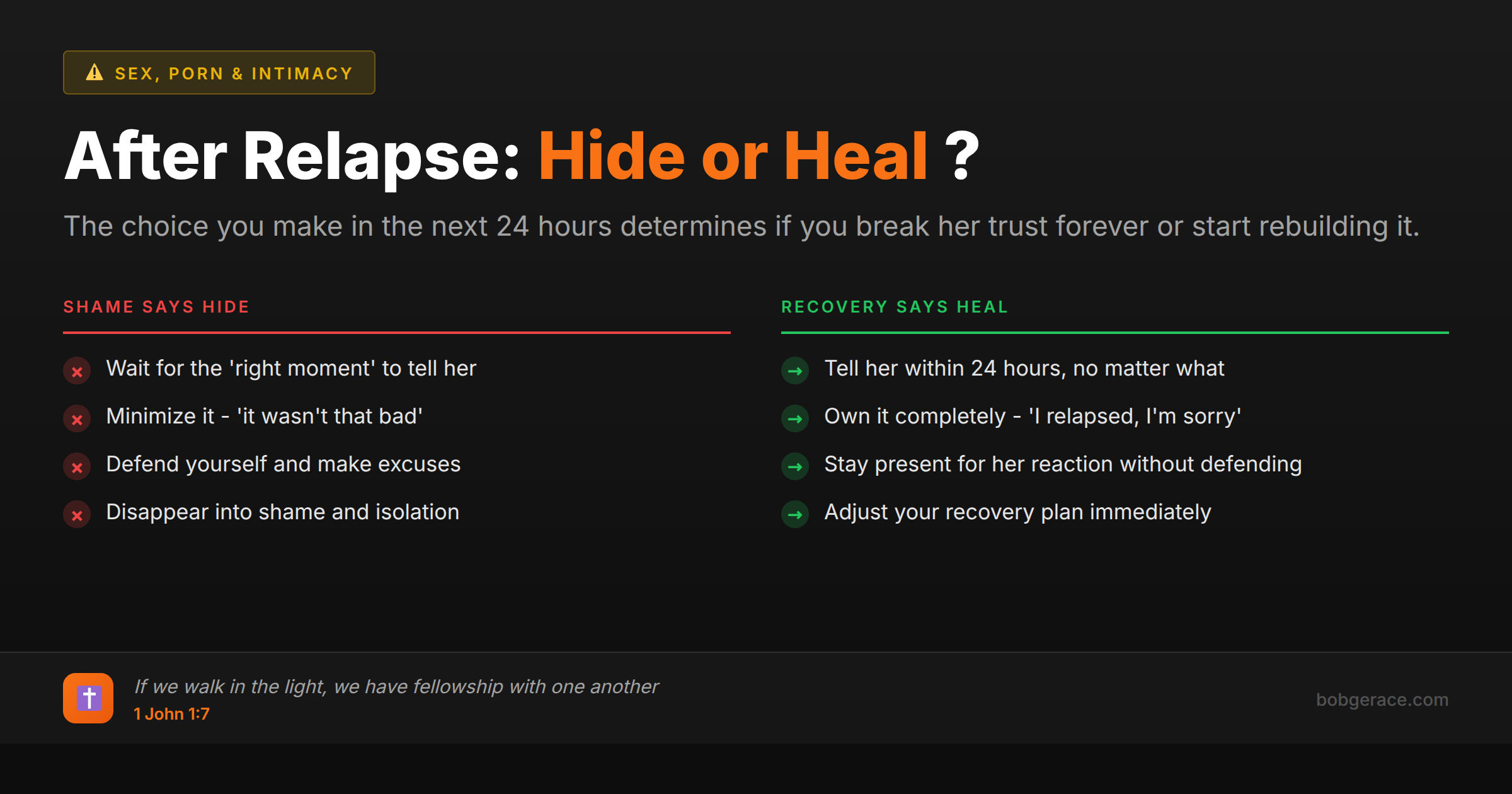
You handle relapse by telling her within 24 hours, owning it without excuses, and staying in the repair process instead of disappearing into shame. Relapse is not the end of recovery. Hiding the relapse is. The goal is not perfection. The goal is ending the secrecy that kills trust faster than the behavior itself. Your wife needs to know you're choosing her over your comfort. That means bringing the truth into the light even when you feel like a failure. It means saying, "I relapsed. I'm telling you now because I'm done hiding. I'm sorry." Then you stay present for her reaction, you don't defend, and you keep working your recovery plan with new adjustments.
Why Hiding the Relapse Is Worse Than the Relapse Itself
Most men think the relapse is the betrayal. It's not. The hiding is. When you relapse and go silent, you're choosing the same pattern that broke her trust in the first place. You're teaching her that your shame matters more than her reality. You're proving that when things get hard, you disappear.
She's not just hurt by the porn. She's hurt by the secrecy, the gaslighting, the months or years of wondering if she's crazy. Every time you hide, you reinforce that wound. Every time you tell the truth quickly, you start to heal it.
Relapse is part of recovery for many men. It doesn't mean you're not serious. It means you're human, your brain is wired for this, and you're in a fight. But secrecy is not part of recovery. Secrecy is the addiction to comfort and image management. It's the part of you that still wants to control her perception instead of living in the truth.
Your wife can handle a relapse if you're honest. What she can't handle is finding out later, realizing you lied by omission, and discovering that you're still the man who hides when he's scared. The relapse is a setback. The hiding is a betrayal. Know the difference.
The Shame-Secrecy Loop and How to Break It
Shame is the fuel for secrecy. When you relapse, your nervous system floods with cortisol and self-contempt. You feel like a failure, a fraud, a man who can't keep his word. That shame tells you to hide, to manage the situation, to wait until you've "fixed it" before you tell her.
But shame-driven secrecy creates a loop. You hide, she senses the distance, her nervous system flags danger, she pulls back or presses in, you feel more shame, you hide more. The relapse becomes a secret, the secret becomes a pattern, and the pattern becomes the real problem.
Breaking the loop requires vulnerability faster than your shame can build a wall. That means telling her before you've "processed it," before you have a plan, before you feel ready. It means letting her see you in your failure instead of your polished apology three weeks later.
This is terrifying because it requires you to trust that the relationship can hold your imperfection. Most men don't believe that. They believe they have to earn safety by being good enough. But trust is built through repair, not perfection. When you bring the truth quickly, you show her that you value honesty over image. That's what rebuilds trust.
Your brain will tell you to wait, to make sure it won't happen again, to avoid "burdening her." That's the addiction talking. The recovery move is to tell her now, stay present for her pain, and let the repair process do its work.
Walking in the Light, Even When You Stumble
1 John 1:7 says, "If we walk in the light, as he is in the light, we have fellowship with one another, and the blood of Jesus his Son cleanses us from all sin." Walking in the light doesn't mean never falling. It means refusing to hide when you do.
Jesus didn't die so you could manage your image. He died so you could live in the truth. That means confessing your sins to one another, bringing your failures into the light, and trusting that grace is stronger than your shame. Hiding is not humility. Hiding is pride dressed up as self-protection.
Proverbs 28:13 is clear: "Whoever conceals his sins does not prosper, but he who confesses and forsakes them obtains mercy." Concealing the relapse is concealing your sin. It's choosing darkness over light, comfort over integrity, your reputation over your wife's reality.
God's design for marriage is oneness. Secrecy destroys oneness. Every time you hide, you're building a wall between you and your wife. Every time you confess quickly, you're tearing that wall down. This is the work of sanctification. It's painful, it's humbling, and it's the only way forward.
Action Steps
-
1
Tell her within 24 hours of the relapse. No waiting, no planning the perfect moment. Just honesty.
-
2
Own it without excuses. Say, "I relapsed. I'm telling you now because I'm done hiding. I'm sorry." Don't explain why it happened unless she asks.
-
3
Stay present for her reaction. Don't defend, don't minimize, don't try to fix her feelings. Let her be hurt.
-
4
Adjust your recovery plan immediately. Add a new layer of accountability, change your phone setup, or increase your support meetings. Show her you're taking action.
-
5
Keep showing up. Don't disappear into shame. Stay engaged, stay honest, and keep doing the work even when you feel like a failure.
Related Questions
Also find Bob on
Subscribe for weekly videos on Christian marriage.
Ready to Stop Hiding?
If you're tired of the shame-secrecy loop and you want to rebuild trust through honest repair, let's talk. I help men break the cycle and become the husband their wife can trust again.
Talk to Bob →