How do I rebuild trust after hiding porn?
5 min read
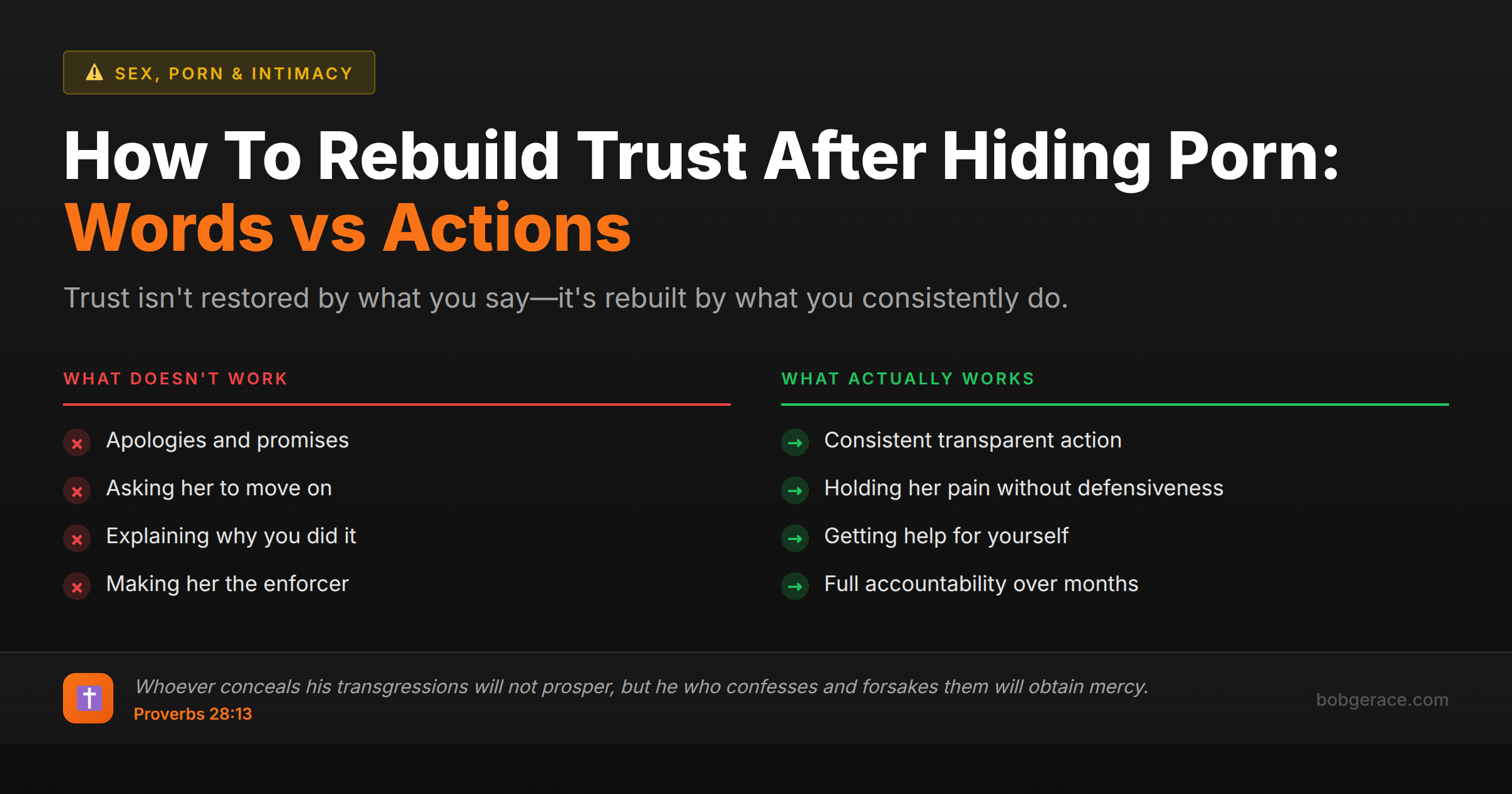
You rebuild trust after hiding porn through consistent, transparent action over time—not through apologies, promises, or asking your wife to forgive and move on. Trust isn't restored by words. It's restored when your behavior proves you're no longer the man who hid, minimized, or lied. That takes months, not days. Your wife's hurt isn't irrational. She's processing betrayal, comparison, and the collapse of safety. She may feel blindsided, humiliated, or disgusted. She may question everything you've said. She may not want you to touch her. This is a normal trauma response, not punishment. Rebuilding trust means holding her pain without defensiveness, staying accountable without resentment, and doing the internal work whether she softens or not.
The Full Picture: What Secrecy Did to Your Marriage
When your wife discovered or learned about your porn use, it wasn't just about the images. It was about the lying. The hiding. The times you reassured her nothing was wrong while you were living in secret. The moments she initiated and you turned her down, then used porn hours later. The feeling that she's been competing with pixels and losing.
She may feel betrayed, humiliated, and unsafe. She may wonder what else you've hidden. She may question whether you've ever truly desired her or just tolerated her. She may feel disgusted by the thought of your hands on her after they've been on a screen. This isn't overreaction—it's the collapse of trust. You weren't just using porn. You were managing her perception of reality.
Many men minimize at this point. 'It's not like I cheated.' 'Other guys do worse.' 'I said I'm sorry—what more do you want?' This defensiveness confirms her fear: you still don't get it. Rebuilding trust starts with full ownership. No minimizing. No blame-shifting. No timeline pressure. You broke something. You don't get to decide how long it takes to heal. Your job is to prove through sustained, transparent behavior that you're becoming a man worthy of trust again.
Clinical Insight: Betrayal Trauma and the Long Road Back
Your wife is likely experiencing betrayal trauma. Her nervous system is in threat mode. She may check your phone, ask repeated questions, or withdraw physically. She's not being controlling—she's trying to re-establish safety in a relationship where the ground collapsed. Her brain is scanning for evidence that you're still lying or that the threat is ongoing.
Rebuilding trust requires you to stay regulated when she's dysregulated. If she's angry, you stay calm. If she's distant, you stay present without pressuring. If she asks the same question five times, you answer it five times without sighing or rolling your eyes. This is co-regulation. You're proving that you can hold her pain without collapsing, defending, or making it about you.
Transparency is non-negotiable. Give her access to your phone, computer, and location without her having to ask. Install accountability software and share the reports with a mentor or coach, not her—she's your wife, not your parole officer. Attend individual counseling or coaching to address why you used porn and hid it. Let her see you doing the work. Trust is rebuilt through pattern recognition. She needs to see, over months, that you're different. One good week doesn't erase years of secrecy.
Biblical Framework: Confession, Repentance, and Covenant Repair
James 5:16 says, "Confess your sins to one another and pray for one another, that you may be healed." Confession isn't just telling God—it's bringing sin into the light with the people it affected. You confessed to your wife. That's step one. Repentance is step two, and repentance means changed behavior, not just remorse.
Proverbs 28:13 warns, "Whoever conceals his transgressions will not prosper, but he who confesses and forsakes them will obtain mercy." Forsaking means you stop. You get help. You build new patterns. You don't just white-knuckle it and hope she doesn't ask questions. Mercy isn't automatic—it's extended when repentance is real.
Your marriage is a covenant, not a contract. Covenant means you don't get to quit when it's hard or when your wife doesn't immediately forgive you. Ephesians 5 calls you to love your wife as Christ loved the church—sacrificially, patiently, without keeping score. Jesus didn't minimize His bride's wounds. He bore them. You're called to bear the consequences of your secrecy without resentment, trusting that God can restore what sin has broken if you're willing to do the long, humble work of repair.
Action Steps
-
1
Own the full impact without minimizing. Say: 'I lied to you. I hid this. I hurt you. I'm not asking you to get over it—I'm committed to earning your trust back, however long it takes.'
-
2
Give her full transparency: phone, computer, location. Install accountability software and share reports with a mentor, not her. Let her see you're serious without making her the enforcer.
-
3
Attend individual coaching or counseling to address why you used porn and hid it. Let her see you doing the internal work, not just behavior management.
-
4
Do not pressure her for sex, affection, or forgiveness. Let her set the pace for physical reconnection. Pursue emotional intimacy without expecting it to lead anywhere.
-
5
Check in weekly: 'How are you doing with all this? What do you need from me?' Listen without defending. Hold her pain without collapsing. This is the long game.
Related Questions
Also find Bob on
Subscribe for weekly videos on Christian marriage.
Rebuilding Trust Takes More Than Apologies
Your wife's trust won't return because you said sorry. It returns when your behavior proves you're different. I help men move from defensiveness to ownership, from secrecy to transparency, and from shame to sustained change.
Talk to Bob →