How do I stop sulking after sexual rejection?
5 min read
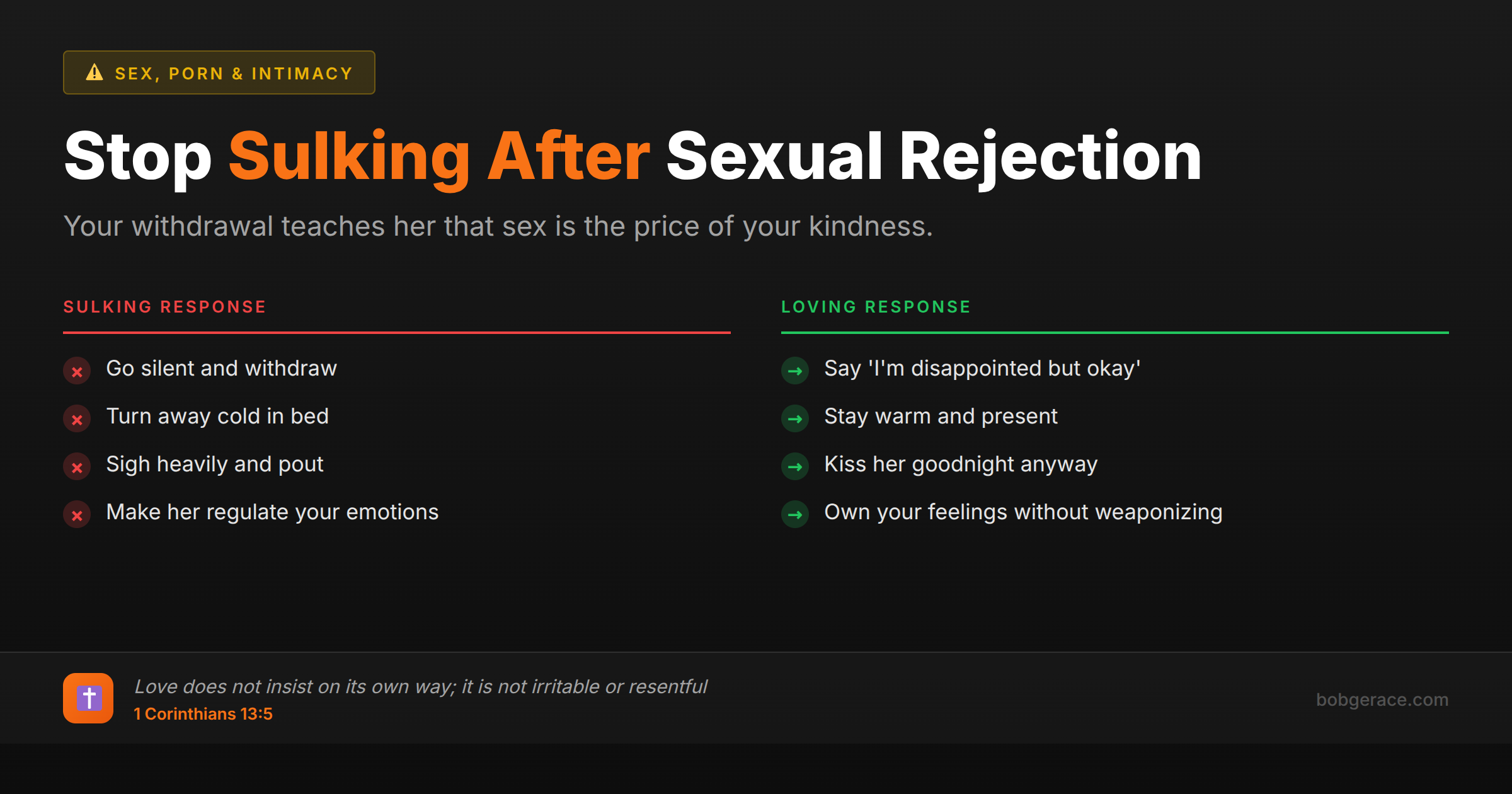
Stop sulking by recognizing that your withdrawal, silence, or cold shoulder after she says no is emotional punishment. It teaches her that sex is the price of your kindness. Instead, respond with calm presence. Say something like, "I'm disappointed, but I'm good. I love you." Then actually be good—don't ice her out, sigh heavily, or turn away in bed. The goal isn't to fake happiness. It's to stop making her responsible for regulating your emotions. Your sulking activates her nervous system, confirms her fear that you only value her for sex, and makes future intimacy even less likely. You break the cycle by owning your feelings without weaponizing them.
Why Sulking After Rejection Kills Intimacy
When your wife says no to sex and you withdraw—go silent, get short with her, scroll your phone coldly, or turn away in bed—you're sending a clear message: "You failed me. Now I'm punishing you." You may not think of it that way. You might just feel hurt, frustrated, or rejected. But your behavior teaches her that your affection is conditional on her sexual availability.
This creates a vicious cycle. She feels the pressure of your disappointment. She starts to dread saying no because she knows what's coming: the cold shoulder, the heavy sigh, the emotional distance. Sex stops being about connection and becomes about keeping the peace. She begins to feel like a service provider, not a wife. And when she feels that way, desire dies.
Meanwhile, you're stuck in your own loop. You feel rejected, so you protect yourself by withdrawing. But your withdrawal confirms her fear that you don't really want her—you want sex. The intimacy gap widens. Resentment builds on both sides. You start keeping score. She starts avoiding you. The bedroom becomes a battleground, and neither of you knows how it got this bad.
The truth is, sulking is a form of emotional coercion. It's not violent or loud, but it's manipulative. It says, "If you don't give me what I want, I'll make you feel bad." And it works—for a while. She may give in to avoid the fallout. But compliance isn't desire. Duty sex doesn't build intimacy. It builds resentment. And eventually, she stops complying altogether.
The Nervous System Dance of Rejection and Withdrawal
When you sulk after rejection, you're dysregulating both your nervous system and hers. Sexual rejection triggers your attachment system—specifically, the fear of being unwanted or abandoned. Your nervous system interprets her "no" as a threat to connection, and you respond with a freeze or shutdown response. You withdraw to protect yourself from further hurt.
But here's the problem: your withdrawal triggers her nervous system. She feels your coldness as relational danger. Her body reads it as, "He's gone. I'm alone. I did something wrong." If she has anxious attachment wiring, she may try to fix it by over-explaining or apologizing. If she has avoidant wiring, she'll pull further away. Either way, the relational safety you both need for intimacy evaporates.
Sulking is also a bid for her to manage your emotions. You're outsourcing your emotional regulation to her. Instead of processing your disappointment internally or bringing it to God, you're making her responsible for soothing you. This is emotional immaturity, and it's exhausting for her. She can't be your wife and your mother.
The pattern often has roots in how you learned to handle disappointment as a boy. If you were shamed for wanting things, you learned to hide your needs and punish others when they weren't met. If you were taught that men don't feel hurt, you learned to convert sadness into anger or withdrawal. Breaking the sulking habit requires you to do the deeper work of understanding your emotional wiring and learning to self-regulate. That's not therapy talk—it's leadership.
Love Does Not Insist on Its Own Way
First Corinthians 13:5 says love "does not insist on its own way; it is not irritable or resentful." Sulking after sexual rejection is the opposite of this. It insists on your way. It's irritable when you don't get it. It holds resentment as leverage. It's not love—it's self-protection disguised as hurt feelings.
Jesus models a different way. He was rejected constantly—by His own people, His disciples, even His Father in the garden. Yet He never withdrew His love as punishment. He didn't sulk when Peter denied Him. He didn't ice out the disciples who abandoned Him. He stayed present, even in pain. That's the standard.
Ephesians 5 calls you to love your wife as Christ loved the church. That means laying down your life, not your mood. It means leading with self-control, not emotional reactivity. It means absorbing disappointment without making her pay for it. This doesn't mean you're a doormat. It means you're strong enough to feel your feelings without weaponizing them.
Prayer is your first move after rejection, not withdrawal. Take your disappointment to God. Let Him meet you in it. Ask Him to search your heart for entitlement, selfishness, or fear. Ask Him to give you the strength to love her well even when you don't get what you want. That's how you become the man she can trust—and eventually desire.
Action Steps
-
1
Next time she says no, pause before reacting. Take three deep breaths. Say, "I'm disappointed, but I'm okay. I love you." Then mean it.
-
2
Don't go silent, scroll your phone, or turn away in bed. Stay warm. Ask her about her day. Kiss her goodnight. Show her that your love isn't conditional on sex.
-
3
After the moment passes, journal your feelings. Write down what the rejection triggered in you. Fear of being unwanted? Shame about your desire? Anger at the pattern? Bring it to God in prayer.
-
4
If you've been sulking for years, own it. Tell her, "I've been punishing you when you say no. That's not okay. I'm working on it. I'm sorry." Don't expect immediate trust. Rebuild it with consistency.
-
5
Work with a coach or mentor to identify the deeper wound driving your reaction. Sulking is a symptom. The root is usually shame, entitlement, or unprocessed attachment pain. Do the work to heal it.
Related Questions
- What if our sex life only happens when I initiate?
- Why does my wife seem relieved when I stop pursuing sex?
- How do I stop making sex the scoreboard for our marriage?
- Why does she tense up when I try to be affectionate?
- What does nonsexual affection rebuild in marriage?
- How do I show desire without making her feel hunted?
Also find Bob on
Subscribe for weekly videos on Christian marriage.
Stop the Cycle Before It's Too Late
If sulking after rejection has become your default, you're training your wife to avoid intimacy with you. The pattern won't fix itself. Let's get you the tools to lead your marriage with emotional strength and self-control.
Talk to Bob →