What if my wife says she does not feel emotionally safe with me?
5 min read
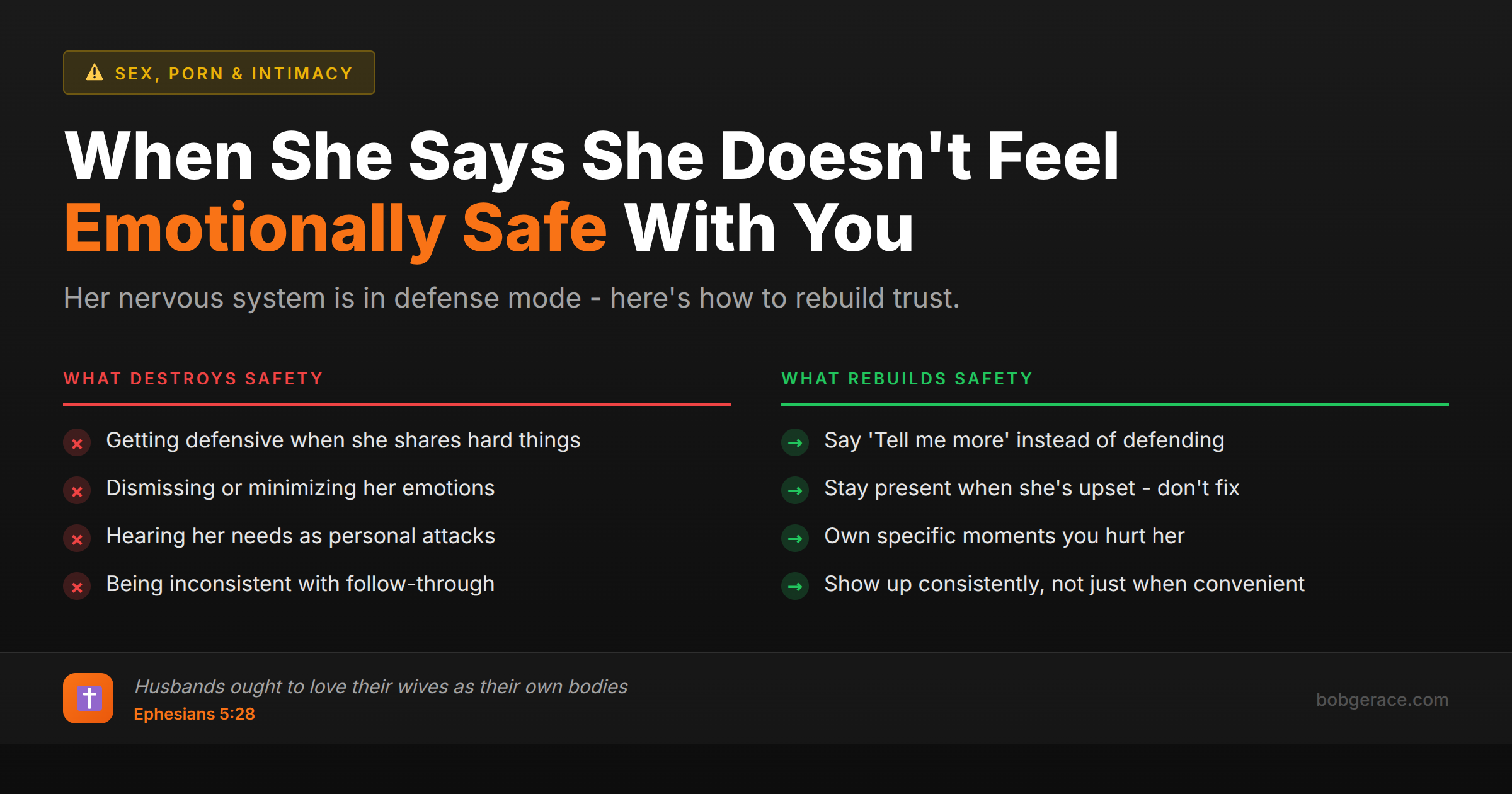
When your wife says she does not feel emotionally safe with you, she is telling you that her nervous system goes into defense mode in your presence. This is not about physical danger. It is about emotional threat: the fear of being dismissed, criticized, misunderstood, or having her feelings minimized. Her body has learned that being vulnerable with you leads to pain, so she has shut down emotionally and physically. This is not an attack on your character. It is information about the relational patterns between you. Most likely, you have been defensive when she shares hard things, dismissive of her emotions, or inconsistent in your follow-through. She may have tried to tell you what she needed, and you either did not hear it or heard it as criticism. Over time, her system stopped trusting that you are safe to be open with. Rebuilding safety requires you to become emotionally regulated, non-defensive, and consistently present—not just when it is convenient.
What Emotional Safety Actually Means (And Why She Lost It)
Emotional safety is not about never disagreeing or always getting it right. It is about your wife being able to share her feelings, needs, and fears without being met with defensiveness, dismissal, or withdrawal. It means she can say, "I felt hurt when you did that," and you respond with curiosity instead of justification. It means she can cry without you trying to fix it or tell her she is overreacting. It means she can say no to sex without you pouting or punishing her with silence.
Most men do not realize they are emotionally unsafe until their wife says it out loud. You may think you are a good husband because you work hard, do not yell, and show up for family events. But emotional safety is not about what you do not do. It is about how she feels in your presence. Does she feel seen, heard, and valued? Or does she feel like she has to manage your emotions, walk on eggshells, or shrink herself to keep the peace?
She lost emotional safety in the thousand small moments you did not notice: the times you got defensive instead of curious, the nights you prioritized your phone over her presence, the pattern of promising to change and then reverting to old habits. Each moment taught her nervous system that you are not a safe person to be vulnerable with. She may still function as your wife, but her heart has withdrawn. She is protecting herself from further disappointment.
This is not about blame. It is about understanding the relational dynamic that created the distance. You cannot rebuild safety by defending yourself or proving you are not that bad. You rebuild it by owning the patterns that hurt her, becoming emotionally regulated, and showing up consistently over time. Safety is not a one-time conversation. It is a daily practice of being present, humble, and non-reactive.
The Nervous System Reality of Emotional Threat
Your wife's nervous system does not distinguish between physical and emotional threat. When she feels dismissed, criticized, or unseen, her autonomic nervous system responds the same way it would to physical danger: fight, flight, freeze, or fawn. Over time, if those responses do not work, she moves into shutdown—a state of emotional numbness and relational withdrawal. This is not a choice. It is a survival mechanism.
When she says she does not feel safe, she is describing a physiological reality. Her body has learned that being vulnerable with you leads to pain. Maybe you got angry when she expressed a need. Maybe you shut down when she cried. Maybe you made her feel like her emotions were too much or not valid. Her nervous system cataloged those experiences and now associates closeness with you with threat, not comfort.
Rebuilding safety requires co-regulation. That means you become the steady, grounded presence in the relationship. When she is upset, you do not match her intensity or shut down. You stay present, curious, and calm. When she shares something hard, you do not defend or explain. You listen, validate, and own your part. Over time, her nervous system learns that you are safe to be open with again.
This process takes time. You cannot logic her into feeling safe. You cannot apologize once and expect her to trust you again. Safety is rebuilt through consistent, repeated experiences of you being emotionally regulated and non-defensive. It is not about grand gestures. It is about showing up day after day, proving through your actions that you are a different man than the one who hurt her.
Christlike Leadership Creates Safety, Not Control
Ephesians 5:28-29 says, "Husbands ought to love their wives as their own bodies. He who loves his wife loves himself. For no one ever hated his own flesh, but nourishes and cherishes it, just as Christ does the church." To nourish and cherish means to create an environment where your wife can flourish. That requires emotional safety. She cannot flourish if she is constantly in defense mode around you.
Jesus created safety for the vulnerable. He did not dismiss the woman at the well or shame the woman caught in adultery. He met them with presence, truth, and compassion. He did not demand they earn His care. He offered it freely, even when they were messy, broken, or afraid. That is the model for how you love your wife. You do not make her earn safety by being less emotional or more compliant. You offer it because you are called to reflect Christ's love.
Proverbs 15:1 says, "A soft answer turns away wrath, but a harsh word stirs up anger." Most men do not realize how harsh they sound when they are defensive. You may think you are just explaining your side, but your wife hears dismissal. You may think you are being logical, but she feels unseen. Emotional safety requires you to soften—not to become passive, but to become humble. It requires you to listen more than you defend, to validate before you problem-solve, and to own your part without deflecting.
God calls you to lead, but leadership in marriage is not about control. It is about creating the conditions for your wife to feel safe, seen, and cherished. That is how Christ leads the church. That is how you are called to lead your home.
Action Steps
-
1
Stop defending yourself when she says she doesn't feel safe. Instead, say, 'Tell me more. I want to understand.' Listen without interrupting or explaining.
-
2
Identify your defensive patterns. Do you shut down, get angry, deflect, or turn it back on her? Name the pattern and commit to interrupting it.
-
3
Practice staying present when she's upset. Do not try to fix it, minimize it, or make it go away. Just sit with her and let her feel what she feels.
-
4
Own specific moments you made her feel unsafe. Say, 'I see how I hurt you when I [specific behavior]. That was wrong. I'm working on changing that.'
-
5
Work with a coach who can help you see your blind spots and build the emotional regulation skills you need. You cannot do this alone.
Related Questions
- What if she says she wants emotional connection before physical intimacy?
- Why does my wife feel pressure even when I am being nice?
- Can I rebuild attraction after years of resentment?
- Why does she not want me even though I have changed?
- How did we become business partners instead of lovers?
- What if we sleep in the same bed but live separate lives?
Also find Bob on
Subscribe for weekly videos on Christian marriage.
Rebuild Safety Before It's Too Late
When your wife says she doesn't feel safe, the clock is ticking. You need a clear plan to address the patterns that created the distance—before she gives up entirely.
Talk to Bob →