Why does porn make real intimacy feel emotionally risky?
5 min read
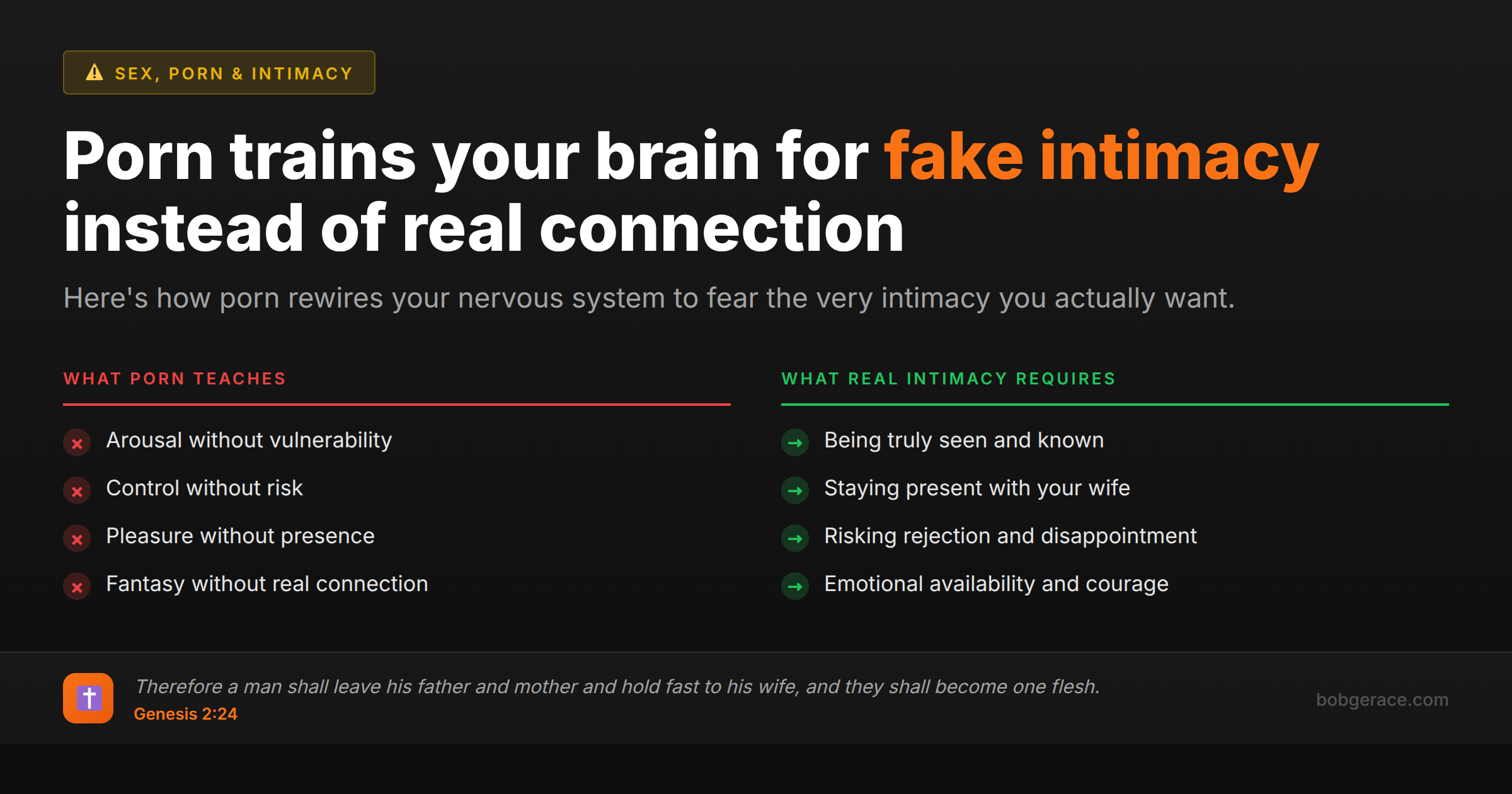
Porn makes real intimacy feel risky because it trains your nervous system to associate sexual arousal with control, novelty, and zero emotional exposure. You get dopamine without vulnerability. Real intimacy requires you to be seen, to stay present, to risk rejection, and to let your wife matter. After months or years of porn, that feels dangerous. Your brain has learned that arousal equals safety from shame, performance pressure, or relational risk. Real sex with your wife demands the opposite: presence, emotional availability, and the willingness to be known. That's why porn users often feel more anxious, not less, when real intimacy is available.
The Full Picture: Porn Rewires Your Intimacy Capacity
Porn doesn't just give you a sexual outlet. It rewires how your brain associates arousal, safety, and connection. Every time you use porn, you're training your nervous system that sexual pleasure comes without relational risk. You don't have to be seen. You don't have to perform. You don't have to worry about her needs, her mood, or whether she finds you desirable. You control the script, the pace, the fantasy. There's no rejection, no disappointment, no vulnerability.
Real intimacy with your wife is the opposite. She sees you. She has needs. She might be tired, hurt, or distant. You might feel inadequate, anxious, or unsure if she even wants you. That's emotional exposure. After porn, your nervous system reads that exposure as threat. So you avoid it. You stay in your head during sex. You initiate less. You feel safer in fantasy than in the real presence of your wife.
This isn't just about libido or attraction. It's about your capacity for emotional risk. Porn trains you to prefer the illusion of intimacy over the reality. The illusion never asks anything of you. The reality requires you to show up, stay present, and let her matter. That's why men who quit porn often report that real sex feels harder at first. It's not that their desire is broken. It's that their nervous system has to relearn that intimacy is safe.
Clinical Insight: Arousal, Shame, and Avoidant Attachment
Porn use often correlates with avoidant attachment patterns in marriage. Avoidant men manage relational anxiety by creating emotional distance. Porn becomes a tool for that distance. It gives you sexual release without the vulnerability of being wanted, needed, or emotionally present. Over time, your brain begins to associate arousal with isolation, not connection.
Neurologically, porn floods your dopamine system with novelty and intensity that real sex can't match. Your brain adapts by downregulating dopamine receptors. That means you need more stimulation to feel the same reward. Real intimacy, which is slower, relational, and emotionally complex, registers as less rewarding. Your brain literally prefers the shortcut.
Shame amplifies the cycle. Most Christian men carry deep shame about porn use. Shame activates your sympathetic nervous system—fight, flight, freeze. When you're in that state, vulnerability feels like exposure to attack. So you avoid real intimacy, return to porn for relief, feel more shame, and repeat. The cycle isn't about willpower. It's about nervous system dysregulation and unprocessed relational fear.
Recovery requires more than accountability software. It requires you to rebuild your capacity for emotional presence, to tolerate the discomfort of being seen, and to let your wife's desire matter more than your control. That's nervous system work, not just behavior modification.
Biblical Framework: Intimacy as Covenant Vulnerability
Scripture calls marriage a one-flesh union (Genesis 2:24). That's not just physical. It's emotional, spiritual, relational. One flesh means you are known and you are safe. Porn is the opposite. It's a fantasy of connection without covenant, arousal without vulnerability, pleasure without presence.
Jesus says lust is adultery of the heart (Matthew 5:28). That's not legalism. It's a description of relational reality. Lust trains your heart to want women who don't exist, who make no demands, who never see your weakness. It fractures your capacity for covenant love, which requires you to be fully known and fully committed.
Paul tells husbands to love their wives as Christ loved the church (Ephesians 5:25). Christ's love is self-giving, present, and vulnerable. He didn't hide. He didn't control. He gave Himself fully, even to death. Porn is the opposite of that posture. It's self-protective, hidden, and controlling. It trains you to take without giving, to consume without being consumed by love.
Intimacy in marriage is designed to be a picture of Christ and the church. That means risk, presence, and the willingness to be seen. Porn destroys that picture. Recovery isn't about white-knuckling sobriety. It's about rebuilding your heart's capacity to love your wife the way Christ loves you.
Action Steps
-
1
Name the pattern: write down when you use porn and what emotion you're avoiding (anxiety, rejection, loneliness, performance fear).
-
2
Install real accountability: not just software, but a man who asks you weekly about your emotional state, not just your behavior.
-
3
Practice presence: during sex with your wife, notice when you drift into fantasy or performance mode. Breathe. Come back to her face, her body, her presence.
-
4
Confess to your wife if you haven't: hiding porn keeps you in shame and keeps her in the dark about why you're emotionally distant.
-
5
Work with a coach or therapist who understands nervous system regulation, not just sin management. You need to rebuild your capacity for vulnerability, not just stop a behavior.
Related Questions
Also find Bob on
Subscribe for weekly videos on Christian marriage.
Ready to Rebuild Real Intimacy?
Porn isn't just a behavior problem. It's a nervous system and intimacy problem. I help men rebuild their capacity for presence, vulnerability, and real connection with their wives.
Talk to Bob →