Is it my fault she had an affair?
6 min read
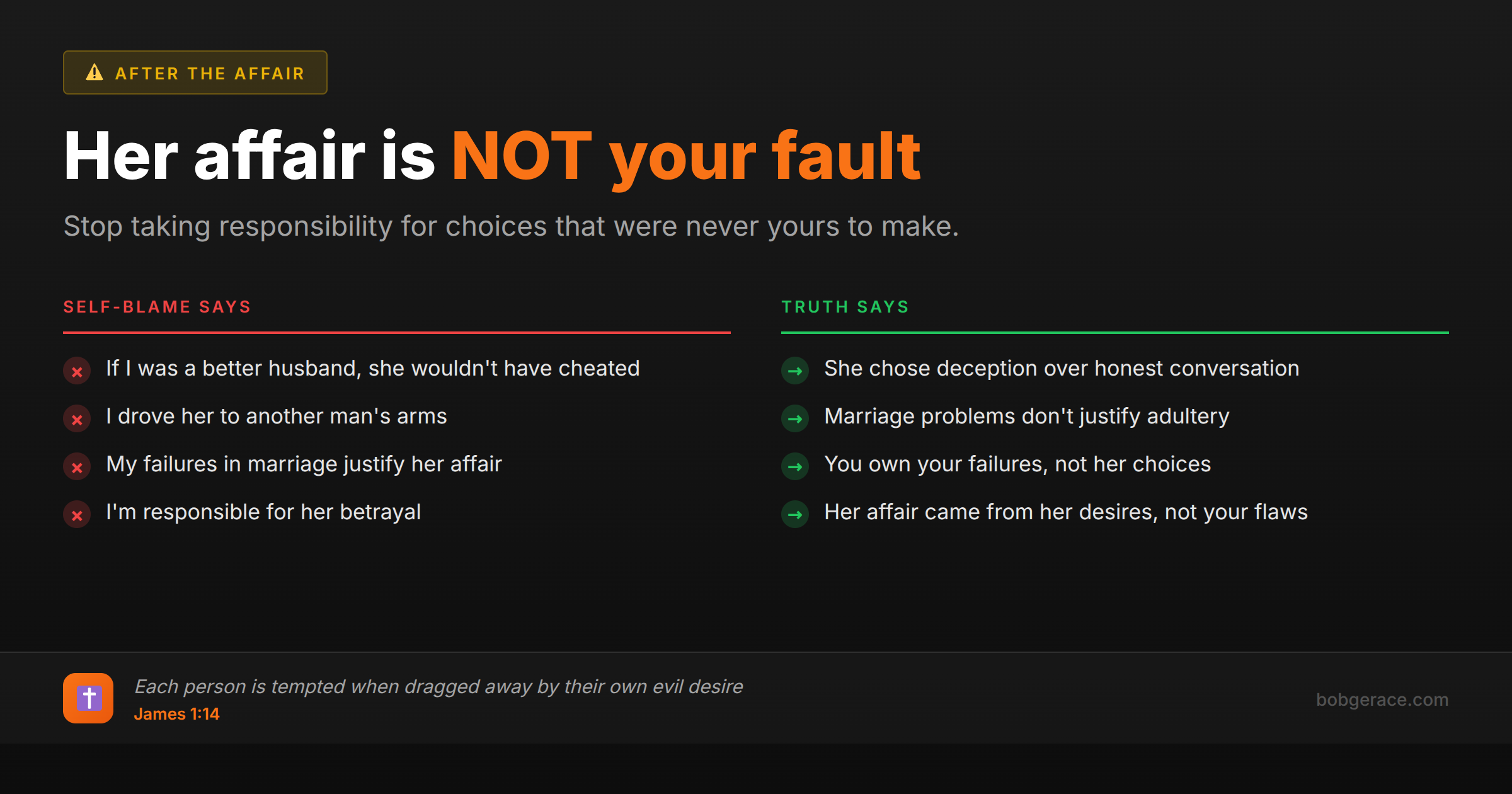
No, her affair is not your fault. She made the choice to break her marriage vows and betray your trust. While marriages have problems that both spouses contribute to, those problems never justify adultery. There were countless other ways she could have addressed marriage issues - counseling, honest conversations, separation - but she chose deception and betrayal instead. That said, this isn't about declaring you perfect or blameless for all marriage problems. It's about clarity: you're responsible for your contributions to marriage difficulties, but you're not responsible for her choice to have an affair. Understanding this distinction is crucial for your healing and for any possibility of rebuilding your marriage.
The Full Picture
Here's what I've learned after coaching hundreds of men through infidelity: the affair is 100% her responsibility, but the marriage problems leading up to it are shared responsibility. This distinction matters enormously.
Let me be crystal clear - nothing you did or didn't do forced her to cheat. She had choices. She could have: - Asked for marriage counseling - Been direct about her unhappiness - Suggested a trial separation - Filed for divorce if she was that miserable - Set boundaries with the other man when temptation arose
Instead, she chose secrecy, lies, and betrayal. That choice is hers alone.
But here's where it gets complicated. Most affairs don't happen in marriages where everything was perfect. There were likely issues - emotional distance, poor communication, unmet needs, resentment. You probably contributed to some of those problems. Acknowledging this isn't about taking blame for her affair; it's about taking responsibility for your part in the marriage dynamics.
I've seen men torture themselves with "what if" scenarios: *What if I'd been more romantic? What if I'd listened better? What if I'd worked less?* This kind of thinking will destroy you. Yes, examine your role in marriage problems. Yes, commit to growth and change. But don't you dare take responsibility for her betrayal.
The most dangerous trap is thinking you could have prevented her affair by being a "better husband." Plenty of good men get cheated on. Plenty of marriages with problems don't end in affairs. Her character and choices determined the affair, not your performance as a husband.
What's Really Happening
From a clinical perspective, affairs are complex behaviors driven by multiple factors, rarely attributable to a single cause or person. Research consistently shows that infidelity is primarily about the unfaithful partner's internal landscape - their coping mechanisms, attachment style, values system, and emotional regulation skills.
What we see in affair psychology is often: - Compartmentalization - the ability to separate behaviors from values - Rationalization - creating justifications for betrayal - Emotional avoidance - using the affair to escape difficult feelings about life, marriage, or self - Entitlement patterns - believing rules don't apply to them
Yes, marriage dynamics matter. Emotional distance, poor communication, or unmet needs can create vulnerability. But these same conditions exist in countless marriages that never experience infidelity. The difference isn't the problems - it's how each person chooses to handle those problems.
The betrayed partner often experiences intense self-examination, which is normal but can become destructive when it turns into self-blame. This hypervigilance about your own faults is actually a trauma response - your mind trying to regain control by finding something you could have done differently. While self-reflection is healthy, taking responsibility for someone else's moral choices is not. Focus on what you can control: your own //blog.bobgerace.com/marriage-growth-christian-husband-testing-season/:growth, healing, and future choices.
What Scripture Says
Scripture is clear about personal responsibility for sin. "Each person is tempted when they are dragged away by their own evil desire and enticed. Then, after desire has conceived, it gives birth to sin" (James 1:14-15). Her affair was birthed from her own desires and choices, not your failures.
God holds each person accountable for their own actions: "The one who sins is the one who will die. The child will not share the guilt of the parent, nor will the parent share the guilt of the child" (Ezekiel 18:20). You don't bear guilt for her sin, just as she doesn't bear guilt for yours.
However, Scripture also calls us to honest self-examination. "Why do you look at the speck of sawdust in your brother's eye and pay no attention to the plank in your own eye?" (Matthew 7:3). This doesn't mean you caused her affair, but it does mean you should examine your own contributions to marriage problems.
The biblical model is both grace and responsibility. "If we confess our sins, he is faithful and just and will forgive us our sins and purify us from all unrighteousness" (1 John 1:9). Confess your own sins - pride, anger, neglect, whatever they are. But don't confess sins that aren't yours.
Marriage is a covenant requiring faithfulness from both partners. "Marriage should be honored by all, and the marriage bed kept pure, for God will judge the adulterer and all the sexually immoral" (Hebrews 13:4). Her breaking of this covenant is her responsibility before God.
"Above all else, guard your heart, for everything you do flows from it" (Proverbs 4:23). She failed to guard her heart. That failure is hers, not yours.
What To Do Right Now
-
1
Stop the self-blame spiral - write down "Her affair is her choice and responsibility" and read it when guilt attacks
-
2
Make two lists: "My contributions to marriage problems" and "Things that don't justify adultery" - keep them separate
-
3
Find a trusted friend, pastor, or counselor who won't let you take inappropriate responsibility for her choices
-
4
Commit to personal growth in areas where you contributed to marriage problems - but do it for yourself, not to prevent future affairs
-
5
Set boundaries around conversations where she tries to justify the affair by blaming you
-
6
Focus on what you can control: your healing, your character, and your future decisions
Related Questions
- Why did she cheat?
- Was I not enough for her?
- What role did our relationship problems play?
- What role did her individual issues play?
- Is she responsible even if I contributed to problems?
- What's the relationship between her sin and my sin?
- How do I hold both my responsibility and her agency?
- What does 'taking responsibility' actually look like?
- She brings up things from years ago
- How do I address years of built-up hurt?
Also find Bob on
Subscribe for weekly videos on Christian marriage.
Sort Through This With a Coach
Guilt and responsibility get tangled after an affair. A coach who knows your specific marriage can help you see what's yours to own and what isn't—so you stop carrying weight that was never yours.
Talk to Bob →