Why did she cheat?
6 min read
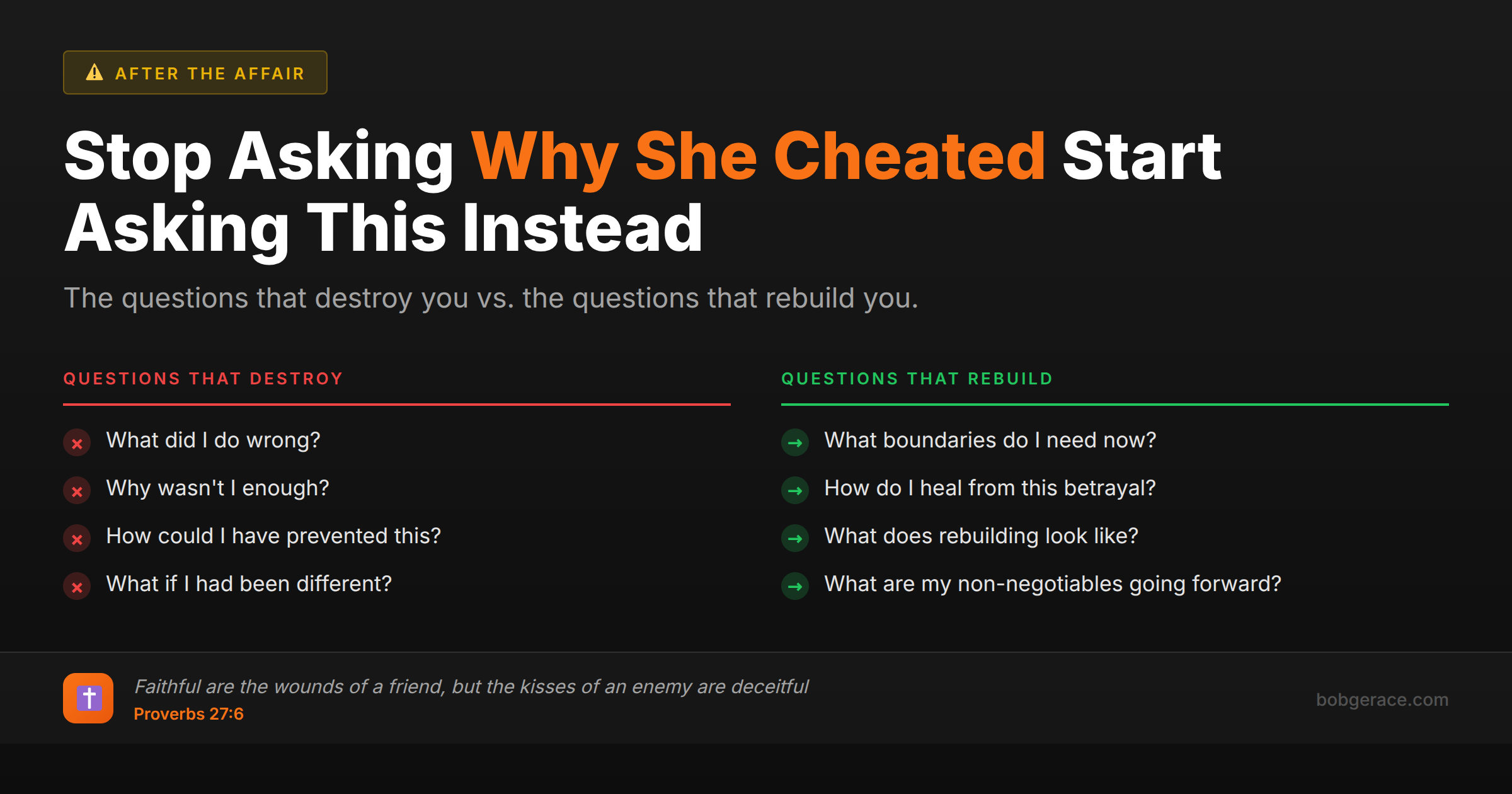
The question 'Why did she cheat?' haunts every betrayed husband. While each situation is unique, affairs typically stem from unmet emotional needs, personal brokenness, or a breakdown in marital connection—not necessarily your failure as a husband. She may have felt emotionally disconnected, craved validation, or was struggling with her own identity and self-worth issues. However, understanding potential contributing factors doesn't excuse the betrayal. Cheating is always a choice, and she bears full responsibility for breaking her marriage covenant. Many couples face similar challenges without resorting to infidelity. The 'why' matters for healing and prevention, but it shouldn't become a burden of self-blame you carry alone.
The Full Picture
Affairs don't happen in a vacuum. They're usually the result of multiple factors converging over time, creating vulnerability that leads to poor choices. Understanding these factors helps you process what happened without taking inappropriate blame.
Common contributing factors include:
Emotional disconnection - When couples stop talking deeply, sharing feelings, or prioritizing their relationship, it creates distance. This doesn't justify cheating, but it can make someone more susceptible to outside attention.
Unresolved personal issues - Many who cheat are dealing with their own brokenness: childhood trauma, depression, anxiety, or identity struggles. The affair becomes an unhealthy coping mechanism or escape from internal pain.
Life transitions and stress - Career changes, parenting pressures, aging parents, or health issues can create overwhelming stress. Some people make terrible choices when they feel lost or overwhelmed.
Validation seeking - If she struggled with self-worth or felt unappreciated, another man's attention might have felt intoxicating. This reflects her internal struggles more than your adequacy as a husband.
Opportunity plus poor boundaries - Affairs often involve someone who was already in her life—a coworker, friend, or acquaintance. Poor emotional boundaries gradually led to inappropriate intimacy.
Remember: understanding isn't excusing. Millions of people face these same challenges without betraying their spouse. She had other options—counseling, honest conversation with you, addressing her personal issues—but chose deception instead. The 'why' helps you heal and rebuild, but the responsibility remains entirely hers.
What's Really Happening
From a clinical perspective, affairs are rarely about sex or even love—they're typically about filling emotional voids or escaping psychological pain. Research shows that most people who cheat aren't actively looking for an affair; they gradually slide into it through a series of boundary crossings.
The 'affair fog' is real. When someone is in an affair, their brain chemistry actually changes. The secrecy and excitement flood the system with dopamine, creating an addictive cycle that impairs judgment. This is why she might seem like a different person—in many ways, she neurologically is.
Women's affairs often center on emotional connection. She likely felt heard, understood, or valued by the other man in ways she wasn't experiencing at home. This doesn't mean you failed as a husband, but it does suggest where healing needs to focus.
It's crucial to understand that her cheating reveals more about her coping mechanisms and emotional regulation than about your worth or your marriage's value. Many betrayed spouses torture themselves wondering what they could have done differently, but this thinking //blog.bobgerace.com/mama-boy-christian-marriage-break-mother-loyalty-trap/:trap prevents healing. Focus on what you can control moving forward, not what you think you should have controlled in the past.
What Scripture Says
Scripture gives us clear guidance on marriage, faithfulness, and how to process betrayal. Malachi 2:16 reminds us that God hates divorce—but He also hates the violence of covenant-breaking that adultery represents.
Proverbs 27:6 says *'Faithful are the wounds of a friend, but the kisses of an enemy are deceitful.'* Her affair was ultimately deceitful, regardless of any genuine feelings involved. Truth and faithfulness matter to God.
1 Corinthians 10:13 assures us that *'No temptation has overtaken you except what is common to mankind. And God is faithful; he will not let you be tempted beyond what you can bear. But when you are tempted, he will also provide a way out so that you can endure it.'* She had a way out—she chose not to take it.
Ephesians 4:32 calls us to *'Be kind and compassionate to one another, forgiving each other, just as in Christ God forgave you.'* This doesn't mean immediate trust or consequences-free reconciliation, but it does mean releasing bitterness for your own spiritual health.
Romans 8:28 promises that God works all things together for good for those who love Him. Even this devastating betrayal can become part of His redemptive work in your life and marriage, though the path forward requires wisdom, time, and often professional help.
God sees your pain and hasn't abandoned you in this darkness.
What To Do Right Now
-
1
Stop asking 'what if' questions and focus on what you know to be true
-
2
Don't take full responsibility for her choices—she had other options
-
3
Get individual counseling to process your emotions and trauma
-
4
Establish clear boundaries about what information you need versus what hurts
-
5
Consider a trial separation to give both of you space to think clearly
-
6
Start documenting everything in case legal action becomes necessary
Related Questions
- Is it my fault she had an affair?
- Was I not enough for her?
- What are the most common reasons women have affairs?
- What role did our relationship problems play?
- What role did her individual issues play?
- How does attachment style relate to affair risk?
- Where does this come from?
- What patterns did I inherit vs. choose?
- Why does she seem like a different person?
Also find Bob on
Subscribe for weekly videos on Christian marriage.
Your Marriage Isn't a Generic Case Study
Bob works with betrayed husbands one-on-one—hearing your specific story, the timeline, what she said, what you're actually dealing with. When the tool isn't enough, bring this to a human.
Talk to Bob →