She doesn't know I know — do I tell her?
6 min read
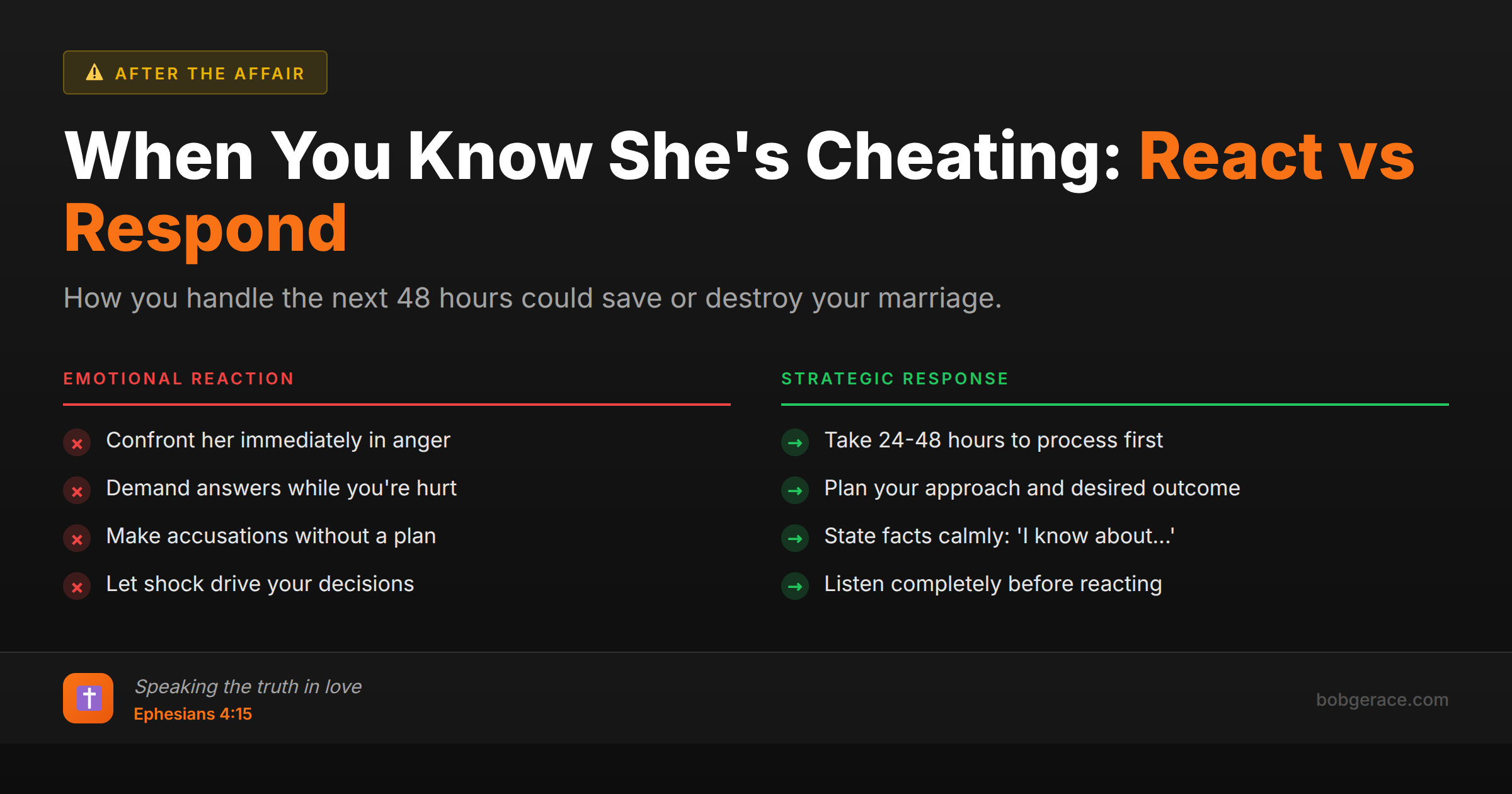
The discovery that your wife is involved with another man creates an agonizing dilemma when she doesn't know you know. While every fiber of your being may want to confront her immediately, I strongly advise against rushing into this conversation unprepared. This moment requires strategic thinking, not emotional reaction. Yes, you should tell her you know, but timing and preparation are crucial. Take 24-48 hours to process the shock, gather your thoughts, and plan your approach. This isn't about playing games or being manipulative—it's about ensuring you handle this marriage-defining moment with wisdom rather than raw emotion. The confrontation will happen, but how you handle it could determine whether your marriage has any chance of recovery.
The Full Picture
The Secret Knowledge Trap
You're living in what I call the "secret knowledge trap"—that horrible space where you know something that changes everything, but the other person remains unaware. Every interaction becomes loaded with hidden meaning. She kisses you goodbye while you know where she's really going. She talks about her day while you know what she's not telling you.
This isn't sustainable, and it's not healthy for you. The stress of carrying this knowledge while maintaining normalcy is crushing. You'll find yourself analyzing every word, every gesture, every text notification. You'll become a detective in your own home, and that's no way to live.
The Confrontation Dilemma
The question isn't really whether to tell her—it's when and how. Some men think they need to gather more evidence first, like they're building a legal case. Others want to catch her in the act for maximum dramatic impact. Both approaches are mistakes.
Gathering more "evidence" usually just prolongs your agony and pushes you deeper into detective mode. You already know what you need to know—she's involved with another man. Additional details won't change that fundamental betrayal, but they will poison your mind further.
The Preparation Phase
Before you confront her, you need to get yourself mentally and emotionally prepared. This conversation will likely be one of the most difficult of your entire marriage. She may deny it, minimize it, blame you, or completely shut down. She might confess everything and beg forgiveness, or she might double down and attack you for "spying" on her.
You need to know what outcome you're hoping for before you start this conversation. Are you looking to save the marriage? Are you gathering information to make decisions? Are you simply unable to carry this secret any longer? Your motivation will shape how you approach the conversation.
Why Waiting Is Strategic, Not Weak
Taking 24-48 hours to prepare isn't weakness—it's wisdom. Use this time to get your emotions in check, plan what you want to say, and decide what boundaries you need to establish. This delay isn't about protecting her feelings; it's about protecting your marriage's chances of survival.
What's Really Happening
The psychological impact of discovering infidelity while remaining undetected creates what we call "cognitive dissonance stress." You're trying to reconcile the person you thought you knew with this new reality, all while maintaining normal interactions. This creates significant psychological strain.
Neurologically, your brain is in hypervigilance mode—the same state experienced during trauma. Your nervous system is flooded with stress hormones, making clear thinking difficult. This is why immediate confrontation often backfires. You're literally not operating with your full cognitive capacity.
The urge to confront immediately stems from your brain's attempt to resolve this dissonance and return to equilibrium. However, confrontation from this activated state typically triggers the other person's defensive mechanisms, leading to denial, counter-attack, or emotional //blog.bobgerace.com/dorsal-vagal-shutdown-christian-marriage-disconnection/:shutdown.
Research shows that couples who navigate infidelity disclosure with preparation and intentionality have significantly better outcomes than those who handle it reactively. The betrayed partner's emotional regulation during initial disclosure often sets the tone for whether productive dialogue is possible.
From a therapeutic standpoint, this preparation period isn't about strategy—it's about moving from your traumatized nervous system into a more regulated state where productive conversation becomes possible. This serves both your mental health and your marriage's potential for recovery.
What Scripture Says
Truth in Love
Scripture calls us to speak truth, but always in love: "Instead, speaking the truth in love, we will grow to become in every respect the mature body of him who is the head, that is, Christ" (Ephesians 4:15). This doesn't mean avoiding difficult conversations—it means having them with the right heart and approach.
Wisdom in Timing
"There is a time for everything, and a season for every activity under the heavens... a time to be silent and a time to speak" (Ecclesiastes 3:1,7). The discovery of infidelity demands both truth-telling and wisdom in timing. Rushing into confrontation without preparation rarely serves truth or love.
Gentle Restoration
"Brothers and sisters, if someone is caught in a sin, you who live by the Spirit should restore that person gently. But watch yourselves, or you also may be tempted" (Galatians 6:1). Even in confronting sin, our goal should be restoration, not punishment. This requires approaching the conversation from a place of spiritual strength, not emotional chaos.
Biblical Confrontation Process
Jesus outlined a clear process: "If your brother or sister sins, go and point out their fault, just between the two of you. If they listen to you, you have won them over" (Matthew 18:15). This private, direct approach is exactly what's needed here. The goal isn't public exposure or dramatic confrontation—it's winning back your spouse.
Seeking Wisdom
"Plans fail for lack of counsel, but with many advisers they succeed" (Proverbs 15:22). Before having this conversation, seek counsel from mature believers, a pastor, or a Christian counselor. This isn't gossip—it's seeking wisdom for one of the most important conversations of your marriage.
Trust in God's Justice
"Do not take revenge, my dear friends, but leave room for God's wrath, for it is written: 'It is mine to avenge; I will repay,' says the Lord" (Romans 12:19). Your role isn't to punish your wife for her sin—it's to address it honestly and work toward restoration if possible.
What To Do Right Now
-
1
Take 24-48 hours to process the shock before confronting her—don't act from pure emotion
-
2
Decide what outcome you're hoping for: information, reconciliation, or simply honesty
-
3
Choose a private time and place where you can talk without interruptions or distractions
-
4
Start with what you know, not accusations: 'I discovered you've been seeing someone else'
-
5
Listen to her response completely before reacting—she may surprise you with honesty
-
6
Set clear immediate boundaries about contact with the other person and transparency moving forward
Related Questions
- I just found out — what do I do in the next hour?
- How do I confirm she's actually cheating?
- Should I gather more evidence first?
- I found texts — do I confront her?
- Should I confront immediately or wait?
- What are the risks of confronting too soon?
- What evidence should I secure?
- How do I not lose my mind right now?
- What is 'betrayal trauma' and do I have it?
- How do I function when my body won't calm down?
Also find Bob on
Subscribe for weekly videos on Christian marriage.
Don't Wing This Conversation
This confrontation happens once. A coach who knows your marriage can help you prepare for what you'll say, how she'll react, and what comes after.
Talk to Bob →