Should I contact the other man's wife?
6 min read
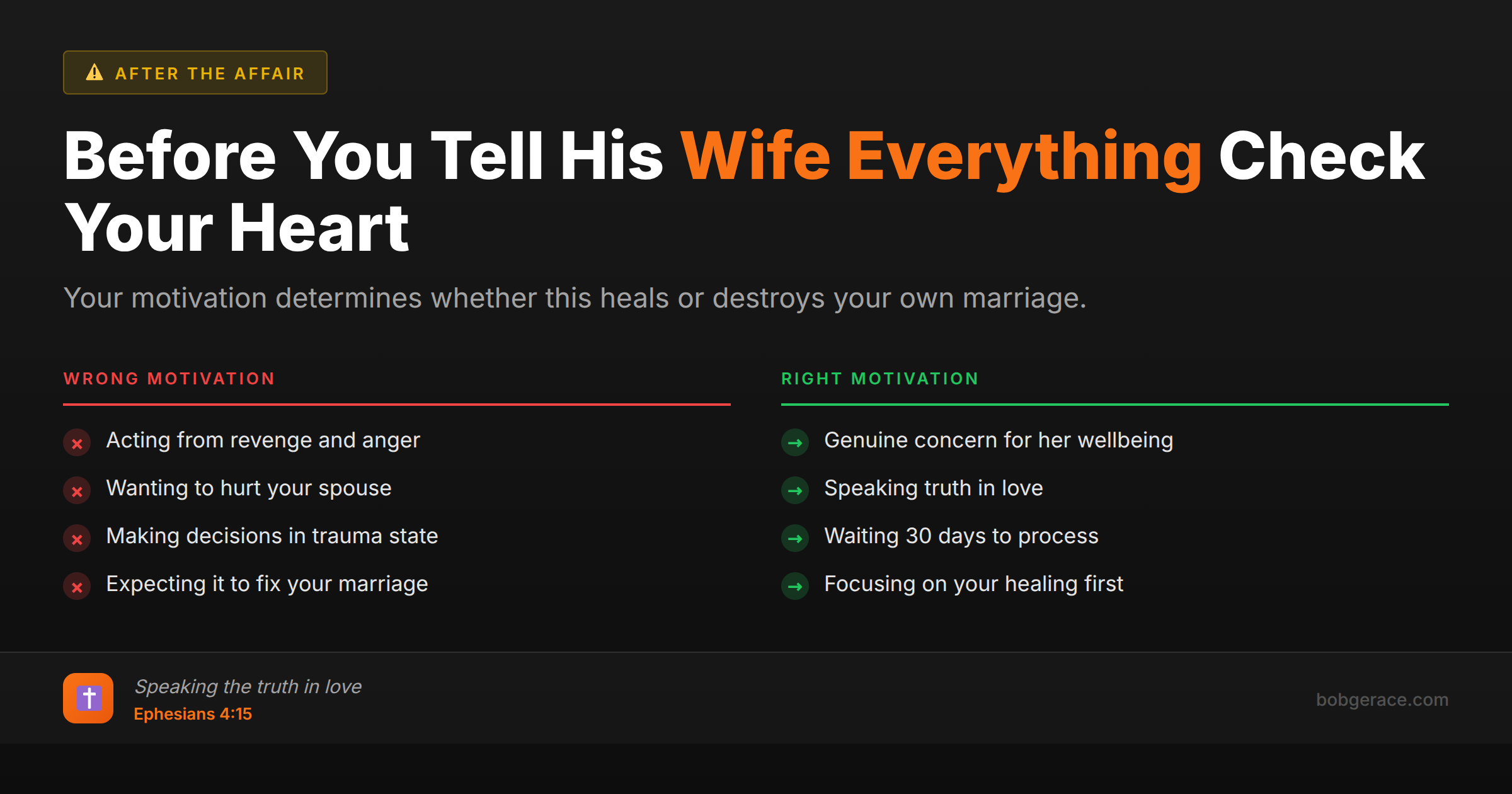
The decision to contact the other man's wife is complex and shouldn't be made impulsively. While she deserves to know the truth about her marriage, your motivations matter tremendously. If you're acting from revenge, anger, or a desire to hurt your spouse, stop. This will backfire and damage your own healing process. However, if you're genuinely concerned for her wellbeing and believe she has a right to know what's happening in her marriage, that's different. Consider the timing, your approach, and the potential consequences. Many times, focusing on your own marriage first - getting clarity, setting boundaries, and working toward healing - is more productive than immediately involving others.
The Full Picture
This question usually comes from one of two places: righteous anger or genuine concern. Both are understandable, but they lead to very different outcomes.
When you're in the immediate aftermath of discovering an affair, your emotions are raw. You want justice. You want the other man to face consequences. You want his wife to know what kind of person she's married to. These feelings are completely normal, but they're not necessarily the best foundation for making this decision.
Consider the ripple effects. Contacting the other man's wife will likely: - Escalate the entire situation dramatically - Create additional chaos during an already turbulent time - Potentially harm innocent children in their family - Force your spouse to deal with fallout from multiple directions - Complicate any attempts at reconciliation
That said, there are legitimate reasons to consider disclosure. She is living a lie, potentially exposing herself to health risks, and making decisions about her life and marriage based on false information. From a purely ethical standpoint, she has a right to know.
Timing matters tremendously. If you contact her immediately after discovery, while emotions are high, it often appears vindictive regardless of your intentions. If you wait until you've processed your own situation, gained clarity, and can approach it from a place of genuine concern rather than raw emotion, the conversation will likely go much better.
Your marriage must come first. Before you focus on their marriage, you need to address what's happening in yours. Have you clearly communicated your boundaries to your spouse? Have you insisted the affair end immediately? Are you getting the support and counseling you need? These steps are far more important than any conversation with the other man's wife.
What's Really Happening
From a therapeutic perspective, the desire to contact the other man's wife often represents an attempt to regain control in a situation where you feel completely powerless. This is a normal trauma response, but it's important to examine whether this action will actually serve your healing //blog.bobgerace.com/complete-surrender-christian-marriage-gods-timing-process/:process.
Research shows that revenge-based actions following infidelity actually prolong recovery and increase symptoms of depression and anxiety. However, when the motivation is genuinely altruistic - concern for another person's wellbeing - the psychological impact is very different.
I typically encourage clients to wait at least 30 days after discovery before making this decision. This allows time for the initial shock to subside and for clearer thinking to emerge. During this time, I recommend focusing on stabilization: establishing safety, getting support, and beginning to process the trauma.
When clients do decide to make contact, I strongly advise having a clear plan. What exactly will you say? What outcome are you hoping for? How will you handle her potential reactions - denial, anger, blame directed at you? Many people underestimate how difficult and emotionally draining this conversation can be.
Consider also that she may already know or suspect something. Studies indicate that approximately 40% of betrayed spouses have some awareness of their partner's infidelity before formal disclosure. Your revelation may not be the shocking news you expect it to be.
What Scripture Says
Scripture gives us principles to guide this difficult decision, though it doesn't provide a simple yes or no answer.
Truth and love must work together. Ephesians 4:15 tells us to speak "the truth in love." This means both the content and the motivation matter. Truth spoken from anger, revenge, or malice isn't the same as truth spoken from genuine love and concern.
Consider your own heart first. Matthew 7:3-5 reminds us: "Why do you look at the speck of sawdust in your brother's eye and pay no attention to the plank in your own eye?" This doesn't mean you ignore wrongdoing, but it does mean you examine your own motivations honestly before taking action.
Restoration should be the goal. Galatians 6:1 instructs us: "If someone is caught in a sin, you who live by the Spirit should restore that person gently." The key word is "restore" - not punish, not embarrass, not get revenge. If contacting his wife serves restoration, that's different than if it serves retribution.
Wisdom requires good counsel. Proverbs 15:22 says "Plans fail for lack of counsel, but with many advisers they succeed." Don't make this decision alone. Seek guidance from mature believers, counselors, or pastors who can help you discern your motivations and consider the consequences.
Love your enemies. Matthew 5:44 is challenging here, but relevant. Both your spouse and the other man have wronged you, but you're still called to love them. Sometimes love requires difficult conversations and consequences, but the heart behind it matters immensely.
Consider the vulnerable. Scripture consistently calls us to protect and care for those who are vulnerable or deceived. The other man's wife is both - she's vulnerable to health risks and living under deception. This weighs in favor of disclosure, but again, how and when you do it matters.
What To Do Right Now
-
1
Wait at least 30 days after discovery to make this decision - don't act from immediate emotion or trauma
-
2
Examine your heart honestly - write down your true motivations for wanting to contact her
-
3
Focus on your own marriage first - establish clear boundaries and consequences with your spouse
-
4
Seek counsel from a trusted pastor, counselor, or mature friend before making any contact
-
5
If you decide to reach out, plan the conversation carefully - what will you say and what outcome do you want?
-
6
Prepare for various reactions - she may deny it, blame you, or become angry, and you need to be ready
Related Questions
- Should I confront the other man?
- Should I expose the affair publicly?
- How do I compete with the affair partner?
- What are risks vs. benefits of exposure?
- What does research say about confronting the affair partner?
- How do I love my enemy when he's sleeping with my wife?
- What evidence should I secure?
- Should I tell anyone right now?
- What boundaries should I set?
- How do I not lose my mind right now?
Also find Bob on
Subscribe for weekly videos on Christian marriage.
Get a Coach on Your Specific Situation
This decision depends on details only you know—your wife's current state, the other marriage, what you're actually trying to accomplish. A coach who knows your story can help you think this through without regret.
Talk to Bob →