Should I expose the affair publicly?
6 min read
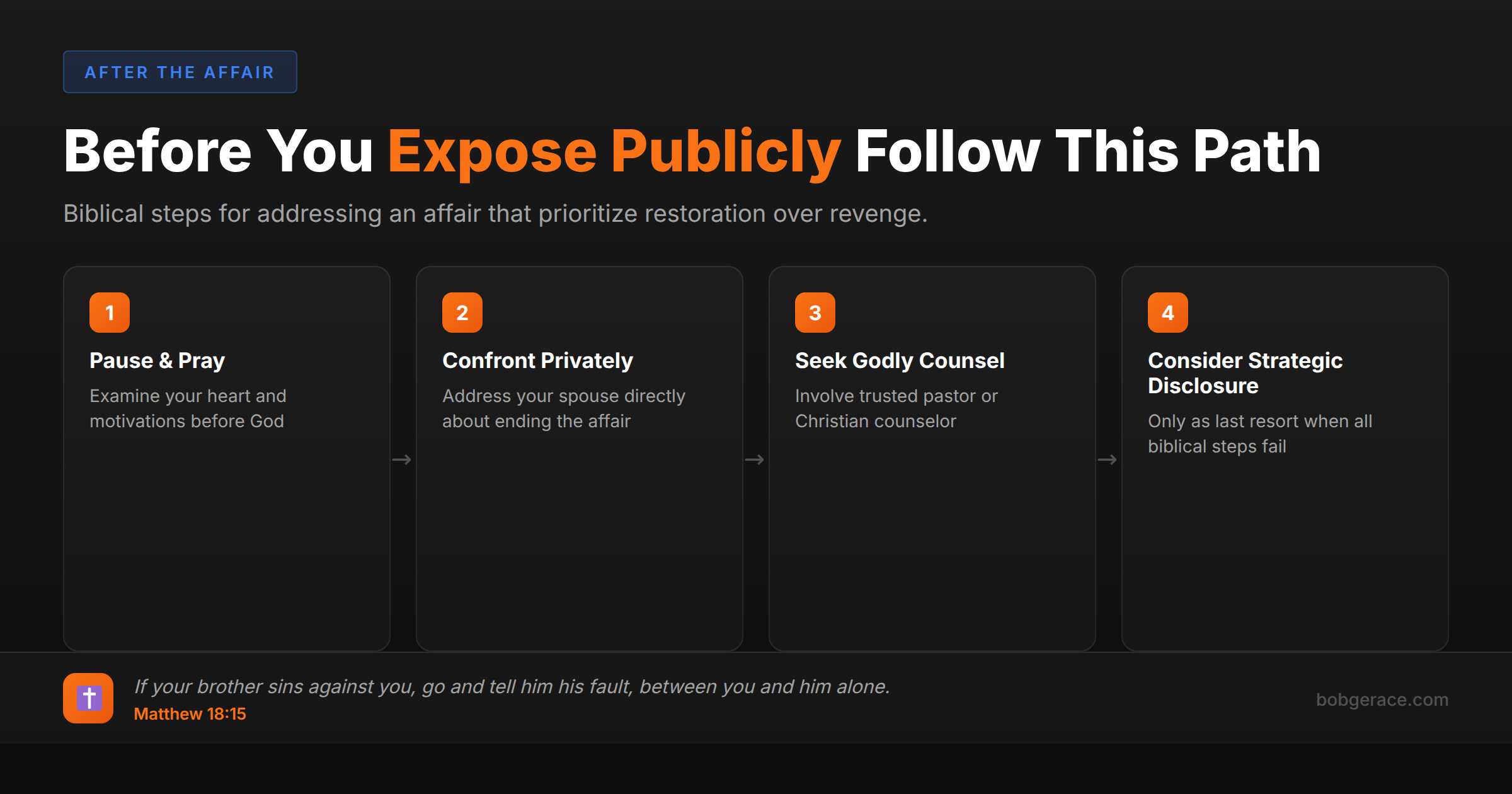
Public exposure of an affair should be approached with extreme caution and biblical wisdom. While the betrayed spouse's pain and desire for justice are understandable, broadcasting intimate marital failures publicly can cause irreversible damage to your marriage, children, and witness as a believer. The goal should always be restoration, not revenge. Before going public, exhaust biblical restoration processes first. This includes private confrontation, involving trusted counselors or church leadership, and giving your spouse opportunity to repent and end the affair. Public exposure should only be considered as a last resort when all other biblical steps have failed and the unfaithful spouse continues in unrepentant adultery.
The Full Picture
When you discover your spouse's affair, the natural human response is often a desire for justice, validation, and sometimes revenge. The thought of exposing their betrayal publicly can feel like the only way to level the playing field or force accountability. You might imagine telling family members, posting on social media, or confronting the other man publicly. These impulses are understandable but potentially destructive.
The immediate consequences of public exposure include:
- Permanent damage to your spouse's reputation and career - Humiliation for your children and family - Potential legal complications, especially if the other man is married - Burning bridges that might be needed for restoration - Hardening your spouse's heart against reconciliation - Creating a public spectacle that reflects poorly on your Christian witness
However, there are situations where disclosure becomes necessary:
- When the other man's spouse deserves to know the truth - If your spouse refuses to end the affair after private confrontation - When church discipline becomes necessary for an unrepentant believer - If there are safety concerns or ongoing deception affecting others
The key is understanding the difference between strategic, purposeful disclosure and emotional, vengeful exposure. One seeks restoration and truth; the other seeks to inflict pain and embarrassment. Your motivation matters enormously in determining the right course of action.
Remember that once information is made public, you cannot take it back. Social media posts can be screenshotted, family relationships can be permanently damaged, and your children may bear the shame of public knowledge about their parents' private struggles. Wisdom demands that you pause, pray, and seek godly counsel before making any public disclosure decisions.
What's Really Happening
From a therapeutic standpoint, the impulse to expose an affair publicly often stems from what we call 'trauma reactivity' - the brain's attempt to regain control and power after experiencing betrayal trauma. When someone discovers infidelity, their nervous system goes into hypervigilance mode, desperately seeking ways to feel safe and vindicated.
Public exposure can temporarily satisfy several psychological needs: it validates your reality (especially important when gaslighting has occurred), it shifts shame back to the unfaithful partner, and it creates external pressure for the affair to end. However, research consistently shows that public humiliation tactics rarely lead to genuine remorse or lasting change in the unfaithful spouse.
What often happens instead is that the unfaithful partner becomes defensive, doubles down on their choices, or goes deeper underground with their deception. The shame and humiliation can actually drive them further toward the affair partner, who becomes their 'safe haven' from public judgment.
More effective approaches focus on what we call 'strategic transparency' - carefully planned disclosure to specific individuals who can provide support or accountability, rather than broadcasting to everyone. This might include telling the other betrayed spouse, involving trusted //blog.bobgerace.com/blended-family-christian-marriage-protect-children/:family members, or engaging church leadership when appropriate.
The goal should always be creating conditions for genuine accountability and repentance, not simply inflicting pain. When betrayed spouses focus on strategic rather than reactive disclosure, they maintain more personal power and create better conditions for either restoration or healthy separation if restoration proves impossible.
What Scripture Says
Scripture provides clear guidance on how to handle sin and conflict within relationships, including the painful reality of adultery. The biblical approach prioritizes restoration over revenge and follows a specific process for addressing sin.
Start with Private Confrontation: *"If your brother sins against you, go and tell him his fault, between you and him alone. If he listens to you, you have gained your brother."* - Matthew 18:15
Jesus establishes the principle that confrontation should begin privately, giving the offending party opportunity for repentance without public shame.
Involve Wise Counselors When Necessary: *"But if he does not listen, take one or two others along with you, that every charge may be established by the evidence of two or three witnesses."* - Matthew 18:16
When private confrontation fails, Scripture endorses involving trusted, godly counselors - not the entire community.
Guard Against Revenge: *"Beloved, never avenge yourselves, but leave it to the wrath of God, for it is written, 'Vengeance is mine, I will repay, says the Lord.'"* - Romans 12:19
Public exposure motivated by revenge contradicts this clear biblical command to leave justice in God's hands.
Pursue Truth in Love: *"Rather, speaking the truth in love, we are to grow up in every way into him who is the head, into Christ."* - Ephesians 4:15
Any disclosure must be motivated by love and restoration, not by a desire to harm or embarrass.
Consider the Witness of Your Actions: *"Let all that you do be done in love."* - 1 Corinthians 16:14
Your response to betrayal becomes part of your Christian witness. Public exposure that damages your testimony may not honor God.
Protect the Vulnerable: *"But whoever causes one of these little ones who believe in me to sin, it would be better for him to have a great millstone fastened around his neck and to be drowned in the depth of the sea."* - Matthew 18:6
Consider how public exposure might affect children and other vulnerable family members.
What To Do Right Now
-
1
Pause and pray - Before making any public disclosure, spend time in prayer asking God for wisdom and examining your motivations
-
2
Confront privately first - Have a clear, direct conversation with your spouse about ending the affair before involving others
-
3
Seek godly counsel - Talk to a pastor, Christian counselor, or trusted mentor before making any exposure decisions
-
4
Consider strategic disclosure - If the other man is married, his spouse deserves to know, but do this thoughtfully and compassionately
-
5
Document everything - Keep records of the affair evidence in case disclosure becomes necessary for legal or church discipline purposes
-
6
Protect your children - Make decisions about exposure based on what serves their best interests, not your need for vindication
Related Questions
Need Wisdom for This Difficult Decision?
Making decisions about affair disclosure requires careful guidance and biblical wisdom. Don't navigate this alone.
Get Support →