What does the Bible say about temptation and sin?
6 min read
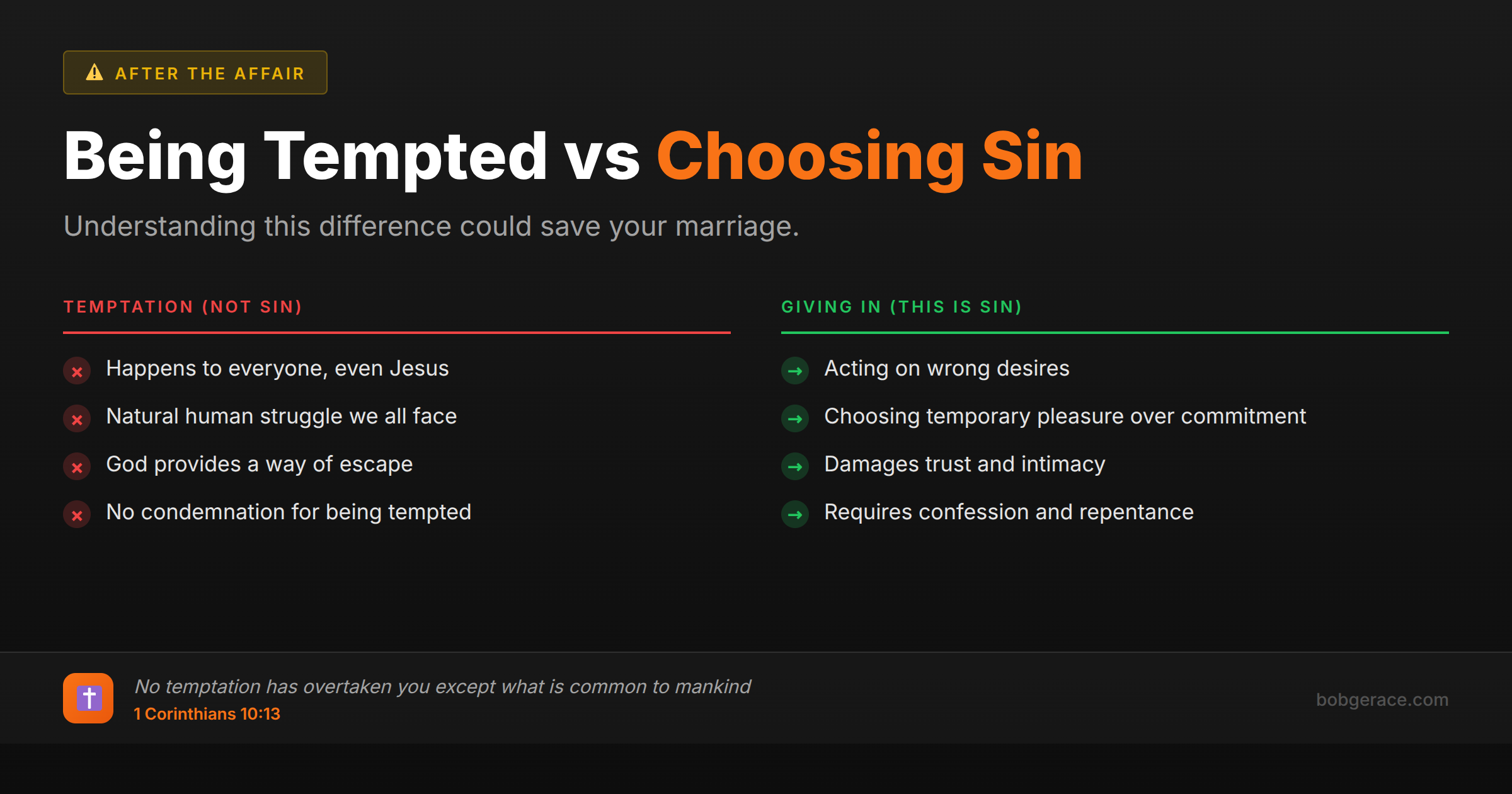
The Bible is crystal clear: temptation itself isn't sin, but giving in to it is. James 1:14-15 explains that temptation comes from our own desires, and when we act on those desires, sin is born. Every person faces temptation - even Jesus was tempted in the wilderness - but Scripture promises that God always provides a way out (1 Corinthians 10:13). The key biblical truth is this: you're not condemned for being tempted, but you are responsible for how you respond. Whether it's emotional affairs, physical infidelity, or other marriage-damaging behaviors, God offers both the strength to resist and the grace to overcome. Understanding this distinction between temptation and sin is crucial for healing and moving forward in your marriage.
The Full Picture
Here's what most people get wrong about temptation and sin: they think being tempted makes them evil. That's not biblical, and it's not helpful for your marriage.
Temptation is universal. Every person who has ever lived has faced temptation. The Bible doesn't promise you'll avoid temptation - it promises you'll have the strength to overcome it. This includes sexual temptation, emotional affairs, and the pull toward relationships outside your marriage.
Sin is a choice. The moment between temptation and action is where your power lies. You can't control every thought or feeling, but you absolutely can control your response. This is where many marriages are won or lost - in those crucial seconds when you decide whether to engage with temptation or walk away.
Confession brings freedom. The Bible teaches that confession isn't just about admitting wrongdoing - it's about breaking sin's power over your life. When you bring your struggles into the light, they lose their grip on you.
Restoration is possible. Scripture is filled with stories of people who fell into sin and were completely restored. David committed adultery and murder, yet God called him "a man after my own heart." Peter denied Jesus three times, yet became the rock of the early church. Your past doesn't define your future.
The enemy wants you to believe that one moment of failure defines you forever. That's a lie. God's grace is bigger than your biggest mistake.
What's Really Happening
From a clinical perspective, understanding the difference between temptation and sin is crucial for //blog.bobgerace.com/holy-spirit-intelligence-christian-marriage/:breaking destructive patterns-in-pattern-breaking)s](/answers/becoming-the-man/how-do-i-break-destructive-patterns) in marriage. What we see in therapy is that shame about temptation often drives people deeper into sin, creating a vicious cycle.
Temptation activates our brain's reward system, flooding us with dopamine and creating powerful urges. This is neurobiologically normal - your brain is doing exactly what it's designed to do. The problem isn't the temptation itself, but how we've been conditioned to respond to it.
Many clients come to me believing that good Christians shouldn't experience temptation at all. This unrealistic expectation creates intense shame, which actually makes them more vulnerable to acting out. When we normalize the experience of temptation while maintaining clear boundaries around behavior, healing accelerates dramatically.
The biblical concept of confession aligns perfectly with what we know about trauma and addiction recovery. Secrets keep us sick, but bringing our struggles into trusted relationships breaks their power. This is why accountability partnerships and therapeutic relationships are so effective - they provide the safe space for honesty that Scripture prescribes.
What's particularly powerful is combining biblical truth with practical coping strategies. When clients understand that temptation is normal but develop specific skills for managing it, they experience both spiritual and psychological freedom.
What Scripture Says
The Bible provides clear guidance on temptation and sin, offering both warning and hope.
Temptation is not sin: "For we do not have a high priest who is unable to empathize with our weaknesses, but we have one who has been tempted in every way, just as we are—yet he did not sin" (Hebrews 4:15). Jesus faced every temptation you face, yet remained sinless. This proves that temptation itself isn't wrong.
God provides escape routes: "No temptation has overtaken you except what is common to mankind. And God is faithful; he will not let you be tempted beyond what you can bear. But when you are tempted, he will also provide a way out so that you can endure it" (1 Corinthians 10:13). Every temptation comes with an exit strategy.
Sin follows a pattern: "But each person is tempted when they are dragged away by their own evil desire and enticed. Then, after desire has conceived, it gives birth to sin; and sin, when it is full-grown, gives birth to death" (James 1:14-15). Understanding this progression helps you intervene before temptation becomes sin.
Confession brings cleansing: "If we confess our sins, he is faithful and just and will forgive us our sins and purify us from all unrighteousness" (1 John 1:9). This isn't just about forgiveness - it's about breaking sin's power over your life.
Restoration is complete: "Therefore, if anyone is in Christ, the new creation has come: The old has gone, the new is here!" (2 Corinthians 5:17). Your identity isn't defined by your failures but by Christ's victory.
What To Do Right Now
-
1
Confess your temptations to God without shame - acknowledge them as normal human struggles, not evidence of spiritual failure
-
2
Identify your personal 'way of escape' - create specific, practical strategies for when temptation hits strongest
-
3
Find one trusted person to share your struggles with - secrets keep you trapped, but confession brings freedom
-
4
Memorize 1 Corinthians 10:13 and speak it out loud when temptation comes - God's Word has power to transform your thinking
-
5
Remove or limit access to your biggest temptation triggers - don't rely on willpower alone when wisdom can protect you
-
6
Focus on your identity in Christ, not your struggles with sin - you are loved, forgiven, and empowered to live differently
Related Questions
- Does Scripture speak to 'why' she cheated?
- Is she responsible even if I contributed to problems?
- What's the relationship between her sin and my sin?
- How do I hold both my responsibility and her agency?
- What does 'hardened heart' mean and does she have one?
- Is this demonic attack, human failing, or both?
- What does Scripture say about self-control?
- What is the role of the flesh vs. spirit?
- Is my anger a fruit problem or root problem?
- What spiritual disciplines address anger?
Also find Bob on
Subscribe for weekly videos on Christian marriage.
Ready to Apply This to Your Marriage?
Knowing what the Bible says and actually living it out when you're triggered are two different things. A coach who knows your specific story can help you close that gap.
Talk to Bob →