She seems happier when I'm not around
6 min read
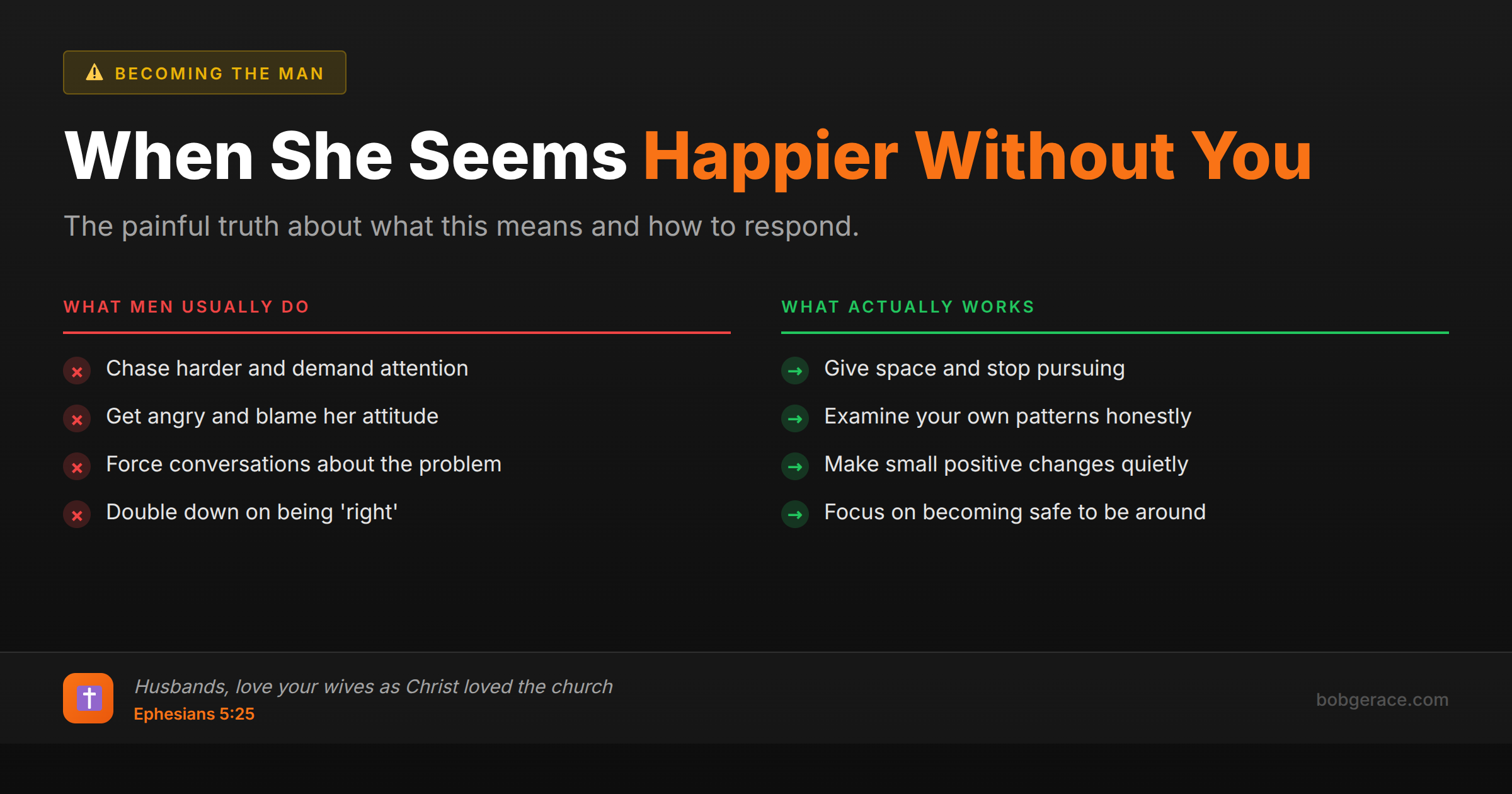
If your wife seems happier when you're not around, this is a significant indicator of emotional disconnection that needs immediate attention. This behavior typically develops when the relationship has become a source of stress rather than comfort for her. She may have learned to associate your presence with conflict, criticism, or emotional exhaustion. This doesn't mean she doesn't love you, but it does mean something fundamental has shifted in your relationship dynamic. Many men notice their wives light up around friends or family but seem subdued when they return home. This pattern suggests she's protecting herself emotionally and has found peace in distance rather than connection with you.
The Full Picture
When your wife appears more relaxed, animated, or genuinely happy in your absence, you're witnessing the result of accumulated relational strain. This isn't something that happens overnight - it's the culmination of patterns that have made home feel unsafe or draining for her emotionally.
What This Actually Looks Like: - She becomes more talkative and animated when you leave for work trips - Friends comment on how "different" she seems when you're not there - She stops sharing about her day or interests when you're present - There's visible tension relief when you're occupied elsewhere - She makes plans that specifically don't include you
The Progression Pattern: Most wives don't start here. Initially, she likely tried to engage, share concerns, or seek connection. When those attempts were met with defensiveness, dismissal, or conflict, she began to withdraw. Over time, she discovered that avoiding interaction altogether felt better than risking disappointment or confrontation.
Why This Matters: This behavior indicates she's moved from actively trying to fix the relationship to passively protecting herself from it. She's not necessarily planning to leave, but she's emotionally creating the distance she needs to survive in the marriage. This is often a precursor to either deeper withdrawal or eventual departure if nothing changes.
The Underlying Message: When she seems happier without you, she's communicating that your current way of relating has become burdensome rather than beneficial to her wellbeing. This isn't about you being a bad person - it's about patterns of interaction that need to change.
What's Really Happening
From a clinical perspective, when a spouse appears happier in their partner's absence, we're observing a protective emotional mechanism. This behavior typically emerges when the relationship has become associated with chronic stress, criticism, or emotional depletion.
The Neurological Reality: Repeated negative interactions actually rewire the brain to anticipate stress when the partner is present. Her nervous system has learned to associate your presence with potential conflict, leading to a physiological stress response that relaxes when you're away. This isn't conscious manipulation - it's an automatic protective response.
Attachment Disruption: Healthy marriages provide a secure base where both partners feel safe to be authentic. When this safety is compromised, the attachment system activates avoidance strategies. She's not rejecting you personally; she's protecting herself from what feels like an unsafe emotional environment.
The Validation Seeking: Often, these wives find energy and joy in other relationships because those interactions provide the validation and acceptance missing at home. This contrast makes the marital dynamic even more apparent to both partners.
Recovery Potential: The encouraging news is that this pattern can be reversed when the underlying dynamic changes. However, it requires the pursuing partner (usually the husband) to fundamentally shift from trying to get needs met to focusing on creating safety and connection. Small, consistent changes in interaction patterns can gradually restore her nervous system's ability to relax in your presence.
What Scripture Says
Scripture provides clear guidance on creating marriages where both spouses flourish rather than merely survive. God's design is for marriage to be a source of joy and strength, not stress and withdrawal.
Love as Safety: *"Husbands, love your wives as Christ loved the church and gave himself up for her"* (Ephesians 5:25). Christ's love creates safety and flourishing. If your wife seems happier without you, examine whether your love is creating security or anxiety in her life.
Gentle Strength: *"A gentle answer turns away wrath, but a harsh word stirs up anger"* (Proverbs 15:1). Often, wives withdraw when interactions consistently feel harsh or combative. Biblical masculinity includes the strength to be gentle and create peace.
Understanding Before Being Understood: *"Be quick to listen, slow to speak, slow to become angry"* (James 1:19). When she seems happier alone, it's time to listen more and demand less. Understanding her experience is the first step toward restoration.
Creating Joy: *"Let your wife be a fountain of blessing for you. Rejoice in the wife of your youth"* (Proverbs 5:18 NLT). God intends marriage to be mutually life-giving. If she's finding joy elsewhere, consider how you can become a source of blessing rather than burden.
Sacrificial Love: *"In this same way, husbands ought to love their wives as their own bodies"* (Ephesians 5:28). This means prioritizing her wellbeing and happiness as much as your own, even when it requires personal change.
Restoration Promise: *"And we know that in all things God works for the good of those who love him"* (Romans 8:28). Even this painful season can become the catalyst for a stronger, more joyful marriage when approached with humility and faith.
What To Do Right Now
-
1
Stop pursuing for now - Give her space instead of trying to force connection or demanding explanations for her behavior
-
2
Examine your patterns - Honestly assess how you typically interact: Are you critical, defensive, demanding, or emotionally unavailable?
-
3
Start small positive changes - Focus on brief, kind interactions without expecting anything in return or trying to fix everything at once
-
4
Address your own issues - Work on anger management, communication skills, or whatever patterns contribute to her stress response
-
5
Create safety first - Before trying to rebuild intimacy, focus on making interactions feel safe and pleasant for her
-
6
Seek professional help - Consider individual coaching or counseling to understand and change the dynamics that led to this disconnection
Related Questions
- She says she loves me but isn't 'in love'
- We're roommates, not spouses
- She's physically present but emotionally gone
- She lights up for everyone but me
- She won't talk about our problems
- Nothing I do seems to matter to her
- What is 'emotional disengagement'?
- What is 'deactivation' and did I cause it?
- Why does she seem numb/flat/dead inside?
- What have I done that made connection feel unsafe?
Also find Bob on
Subscribe for weekly videos on Christian marriage.
This Pattern Needs a Coach Who Knows Your Marriage
When she's pulling away like this, generic advice won't cut it. I'll hear your specific situation and help you stop making it worse before you run out of time.
Talk to Bob →