What does Scripture say about male emotionality?
6 min read
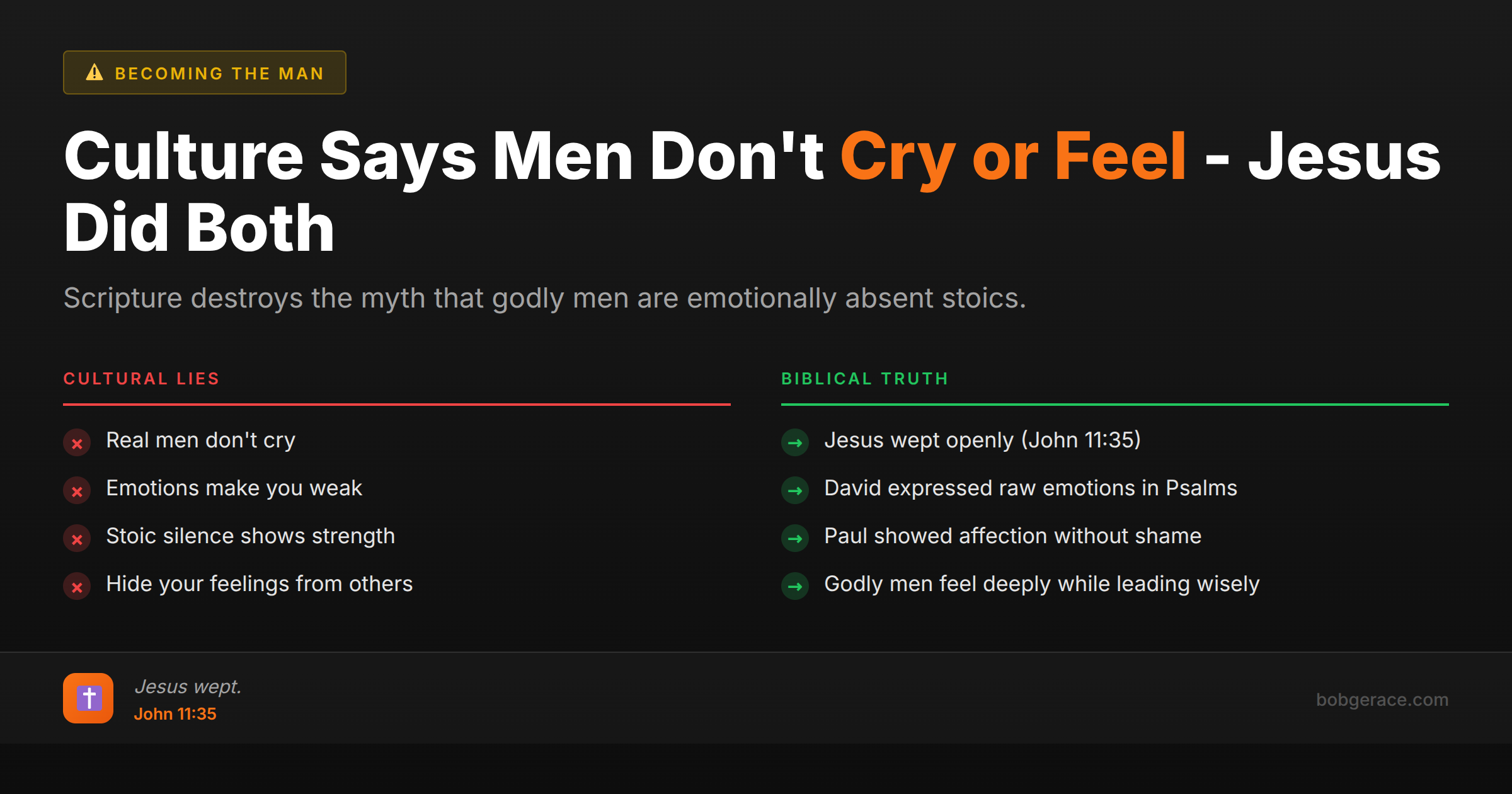
Scripture presents a robust picture of male emotionality that directly contradicts cultural myths about stoic, emotionless masculinity. From the very beginning, men were created in God's image - and God displays the full spectrum of emotions throughout Scripture. Jesus Christ, the perfect man, wept openly, expressed righteous anger, showed compassion, and demonstrated joy. Biblical manhood isn't about suppressing emotions but stewarding them well. David poured out his heart in the Psalms with raw honesty about fear, anger, joy, and sorrow. The apostle Paul expressed deep affection for his spiritual children and wasn't ashamed of his tears. Scripture calls men to feel deeply while leading wisely, to be tender-hearted yet strong, emotional yet stable.
The Full Picture
Let's destroy the lie that's been crushing men for generations: that real men don't feel. This toxic myth has created a generation of emotionally stunted husbands who think spiritual maturity means becoming a stoic robot. That's not biblical masculinity - it's pagan philosophy dressed up in church clothes.
The truth is, God created you as an emotional being because He is emotional. When Scripture says you're made in His image, that includes your capacity for deep feeling. The same God who "rejoices over you with singing" (Zephaniah 3:17) and whose "anger burns against injustice" also designed you with emotional depth.
Jesus is our perfect model of manhood, and He was anything but emotionally flat. He wept at Lazarus' tomb - not a single tear, but the kind of deep sobbing that made onlookers say, "See how he loved him!" He felt compassion so intensely it moved Him to action. He expressed righteous anger when His Father's house was defiled.
The problem isn't that you have emotions - it's that nobody taught you what to do with them. Biblical manhood means feeling fully while leading faithfully. It means your emotions become fuel for love, protection, and servant leadership rather than sources of shame or weakness.
Your wife doesn't need you to be an emotional brick wall. She needs a man who can feel deeply, process wisely, and respond with strength. That's the kind of husband who creates safety and intimacy in marriage.
What's Really Happening
From a clinical perspective, the suppression of male emotionality creates significant psychological and relational damage. When men internalize the message that emotions are weakness, they develop what we call 'emotional alexithymia' - an inability to identify, understand, and express their feelings.
This emotional disconnection doesn't eliminate the emotions; it drives them underground where they emerge as anger, depression, addiction, or complete withdrawal. The research is clear: men who can access and express their full emotional range have stronger marriages, better mental health, and more effective leadership capabilities.
What's particularly damaging is when this emotional suppression gets wrapped in religious language. Men are told that godliness equals emotional flatness, which creates a spiritual double-bind. They feel shame not just for having emotions, but for failing to live up to a false standard of masculinity that doesn't even exist in Scripture.
The therapeutic goal isn't to make men more emotional - it's to help them develop emotional intelligence. This means recognizing emotions as information, understanding their triggers and patterns, and learning to respond rather than react. When men embrace their God-given emotional capacity within a biblical framework, they become more effective husbands, fathers, and leaders - not less.
What Scripture Says
Scripture provides overwhelming evidence that godly men are emotionally engaged, not emotionally absent. Let's look at the biblical record:
Jesus, our perfect example, displayed full emotional range: "Jesus wept" (John 11:35) - The shortest verse in Scripture captures something profound about biblical manhood.
"And he took with him Peter and the two sons of Zebedee, and began to be sorrowful and troubled" (Matthew 26:37) - Jesus didn't hide His anguish but invited others into it.
David, the man after God's own heart, was deeply emotional: "I am weary with my moaning; every night I flood my bed with tears; I drench my couch with my weeping" (Psalm 6:6)
Paul, the apostle, expressed tender emotions: "But we were gentle among you, like a nursing mother taking care of her own children" (1 Thessalonians 2:7)
God Himself models emotional expression: "The Lord your God is in your midst, a mighty one who will save; he will rejoice over you with gladness; he will quiet you by his love; he will exult over you with loud singing" (Zephaniah 3:17)
Scripture calls men to emotional engagement: "Be kind to one another, tenderhearted, forgiving one another, as God in Christ forgave you" (Ephesians 4:32)
Biblical masculinity isn't about emotional suppression - it's about emotional stewardship under God's design.
What To Do Right Now
-
1
Reject the lie that emotions make you weak or unspiritual - this is cultural programming, not biblical truth
-
2
Study Jesus' emotional expressions in the Gospels and ask how He models healthy male emotionality
-
3
Begin identifying your emotions daily using simple feeling words rather than just 'fine,' 'good,' or 'stressed'
-
4
Share one genuine emotion with your wife today - not just facts or thoughts, but how you actually feel
-
5
Pray with emotional honesty like David in the Psalms rather than sanitized, surface-level prayers
-
6
Find a godly mentor or counselor who can help you develop biblical emotional intelligence and expression
Related Questions
Ready to Embrace Biblical Manhood?
Stop letting cultural lies about masculinity destroy your marriage. Learn how to be the emotionally engaged, biblically grounded husband God designed you to be.
Work With Me →