What is 'shepherd leadership'?
6 min read
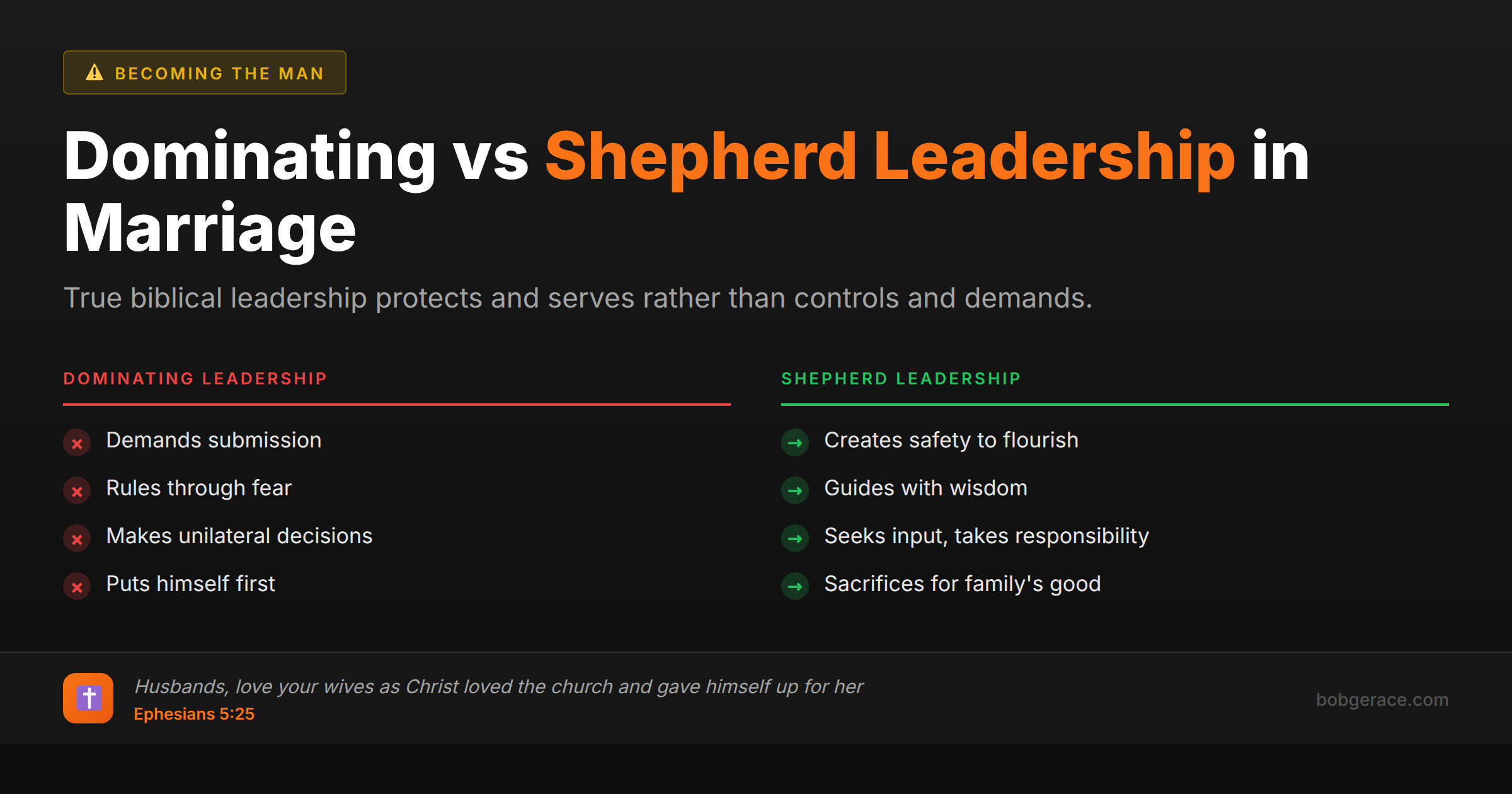
Shepherd leadership is the biblical model for husbands - leading through protection, provision, and sacrificial service rather than dominance or control. Like a shepherd who guides, protects, and cares for his flock, a husband leads by creating safety, making wise decisions for the family's wellbeing, and laying down his own comfort for his wife and children. This isn't about being the 'boss' or demanding submission. It's about being the kind of man your family can trust completely - someone who leads from the front when there's danger, provides direction when there's confusion, and creates an environment where your wife and children can flourish. True shepherd leadership requires strength, wisdom, and deep love.
The Full Picture
Shepherd leadership is fundamentally different from worldly leadership models. While corporate leadership focuses on results and authority, and military leadership emphasizes command and control, shepherd leadership centers on care and sacrifice.
The shepherd doesn't drive the sheep - he leads them. He goes ahead to scout for dangers, finds the best pasture, and creates an environment where the flock can rest and thrive. When wolves come, he doesn't send the sheep to fight - he stands between the threat and his flock. This is exactly how God calls husbands to lead.
In marriage, this means you're responsible for the spiritual, emotional, and physical climate of your home. You set the tone through your character, your decisions, and your example. Your wife doesn't need another boss - she needs a protector, a provider of security (not just financial), and a man who loves her enough to make the hard decisions when needed.
Shepherd leadership requires both strength and tenderness. You must be strong enough to make tough calls, face difficulties head-on, and stand firm in your convictions. But you must also be tender enough to listen, gentle enough to serve, and humble enough to admit when you're wrong. The goal isn't to be in charge - it's to create an environment where your marriage and family can flourish under God's design.
What's Really Happening
Many men struggle with leadership because they've been given two equally destructive models: passive abdication or authoritarian control. Neither reflects healthy shepherd leadership. Passive husbands avoid responsibility and decision-making, leaving their wives to carry burdens God intended them to bear. Authoritarian husbands use power to control rather than serve.
Shepherd leadership operates from secure attachment and emotional regulation. When a man leads from emotional security, he can make decisions based on wisdom rather than fear or ego. He can receive input without feeling threatened, admit mistakes without losing identity, and provide direction without needing to dominate.
The research is clear: families thrive when there's healthy structure and leadership combined with warmth and responsiveness. Children in homes with engaged, loving fathers show better outcomes across every metric. Wives married to men who lead with servant hearts report higher satisfaction and trust.
However, many men fear shepherd leadership because it requires vulnerability and responsibility. It's easier to be passive or controlling than to lead with sacrificial love. True shepherd leadership means you're accountable for the outcomes - not because you control everything, but because you're responsible for creating the conditions where your family can succeed.
What Scripture Says
God established the shepherd as the model for godly leadership throughout Scripture. David, called 'a man after God's own heart,' was literally a shepherd before becoming king. Jesus identified Himself as the Good Shepherd who lays down His life for the sheep.
"Husbands, love your wives as Christ loved the church and gave himself up for her" (Ephesians 5:25). Christ's leadership of the church is shepherd leadership - sacrificial, protective, and nurturing. He doesn't dominate the church; He died for it.
"The LORD is my shepherd, I shall not want" (Psalm 23:1). Notice the result of good shepherding - the sheep lack nothing. Your family should feel secure, provided for, and cared for under your leadership.
"Be shepherds of God's flock that is under your care, watching over them—not because you must, but because you are willing, as God wants you to be; not pursuing dishonest gain, but eager to serve; not lording it over those entrusted to you, but being examples to the flock" (1 Peter 5:2-3). This passage, though written to church elders, perfectly describes how husbands should lead their families.
"Whoever wants to become great among you must be your servant" (Mark 10:43). Jesus redefined leadership as service, and this applies directly to marriage. Your greatness as a husband is measured by how well you serve your wife and children.
What To Do Right Now
-
1
Assess your current leadership style - are you passive, controlling, or truly serving?
-
2
Ask your wife where she feels unprotected or unsupported, then make a plan to address it
-
3
Take ownership of creating the spiritual climate in your home through prayer and example
-
4
Practice making decisions with wisdom and input while taking final responsibility
-
5
Study Jesus as the Good Shepherd - read John 10 and ask how you can model His leadership
-
6
Begin each day asking God how you can better serve and lead your family
Related Questions
- What does Jesus model about masculine leadership?
- What is servant leadership practically?
- What does 'washing feet' look like in marriage?
- What does protecting and providing mean today?
- What does humble leadership look like?
- How do I lead without being positional?
- What is biblical headship?
- What does 'love your wife as Christ loves the church' mean?
- How do I be the spiritual leader?
- What does Christ's leadership model for husbands?
Also find Bob on
Subscribe for weekly videos on Christian marriage.
Ready to Lead Your Actual Marriage?
Shepherd leadership looks different in every marriage. Talk to Bob about what it needs to look like in yours.
Talk to Bob →