What does Paul model?
6 min read
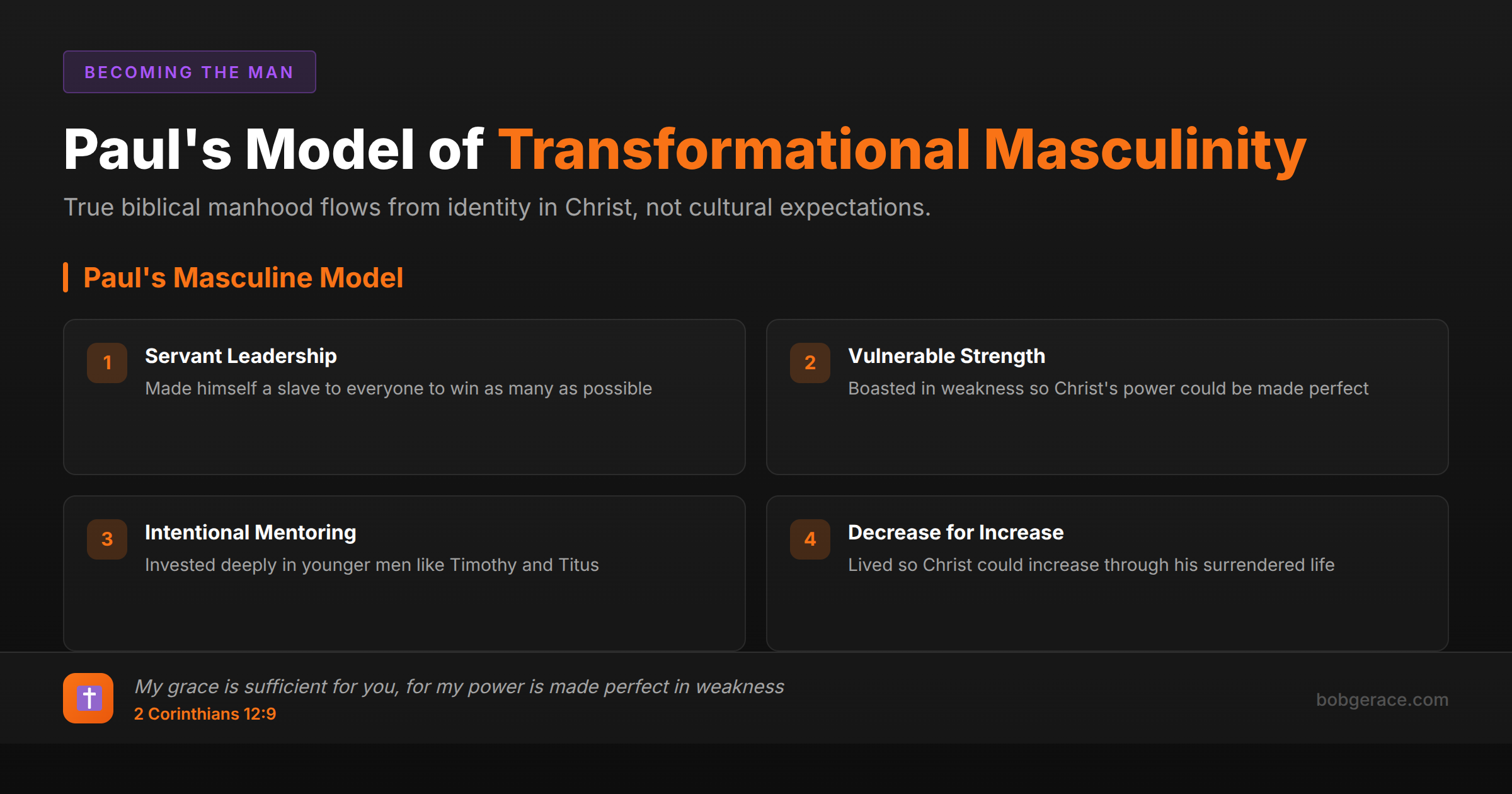
Paul models transformational masculinity rooted in Christ. He demonstrates servant leadership through his apostolic ministry, showing vulnerability by sharing his struggles and weaknesses openly. Paul mentors younger men like Timothy and Titus with intentional investment, while maintaining unwavering commitment to his calling despite persecution and hardship. Most importantly, Paul models what it means to decrease so Christ can increase. He shows us masculinity that isn't threatened by admitting fault, asking for help, or serving others. His life demonstrates that true biblical manhood flows from identity in Christ, not cultural expectations or personal performance.
The Full Picture
Paul's model of masculinity turns cultural expectations upside down. In a Roman world that valued power, dominance, and self-promotion, Paul chose a radically different path.
Servant Leadership in Action Paul led by serving. He worked with his hands to support ministry, refused financial support when it might hinder the gospel, and consistently put others' spiritual growth above his own comfort. This wasn't weakness - it was strength under control.
Emotional Intelligence and Vulnerability Paul openly shared his struggles, fears, and even tears. He wrote about his "thorn in the flesh," his anxiety for the churches, and his deep emotional investment in relationships. Modern men often mistake emotional suppression for strength, but Paul shows us that authentic masculinity includes emotional honesty.
Mentorship and Investment Paul intentionally poured into younger men. His relationships with Timothy, Titus, and others show a man secure enough in his own identity to invest in developing other leaders. He wasn't threatened by their potential success - he celebrated it.
Mission-Driven Purpose Paul lived with crystal-clear purpose. Every decision, every relationship, every hardship was filtered through his calling to advance the gospel. This gave him resilience in suffering and clarity in decision-making that many men today desperately need.
What's Really Happening
From a psychological perspective, Paul demonstrates what we call secure masculine identity. Unlike toxic masculinity that's built on comparison, competition, and control, Paul's identity was anchored in his relationship with Christ.
This security allowed him to be vulnerable without being weak, to lead without dominating, and to invest in others without feeling threatened. These are markers of psychological maturity that many men struggle to develop.
Paul also models healthy emotional regulation. He experienced the full range of human emotions - joy, sorrow, anger, fear - but channeled them constructively rather than being controlled by them. His letters show a man who could express deep affection, righteous anger, and genuine concern without losing his sense of purpose or identity.
Perhaps most importantly, Paul demonstrates what psychologists call "generative masculinity" - the drive to create, build up, and invest in the next generation. This is a key developmental task for mature men, and Paul exemplifies it beautifully in his mentoring relationships and church planting ministry.
For married men, Paul's model is particularly relevant because it shows how to lead without controlling, how to be strong without being harsh, and how to invest in others (including your wife and children) from a place of security rather than insecurity.
What Scripture Says
Scripture gives us a clear picture of Paul's masculine model:
Servant Leadership: *"Though I am free and belong to no one, I have made myself a slave to everyone, to win as many as possible"* (1 Corinthians 9:19). Paul voluntarily chose to serve, demonstrating that true strength serves others.
Vulnerability and Weakness: *"But he said to me, 'My grace is sufficient for you, for my power is made perfect in weakness.' Therefore I will boast all the more gladly about my weaknesses, so that Christ's power may rest on me"* (2 Corinthians 12:9). Paul found strength in acknowledging his limitations.
Emotional Investment: *"We loved you so much that we were delighted to share with you not only the gospel of God but our lives as well, because you had become so dear to us"* (1 Thessalonians 2:8). Paul modeled deep, caring relationships.
Mentorship: *"To Timothy my true son in the faith: Grace, mercy and peace from God the Father and Christ Jesus our Lord"* (1 Timothy 1:2). Paul intentionally invested in developing other men.
Identity in Christ: *"I have been crucified with Christ and I no longer live, but Christ lives in me"* (Galatians 2:20). His masculine identity was rooted in his relationship with Christ, not cultural expectations.
Perseverance Under Pressure: *"I can do all this through him who gives me strength"* (Philippians 4:13). Paul's resilience came from his connection to Christ's power.
What To Do Right Now
-
1
Identify one area where you can serve your wife or family instead of expecting to be served
-
2
Share one struggle or weakness with a trusted friend or mentor this week
-
3
Find a younger man in your church or community to intentionally invest in
-
4
Write down your life's mission and evaluate if your current choices align with it
-
5
Practice emotional honesty by expressing your feelings appropriately rather than stuffing them
-
6
Spend time in prayer asking God to reveal where you're living from insecurity rather than your identity in Christ
Related Questions
Ready to Develop Biblical Masculinity?
Paul's model of masculinity can transform your marriage and leadership. Let's work together to develop the kind of biblical manhood that serves, leads, and loves well.
Start Coaching →