What's the difference between power-over and power-with?
6 min read
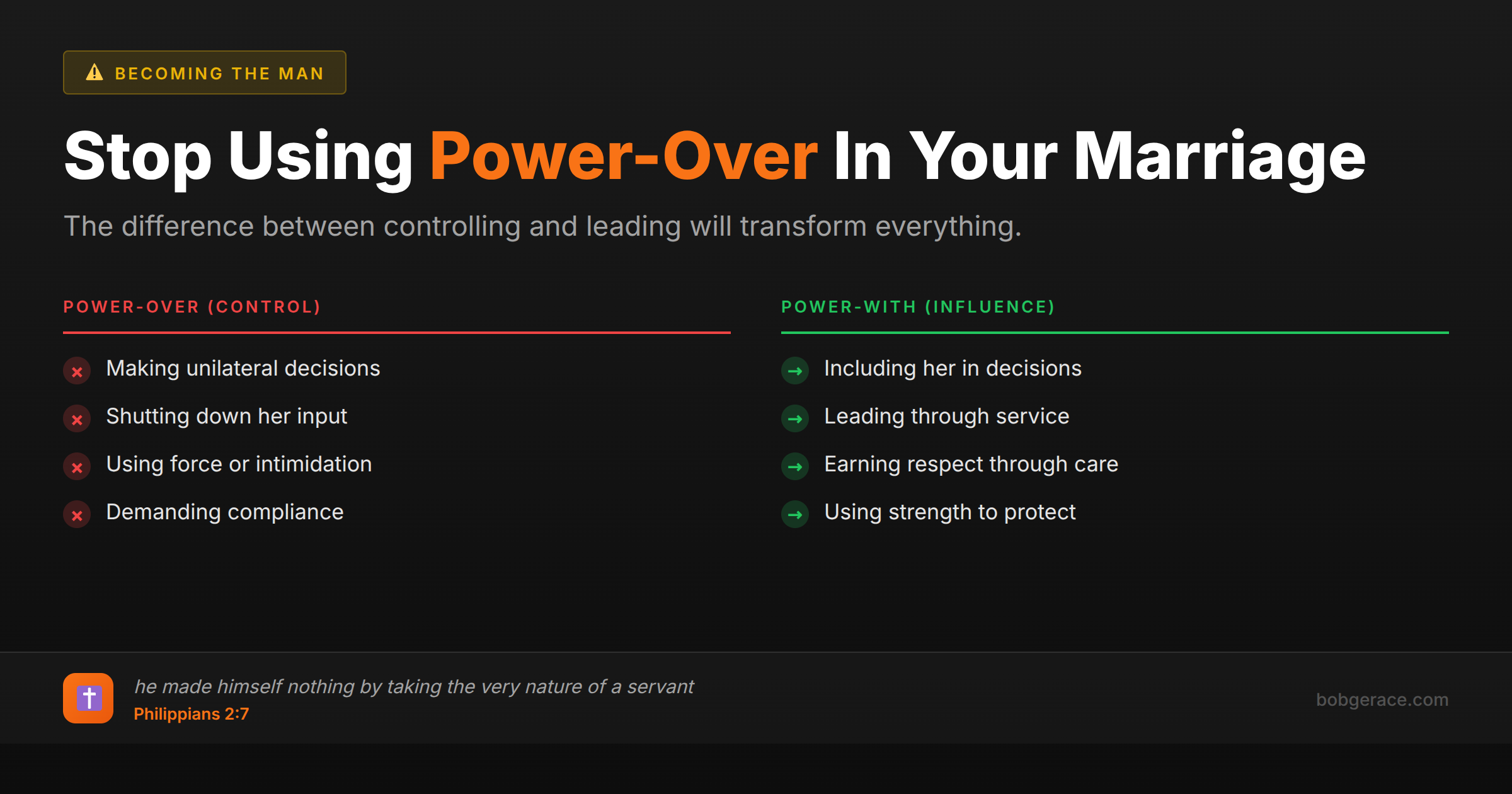
Power-over is controlling, dominating leadership that demands compliance through force, manipulation, or intimidation. It's about getting your way regardless of others' feelings or input. Power-with is influential, collaborative leadership that earns respect through service, wisdom, and genuine care for others' wellbeing. In marriage, power-over looks like making unilateral decisions, shutting down your wife's input, or using your physical presence, income, or Scripture to force compliance. Power-with means leading through influence, involving your wife in decisions, and using your strength to protect and serve rather than control. The difference transforms everything about how your marriage operates.
The Full Picture
Here's what most men don't understand: the moment you resort to power-over tactics, you've actually revealed your weakness, not your strength.
Power-over leadership operates from scarcity and fear. It says, "I have to control the outcome because I don't trust the process or the people involved." It shows up as:
- Making decisions without input from your wife - Using your size, voice, or physical presence to intimidate - Pulling the "I'm the head of the household" card to shut down discussion - Controlling finances as a way to control behavior - Using silent treatment or withdrawal as punishment - Demanding respect rather than earning it
Power-with leadership operates from abundance and confidence. It says, "I'm secure enough in my leadership to invite collaboration and strong enough to handle pushback." It looks like:
- Seeking your wife's input on major decisions while maintaining final responsibility - Using your strength to create safety, not compliance - Leading through example rather than demands - Empowering your wife to use her gifts and voice - Being strong enough to apologize when you're wrong - Earning respect through consistent character
The irony? Men who try to use power-over tactics usually end up with less influence, not more. Their wives either rebel or shut down emotionally. Either way, the man loses the partnership and intimacy he actually wants.
Power-with leadership creates the conditions where your wife wants to follow your lead because she trusts your heart and sees your strength used for her benefit, not your ego.
What's Really Happening
From a psychological perspective, power-over dynamics trigger the threat detection system in your spouse's brain. When someone feels controlled or dominated, their nervous system interprets this as danger, activating fight, flight, or freeze responses. This neurological reaction makes genuine intimacy and connection impossible.
Power-over behavior often stems from deep insecurity, childhood trauma, or learned patterns from dysfunctional family systems. Men who default to controlling behaviors are usually operating from a wounded place, trying to create safety through control rather than connection.
Conversely, power-with leadership activates the social engagement system. When your spouse feels heard, valued, and safe, their nervous system can relax into connection. This creates the neurological foundation for trust, intimacy, and genuine partnership.
The research is clear: relationships characterized by mutual respect and shared power report higher satisfaction, better conflict resolution, and greater longevity. Children in these homes develop better emotional regulation and relationship skills.
It's important to note that shifting from power-over to power-with requires genuine internal work, not just behavioral changes. Your spouse can sense the difference between authentic respect for their autonomy and manipulative tactics designed to get compliance through different means. The heart change must come first.
What Scripture Says
Scripture gives us the clearest picture of power-with leadership through Christ's example. Philippians 2:6-8 shows us that Jesus "did not consider equality with God something to be used to his own advantage; rather, he made himself nothing by taking the very nature of a servant."
Jesus had all power, yet chose to serve rather than dominate. Mark 10:42-44 records His direct teaching: "You know that those who are regarded as rulers of the Gentiles lord it over them, and their high officials exercise authority over them. Not so with you. Instead, whoever wants to become great among you must be your servant."
Ephesians 5:25-28 doesn't call husbands to control their wives, but to "love your wives, just as Christ loved the church and gave himself up for her." This is power-with leadership—using your strength to serve, protect, and nurture.
1 Peter 3:7 instructs husbands to "be considerate as you live with your wives, and treat them with respect as the weaker partner and as heirs with you of the gracious gift of life, so that nothing will hinder your prayers." Notice the emphasis on respect and consideration, not control.
Proverbs 27:5-6 reminds us that "better is open rebuke than hidden love. Wounds from a friend can be trusted." Power-with leadership creates space for honest communication, even when it's challenging.
Biblical leadership is never about lording power over others, but about laying down your life for their benefit. That's the model Christ gave us, and it's the foundation of godly masculine leadership.
What To Do Right Now
-
1
Take inventory: Write down specific ways you've used power-over tactics in your marriage in the past 30 days
-
2
Ask your wife: 'In what areas do you feel like I try to control rather than lead?' Then listen without defending
-
3
Identify your triggers: What situations make you most likely to resort to controlling behavior?
-
4
Practice the pause: Before making unilateral decisions, ask yourself 'How can I involve my wife in this process?'
-
5
Start small: Choose one area where you can shift from power-over to power-with this week
-
6
Get accountability: Find another man who can call you out when you're operating from control rather than influence
Related Questions
- What does masculine leadership look like?
- How do I lead without controlling?
- What's the difference between leading and dominating?
- What does collaborative leadership look like?
- What is 'earned authority'?
- What does humble leadership look like?
- What is biblical headship?
- What's the difference between authority and authoritarianism?
- What does coercive control look like?
- What is a boundary vs. an ultimatum?
Also find Bob on
Subscribe for weekly videos on Christian marriage.
Your Marriage Needs Your Version of This
Power-with sounds clear until you're in the actual moment with your actual wife. A coach helps you see what collaborative leadership looks like in your specific marriage—not the concept, the execution.
Talk to Bob →