What are red flags in coaching/therapy?
6 min read
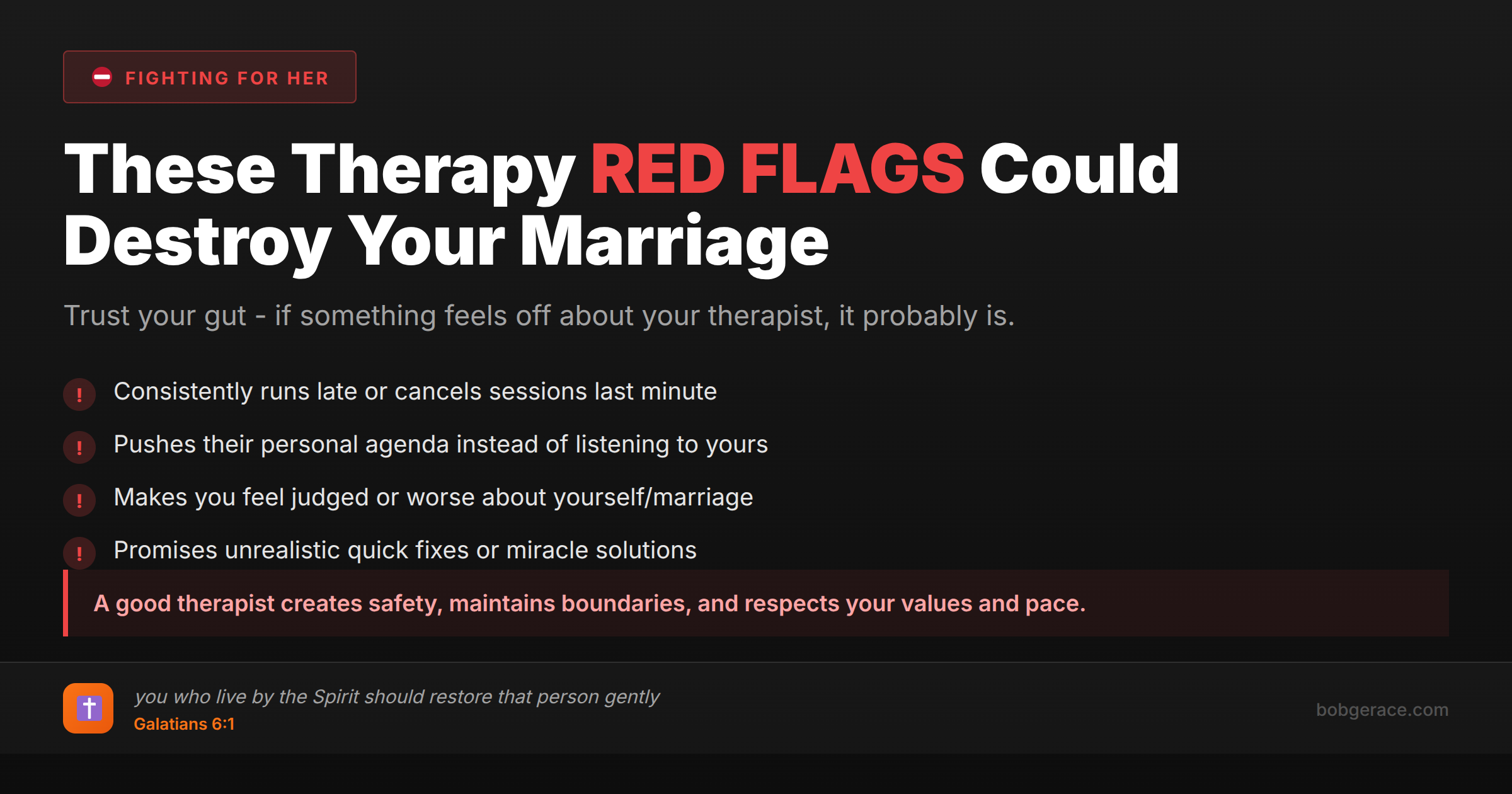
Red flags in coaching or therapy include professionals who consistently run late, push their personal agenda, violate boundaries, or make you feel judged rather than supported. Watch for therapists who talk more than they listen, promise unrealistic quick fixes, or pressure you into decisions about your marriage. A good coach or therapist should create safety, maintain clear boundaries, and respect your pace and values. Trust your gut - if something feels off, it probably is. Your healing journey deserves a professional who honors your story and guides with wisdom, not someone who makes you feel worse about yourself or your marriage.
The Full Picture
Finding the right coach or therapist can make or break your healing journey, especially when your marriage is on the line. Unfortunately, not everyone with a license or certification has your best interests at heart - or the skills to actually help you.
Professional Boundary Violations are among the most serious red flags. This includes inappropriate personal questions unrelated to your growth, sharing too much about their own life, or any form of dual relationships where they try to be your friend, business partner, or romantic interest. A professional maintains clear boundaries while still being warm and supportive.
Pushing Personal Agendas is another major warning sign. Some therapists have strong opinions about what you *should* do with your marriage - whether that's leaving immediately or staying no matter what. A good professional helps you explore your options without imposing their values or experiences onto your situation.
Lack of Structure or Progress should concern you. If sessions feel aimless, your coach can't explain their approach, or you're not seeing any movement after several months, something's wrong. Good therapy has direction, even when it's gentle.
Judgment or Shame-Based Approaches are particularly damaging. You should never leave a session feeling worse about yourself or like you're being lectured. Yes, good coaching involves some hard truths, but it's delivered with compassion and wrapped in hope, not condemnation.
Trust your instincts. If you consistently feel unheard, judged, or pressured, it's time to find someone else.
What's Really Happening
From a clinical perspective, certain behaviors indicate fundamental problems with a therapist's training, ethics, or emotional health. When therapists consistently violate boundaries, it often reflects their own unresolved issues or inadequate supervision during their training years.
One of the most concerning patterns I see is therapists who become emotionally reactive to their clients' situations. If your therapist seems more upset about your husband's behavior than you are, or pushes you toward decisions based on their emotional response rather than clinical judgment, they're likely bringing their own trauma into the room.
Another significant red flag is the inability to hold complexity. Marriage situations are rarely black and white, yet some therapists oversimplify or rush toward solutions without understanding the full dynamics. This often indicates limited experience or training in couples work.
Poor therapists also tend to either over-pathologize normal relationship struggles or under-respond to serious issues like abuse. They might diagnose you with disorders you don't have, or minimize genuine safety concerns because they're uncomfortable with conflict.
The therapeutic relationship should feel collaborative, not authoritarian. You should sense that your therapist is curious about your experience rather than having already decided what your problem is. If they seem bored, distracted, or like they're going through the motions, they've likely burned out and shouldn't be practicing.
Remember: good therapy feels challenging but safe, confrontational but respectful, and directed but not controlling.
What Scripture Says
Scripture gives us clear wisdom about discerning good leadership and counsel from harmful influences. The Bible warns us to be wise about who we allow to speak into our lives and marriages.
Galatians 6:1 tells us, *"Brothers and sisters, if someone is caught in a sin, you who live by the Spirit should restore that person gently. But watch yourselves, or you also may be tempted."* Notice the word 'gently' - restoration should never involve harsh judgment or condemnation.
Proverbs 27:6 reminds us that *"Wounds from a friend can be trusted, but an enemy multiplies kisses."* Good coaching involves difficult conversations, but they come from a place of love and genuine care, not personal agenda or cruelty.
Matthew 7:15-16 warns us to *"Watch out for false prophets. They come to you in sheep's clothing, but inwardly they are ferocious wolves. By their fruit you will recognize them."* Pay attention to the fruit in your life after sessions - do you feel built up or torn down? Hopeful or hopeless?
1 Thessalonians 5:14 instructs us to *"warn those who are idle and disruptive, encourage the disheartened, help the weak, be patient with everyone."* A godly counselor shows patience with your process and encourages your heart, even while addressing difficult issues.
Proverbs 18:13 says, *"To answer before listening—that is folly and shame."* If your therapist jumps to conclusions without really hearing your story, they're operating in folly, not wisdom.
God calls us to be both wise as serpents and gentle as doves in all our relationships, including therapeutic ones.
What To Do Right Now
-
1
Trust your gut instincts - if something feels consistently wrong, pay attention to that feeling
-
2
Set clear expectations upfront about boundaries, goals, and your values before starting with any coach or therapist
-
3
Ask potential therapists about their approach to marriage, their success rates, and their personal beliefs about divorce and reconciliation
-
4
Document concerning behaviors or statements - patterns become clearer when you write them down
-
5
Seek second opinions if you're questioning your current therapist's advice, especially about major marriage decisions
-
6
Don't hesitate to terminate the relationship if red flags persist - your healing is too important to waste time with the wrong person
Related Questions
- What does 'the work' actually mean?
- What is he doing with his coach?
- Is his program legitimate?
- How do I evaluate his program quality?
- What does quality coaching/therapy include?
- What questions should I ask about his process?
- How do I know if he's really changing?
- Is he manipulating me or actually different?
- What are markers of genuine remorse vs. guilt?
- Do I need therapy, coaching, or both?
Also find Bob on
Subscribe for weekly videos on Christian marriage.
Bring Your Actual Marriage to a Coach
You don't have to keep guessing if you're working with the right person. Talk to someone who knows your story and calibrates to where you actually are.
Talk to Bob →