What does integration mean vs. just learning?
6 min read
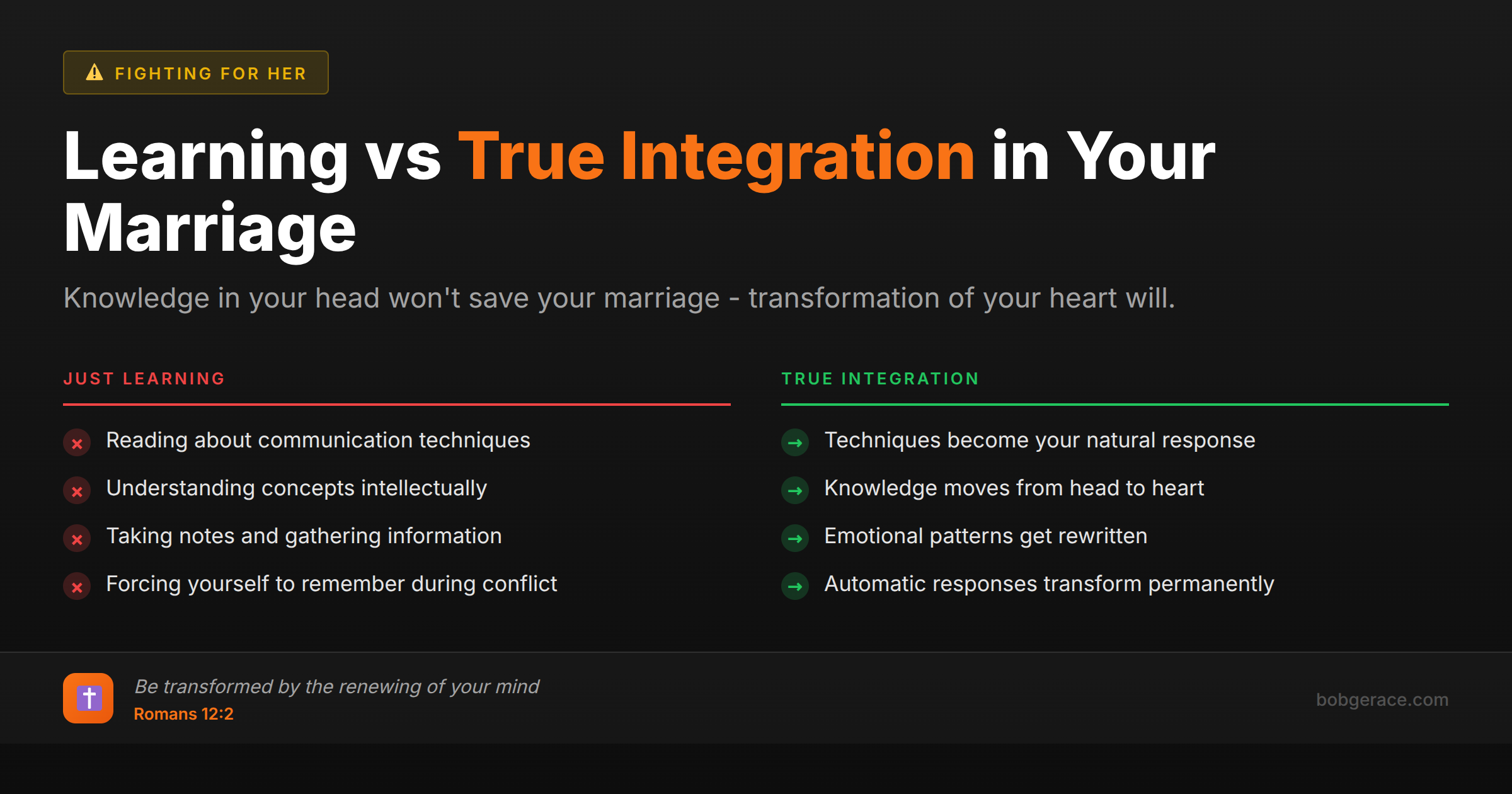
Learning is gathering information in your head - reading books, taking notes, understanding concepts intellectually. Integration is when that knowledge moves from your head to your heart and transforms how you actually live and relate. In marriage, you can learn about communication techniques, but integration happens when those techniques become your natural response during conflict, not something you have to force yourself to remember. Integration creates lasting change because it rewrites your emotional patterns and automatic responses. It's the difference between knowing what healthy boundaries look like and actually setting them consistently in your marriage.
The Full Picture
Think of learning like collecting tools in a toolbox - you know what each tool does and when to use it. Integration is like developing the muscle memory of a master craftsman who reaches for the right tool instinctively and uses it with skill born from practice.
Learning happens in your mind. You read about love languages and think, "That makes sense!" You understand the concept of emotional safety intellectually. You can explain why criticism damages intimacy. This is valuable, but it's just the beginning.
Integration happens in your body, emotions, and automatic responses. When your husband says something triggering, instead of your usual defensive reaction, you pause and respond with curiosity. You don't have to think about it - it's become who you are. Your nervous system has learned to stay calm. Your heart has healed enough to assume good intent.
Many women get stuck in the learning phase because it feels productive. You're reading books, listening to podcasts, taking notes. But without integration, you'll find yourself knowing exactly what you should do while doing the complete opposite in the moment that matters.
Integration requires three things learning doesn't: time, practice, and processing emotions. You have to feel your way through old patterns, not just think your way out of them. You have to practice new responses when your emotions are activated, not just when you're calm and reading a book.
This is why some couples can recite communication techniques perfectly but still have the same fights. They've learned the steps but haven't integrated the heart change that makes those steps natural and authentic.
What's Really Happening
From a neurological perspective, learning creates new neural pathways, but integration strengthens and automates them. When we learn something new about relationships, we're forming connections in our prefrontal cortex - the thinking brain. But our automatic responses in marriage come from deeper brain structures that govern emotions and survival responses.
Integration happens when new information travels from the thinking brain to these deeper emotional centers and literally rewires our automatic responses. This process requires what we call 'emotional arousal' - practicing new responses when you're actually feeling triggered, not just when you're calm.
For women especially, integration often involves healing from past relational wounds that create unconscious protective patterns. You might learn that vulnerability builds intimacy, but if your nervous system associates vulnerability with danger, you'll unconsciously resist it until that deeper healing happens.
The integration process also involves what we call 'embodiment' - when insights move from cognitive understanding to felt sense in your body. You'll know integration is happening when you notice yourself naturally responding differently without having to think about it first. Your body feels different in conflict. Your emotional reactions shift before you consciously choose them.
This is why sustainable marriage transformation takes time and often requires processing with someone skilled in helping you connect head knowledge to heart change. Integration can't be rushed, but it can be supported and accelerated through intentional practice and emotional processing.
What Scripture Says
Scripture consistently emphasizes transformation that goes deeper than surface knowledge. Romans 12:2 calls us to "be transformed by the renewing of your mind" - not just informed, but transformed. The word 'transformed' here is the same used for Christ's transfiguration, indicating a complete change from the inside out.
James 1:22-24 warns against being "hearers only" who deceive themselves: "But be doers of the word, and not hearers only, deceiving yourselves. For if anyone is a hearer of the word and not a doer, he is like a man who looks intently at his natural face in a mirror. For he looks at himself and goes away and at once forgets what he was like." Integration is becoming a doer, not just a hearer.
Ezekiel 36:26 reveals God's heart for deep change: "And I will give you a new heart, and a new spirit I will put within you. And I will remove the heart of stone from your flesh and give you a heart of flesh." This is integration - when God's truth moves from your head to your heart, creating new responses and desires.
Philippians 2:12-13 shows our part in integration: "Work out your own salvation with fear and trembling, for it is God who works in you, both to will and to work for his good pleasure." We participate in the process while trusting God to work the transformation from within.
Colossians 3:16 describes letting "the word of Christ dwell in you richly" - not just visit your mind, but take up residence in every part of your being. This dwelling creates the natural overflow of wisdom and grace in relationships.
2 Corinthians 3:18 promises progressive transformation: "And we all, with unveiled face, beholding the glory of the Lord, are being transformed into the same image from one degree of glory to another." Integration is this ongoing process of becoming more like Christ in how we love and relate.
What To Do Right Now
-
1
Identify one specific area where you have head knowledge but struggle with consistent application in your marriage
-
2
Practice the new response during low-stakes conversations before trying it during conflict
-
3
Notice your body's signals - tension, breathing changes, or emotional reactions that indicate old patterns activating
-
4
Process the emotions that come up when you try to respond differently, through journaling or talking with someone safe
-
5
Give yourself time for integration - expect 3-6 months of consistent practice for new responses to become natural
-
6
Celebrate small wins when you catch yourself responding from your new understanding rather than old patterns
Related Questions
- What is he doing with his coach?
- What should he be learning?
- What are the stages of change work?
- What does good homework look like?
- What daily practices indicate commitment?
- What does real transformation look like?
- What is 'white-knuckling' vs. internalized change?
- How long does it take to rewire the brain?
- What makes change sustainable vs. temporary?
Also find Bob on
Subscribe for weekly videos on Christian marriage.
Your Marriage Needs Integration, Not More Reading
A coach sees where the gap is between what you know and what you're actually doing in your specific marriage. You don't have to keep guessing alone.
Talk to Bob →