What does good homework look like?
6 min read
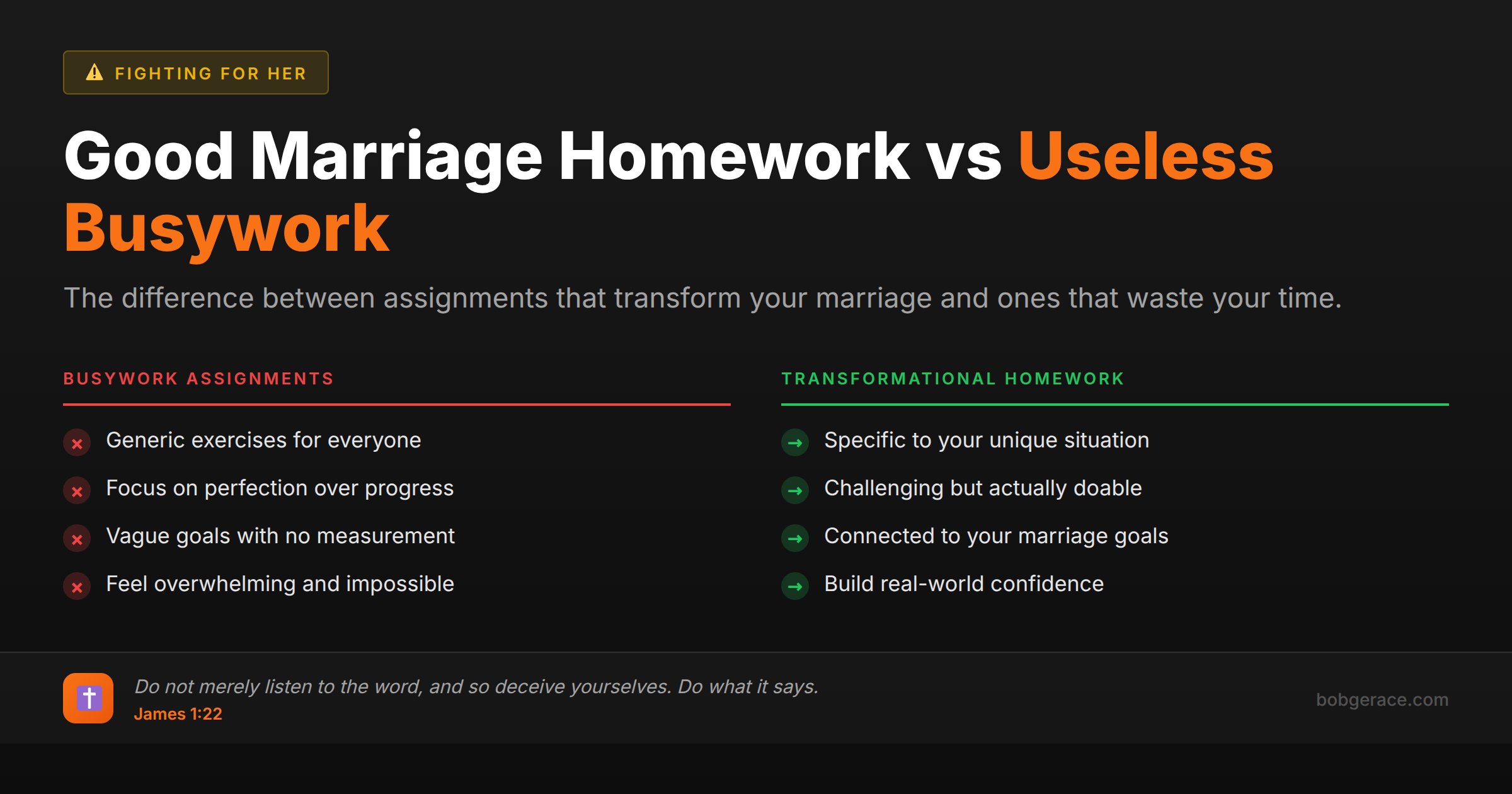
Good homework in marriage coaching isn't busywork—it's purposeful action that bridges the gap between understanding and transformation. It looks like specific, measurable assignments that address your unique situation, whether that's having a difficult conversation with your husband, practicing new communication skills, or implementing boundaries you've discussed in coaching. The best homework feels challenging but doable, pushes you slightly outside your comfort zone, and connects directly to the goals you're working toward. It's not about perfection—it's about progress. Good homework helps you practice new behaviors in real-life situations, gather data about what's working (and what isn't), and build the confidence you need to create lasting change in your marriage.
The Full Picture
Let me be straight with you—homework in marriage coaching isn't like school assignments where you check boxes and move on. It's the real work that happens between our sessions, where you take what we've discussed and apply it to your actual marriage.
Good homework has four key characteristics:
First, it's specific and actionable. Instead of "communicate better with your husband," good homework might be "Use the listening technique we practiced to have a 15-minute conversation about weekend plans without interrupting or defending."
Second, it's measurable. You should be able to tell me exactly what happened, what worked, and what didn't. This isn't about success or failure—it's about gathering information that helps us refine your approach.
Third, it's relevant to your goals. Every assignment should connect directly to the changes you want to see in your marriage. If you're working on rebuilding trust, your homework will look different than if you're addressing communication patterns or intimacy issues.
Fourth, it's appropriately challenging. Good homework stretches you without overwhelming you. It should feel like a manageable next step, not a mountain to climb.
What homework might include: - Specific conversations to have (or avoid) - New responses to practice when triggers arise - Boundary-setting exercises - Self-care commitments - Observation assignments (noticing patterns without trying to change them) - Prayer or reflection practices - Reading assignments with specific application questions
Remember, the goal isn't to do homework perfectly—it's to learn from the experience and use that learning to inform our next steps together.
What's Really Happening
From a therapeutic standpoint, homework serves as a bridge between insight and behavioral change. Many women come to coaching understanding what needs to change but struggling to translate that understanding into consistent action. Well-designed homework creates structure for this translation process.
The most effective assignments target what we call "behavioral experiments"—small, controlled opportunities to practice new responses and observe the results. This approach reduces the anxiety that often comes with major changes because it breaks transformation into manageable pieces.
I often see women resist homework because they're afraid of "failing" or making things worse. This reveals perfectionist tendencies that often contribute to marital struggles in the first place. Good homework reframes "failure" as valuable data. When an assignment doesn't go as planned, we learn something important about timing, approach, or underlying dynamics.
The homework process also reveals patterns of avoidance or self-sabotage that might not surface in coaching sessions. A woman who consistently "forgets" to do assignments might be processing fear about change. Someone who over-complicates simple assignments might be dealing with control issues.
Neurologically, homework leverages the brain's capacity for change through repetition and conscious practice. Each time you practice a new response or boundary, you're literally rewiring neural pathways. The key is consistency over intensity—small, regular actions create more lasting change than sporadic dramatic efforts.
Homework also empowers you as the agent of change in your marriage rather than positioning you as a passive recipient of coaching. This sense of agency is crucial for building the confidence needed to navigate complex relationship dynamics long after coaching ends.
What Scripture Says
Scripture consistently emphasizes the importance of putting wisdom into practice rather than simply accumulating knowledge. James 1:22 warns us: "Do not merely listen to the word, and so deceive yourselves. Do what it says." This principle applies directly to marriage coaching homework—understanding what needs to change isn't enough; we must act on that understanding.
Proverbs 27:17 reminds us that "as iron sharpens iron, so one person sharpens another." Homework creates opportunities for this sharpening process to occur in your marriage through intentional practice and interaction.
The parable of the wise and foolish builders in Matthew 7:24-27 illustrates why consistent practice matters: "Therefore everyone who hears these words of mine and puts them into practice is like a wise man who built his house on the rock." Your marriage is built through countless small actions and responses—homework helps ensure these building blocks align with godly wisdom.
Philippians 4:9 provides a model for transformative learning: "Whatever you have learned or received or heard from me, or seen in me—put it into practice. And the God of peace will be with you." Notice the progression from learning to practicing, with God's peace as the result.
Luke 14:28 emphasizes the importance of intentional planning: "Suppose one of you wants to build a tower. Won't you first sit down and estimate the cost?" Good homework helps you count the cost of change and approach it strategically.
Finally, 1 Corinthians 9:24-25 reminds us that transformation requires training: "Run in such a way as to get the prize. Everyone who competes in the games goes into strict training." Marriage homework is training for the prize of a thriving, God-honoring relationship.
What To Do Right Now
-
1
Approach each assignment with curiosity rather than pressure—you're gathering information, not performing
-
2
Write down what happened after each homework attempt, including your thoughts and emotions
-
3
If an assignment feels overwhelming, break it into smaller pieces or ask for modification
-
4
Practice assignments when you're in a relatively good emotional space, not during crisis moments
-
5
Be honest about what you didn't do and why—this information is as valuable as successful completion
-
6
Connect your homework to prayer, asking God for wisdom and courage as you practice new behaviors
Related Questions
- What does quality coaching/therapy include?
- What should he be working on in order?
- What are the stages of change work?
- What does integration mean vs. just learning?
- What daily practices indicate commitment?
- What should change in his emotional regulation?
- What does sustainable change require?
- How long does it take to rewire the brain?
- What is 'neuroplasticity' and how do I leverage it?
- What makes change sustainable vs. temporary?
Also find Bob on
Subscribe for weekly videos on Christian marriage.
Ready to apply this to your marriage?
A coach who knows your story can design homework that fits where you actually are—not generic exercises, but assignments calibrated to your specific situation.
Talk to Bob →